Creamy Lemon Orzotto with Cannellini Beans and Roasted Red Peppers
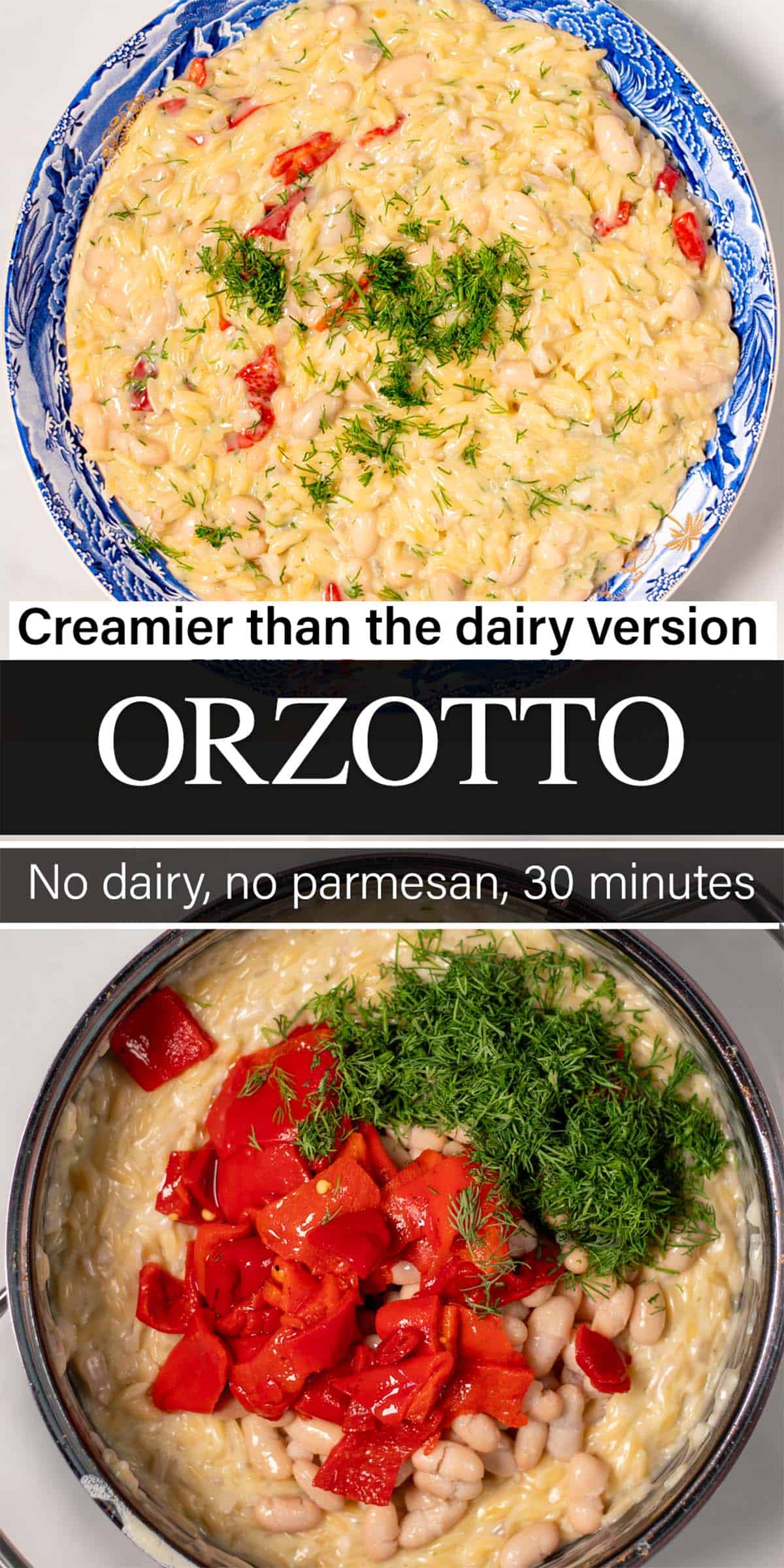
This Orzotto is fully plant-based and made creamy without any dairy - coconut milk and cannellini beans give it a rich, silky body while lemon, roasted red peppers, fresh dill, and six cloves of garlic build the flavor. One pot, 30 minutes, and more satisfying than any cream-and-parmesan version.
Table of contents
Orzotto is orzo cooked risotto-style - toasted briefly in oil, then cooked in broth that is added gradually so the pasta releases its starch and creates a naturally creamy, saucy consistency without flour or cream. The result has the comfort and richness of a risotto but comes together in 30 minutes rather than 45, without the continuous stirring that risotto demands.
Every other orzotto recipe follows the same formula: heavy cream and parmesan, or sour cream and parmesan, with chicken or sausage for protein. They are good. They are also entirely dairy-heavy, not particularly filling in the plant-protein sense, and not an option for anyone cooking plant-based.
This version takes a different route for its creaminess. Coconut milk replaces the heavy cream - it adds a smooth, silky richness that integrates beautifully with the lemon and roasted red peppers without any coconut flavor dominating the dish. And a can of cannellini beans provides both protein and an additional creaminess as some of the beans break down slightly into the sauce during the final minutes of cooking. Together the two create a sauce that is richer and more satisfying than any dairy-based version manages, with far more nutritional substance.
The flavor profile is Mediterranean rather than Italian-classical: lots of garlic, shallots, roasted red peppers for sweetness and depth, lemon for brightness, and fresh dill as the finishing herb that ties everything together. The dill is the detail that most distinguishes this version from anything in the orzotto category - it is bright, aromatic, and slightly anise-like in a way that pairs unexpectedly well with the lemon and the creamy coconut base.
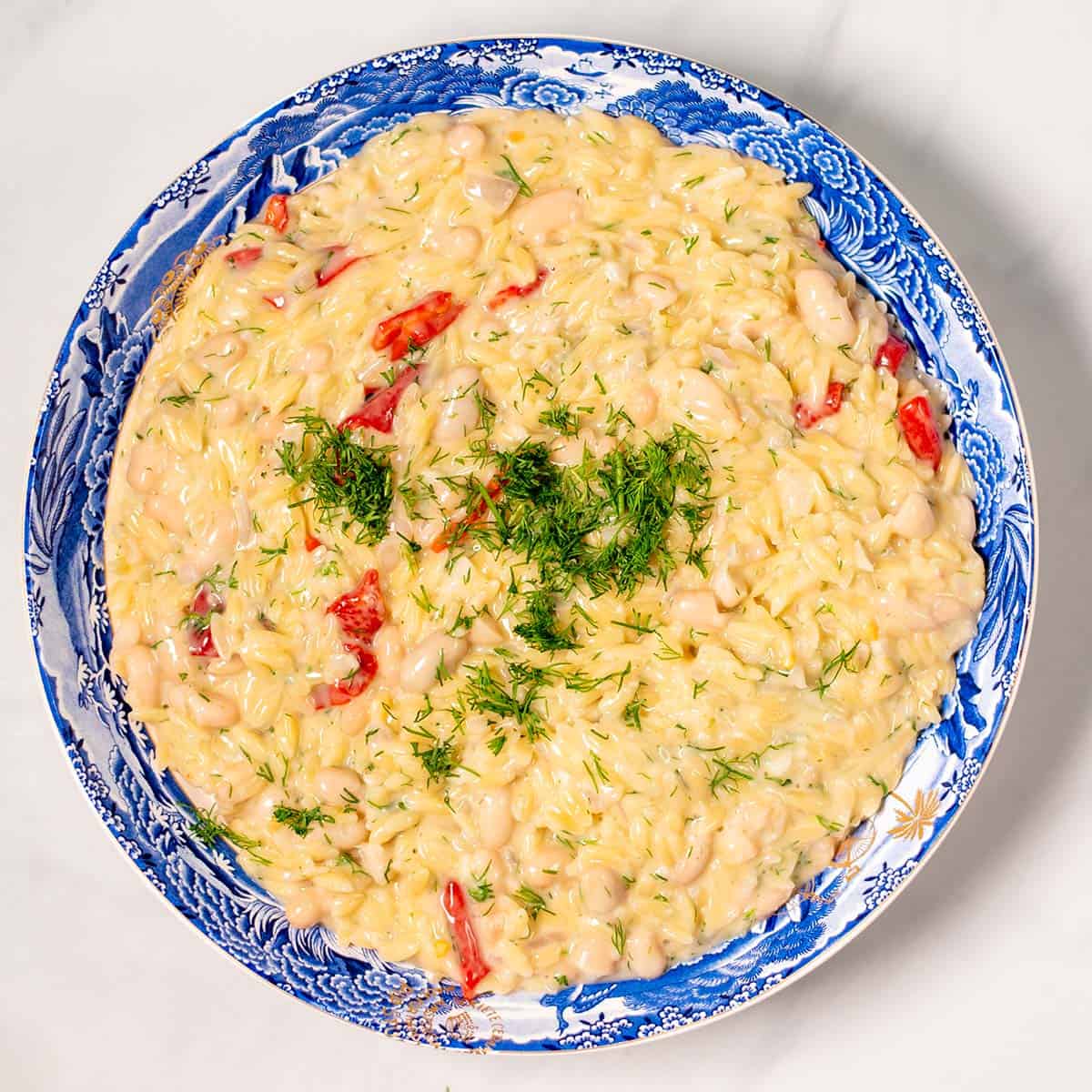
What is orzotto?
Orzotto is the name for orzo pasta cooked using the risotto method - toasted first in oil or butter, then cooked in hot broth added in stages rather than all at once. As the orzo absorbs the broth, it releases surface starch that thickens the cooking liquid into a naturally creamy, saucy consistency. The result looks and feels like risotto but uses pasta rather than rice, which means it cooks in 15-18 minutes rather than the 30-40 that arborio rice requires.
The format is popular because it delivers risotto-level comfort without risotto-level effort. Orzo does not require the constant stirring that rice demands, it is more forgiving on timing, and it absorbs flavors readily in the short time it takes to cook. The pasta shape - small, rice-like grains - means it also works beautifully as leftovers, unlike rice which can become gluey on reheating.
This version adds coconut milk and cannellini beans to the standard broth-based method, producing a richer, more substantial result than the classic formula.
What makes this orzotto different?
The orzotto category online is almost entirely built on two things: heavy cream and parmesan. Occasionally sour cream substitutes for one of them, or chicken stock replaces vegetable broth, but the dairy-and-animal-protein structure is consistent across every top-ranking recipe.
This version does not use either. Coconut milk provides the creamy richness that heavy cream would otherwise deliver, without any dairy. Cannellini beans replace the parmesan protein role - and then go further, breaking down slightly into the sauce as they cook and adding a creamy body that parmesan alone could not produce.
The flavor profile is also distinct. Where most orzotto recipes are Italian in character - tomato, basil, parmesan - this one leans Mediterranean: roasted red peppers, lemon, dill, and six full cloves of garlic. Fresh dill in particular is almost completely absent from the orzotto category and gives this version an aromatic, slightly herbal character that is genuinely different from anything a competitor is making.
Why this recipe works
Coconut milk instead of heavy cream. Full-fat coconut milk adds a smooth, silky richness that integrates with the lemon and roasted red pepper flavors without any coconut flavor dominating. It produces a creamier result than plant cream and thickens more naturally with the starch released by the orzo.
Cannellini beans for protein and extra creaminess. A can of cannellini beans serves two functions. The whole beans add protein, substance, and a satisfying creamy texture alongside the orzo. As the orzotto finishes cooking, some of the beans break down slightly into the sauce, adding a natural body that makes the dish noticeably richer. No competitor adds beans to orzotto.
Six cloves of garlic and three shallots. A generous quantity of both, cooked until soft and fragrant before the orzo goes in. The shallots are milder and sweeter than onion, and they melt into the base rather than asserting themselves - which means the garlic can be the dominant aromatic without the dish tasting sharp.
Roasted red peppers for sweetness and depth. Jarred roasted red peppers are one of the most under-used pantry ingredients in plant-based cooking. They bring a sweet, smoky depth and a vivid red color to the sauce that fresh peppers - which are much brighter and more acidic - cannot replicate in a short cooking time.
Lemon as a structural flavor, not a garnish. The juice of a full lemon goes into the sauce rather than being squeezed over at serving. It brightens the coconut milk and balances the richness of the beans and oil - without it the sauce tastes heavy.
Fresh dill at the end. Fresh dill stirred through just before serving preserves its bright, aromatic character. Dill cooked into the sauce loses most of what makes it distinctive. Added at the end, it provides an herbal freshness that lifts the entire dish.
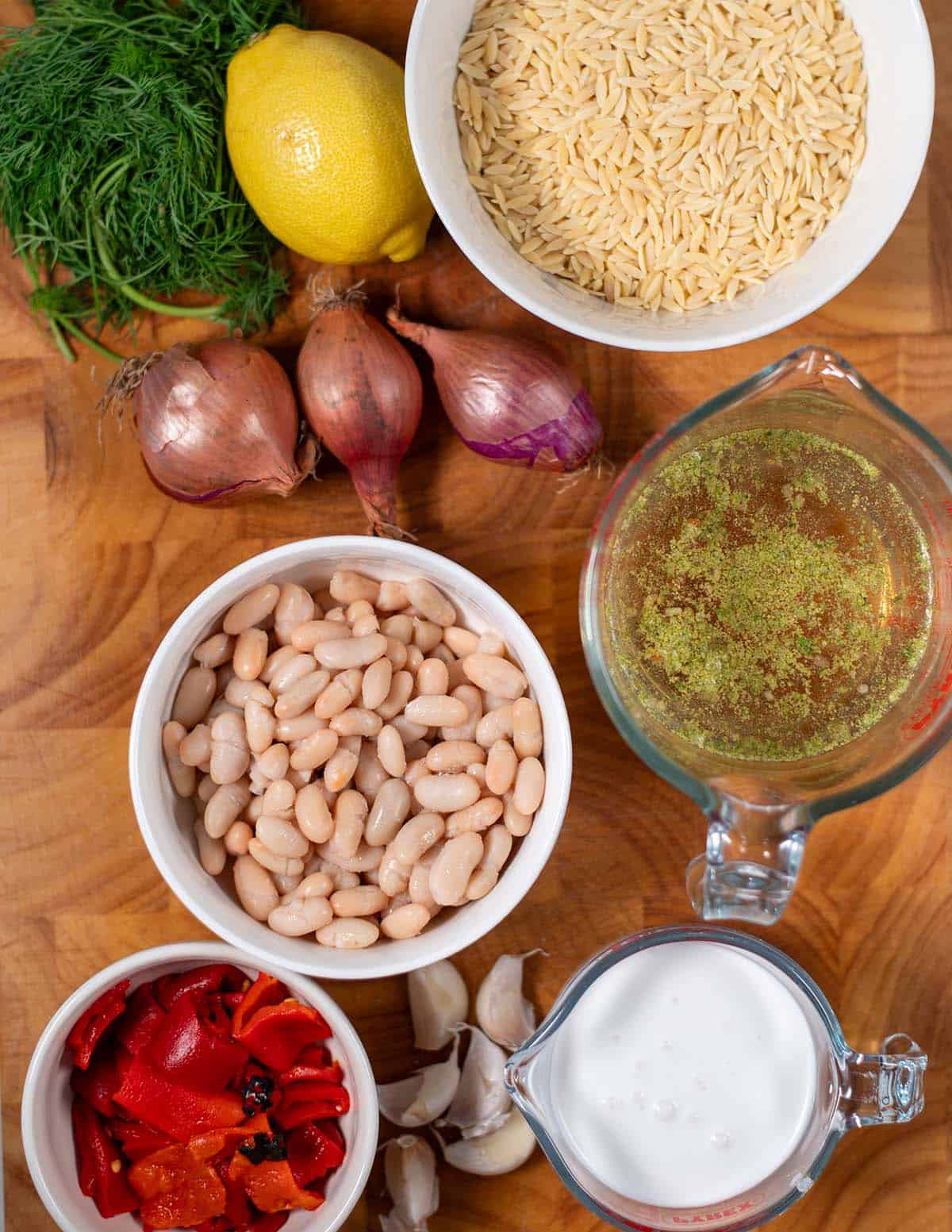
Ingredient notes
Orzo - 1½ cups uncooked. The pasta that forms the base of the orzotto. Toasting it briefly in the olive oil before adding the broth deepens its flavor and helps it hold its shape rather than becoming mushy.
Vegetable broth - 3 cups. The cooking liquid. Use a good-quality broth - it is absorbed directly by the orzo and becomes part of the sauce. Low-sodium broth is preferred as the beans and salt seasoning will do the salting work.
Coconut milk - 1 cup, full-fat canned. The creaminess source. Full-fat is important - light coconut milk produces a noticeably thinner result. The flavor of the coconut is almost entirely masked by the garlic, lemon, and roasted peppers, so this is not a dish that tastes of coconut.
Cannellini beans - one 15 oz can, drained and rinsed. Mild, creamy, and protein-rich. They go in toward the end of cooking and some will break down slightly into the sauce as the orzotto finishes. Great northern beans or butter beans work as substitutes.
Roasted red peppers - 1 cup, chopped. Jarred roasted red peppers, drained and roughly chopped. Their sweet, smoky depth and deep red color define the character of this dish. Homemade roasted peppers work even better if you have them.
Garlic - 6 cloves, minced. A generous quantity - this orzotto is assertively garlicky, which balances the richness of the coconut milk and beans. Reduce to 4 cloves for a milder result.
Shallots - 3, chopped. Sweeter and more delicate than onion. They melt into the base during cooking and provide an aromatic sweetness without sharpness. One medium onion works as a substitute.
Olive oil - 2 tablespoons, for toasting the orzo and softening the aromatics.
Lemon - 1 whole lemon, juiced. The juice goes into the sauce during cooking rather than at serving. It brightens the coconut milk and prevents the sauce from tasting heavy or flat. Adjust quantity to taste - some lemons are significantly more acidic than others.
Fresh dill - a third of a cup, chopped. Stirred through just before serving. Fresh is essential - dried dill is a completely different ingredient and will not produce the same result.
How to make orzotto
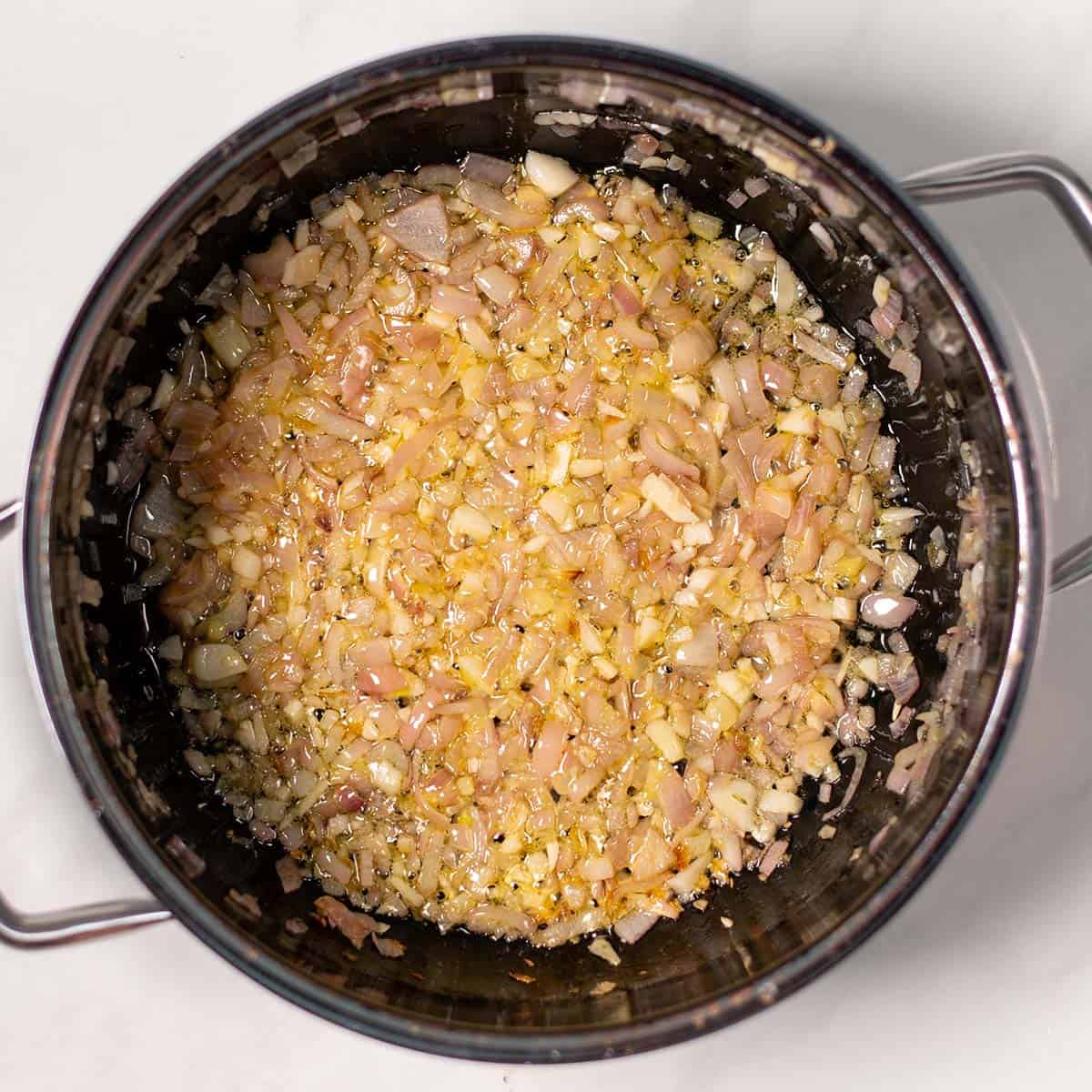
Heat the olive oil in a large, wide pot or deep skillet over medium heat. Add the chopped shallots and cook for 3-4 minutes, stirring occasionally, until softened and translucent. Add the minced garlic and cook for a further 1-2 minutes until fragrant.
Add the dry orzo to the pot and stir to coat in the oil and aromatics. Cook for 1-2 minutes, stirring frequently, until the orzo begins to turn very lightly golden at the edges. This brief toasting step adds flavor and helps the orzo hold its shape as it cooks.
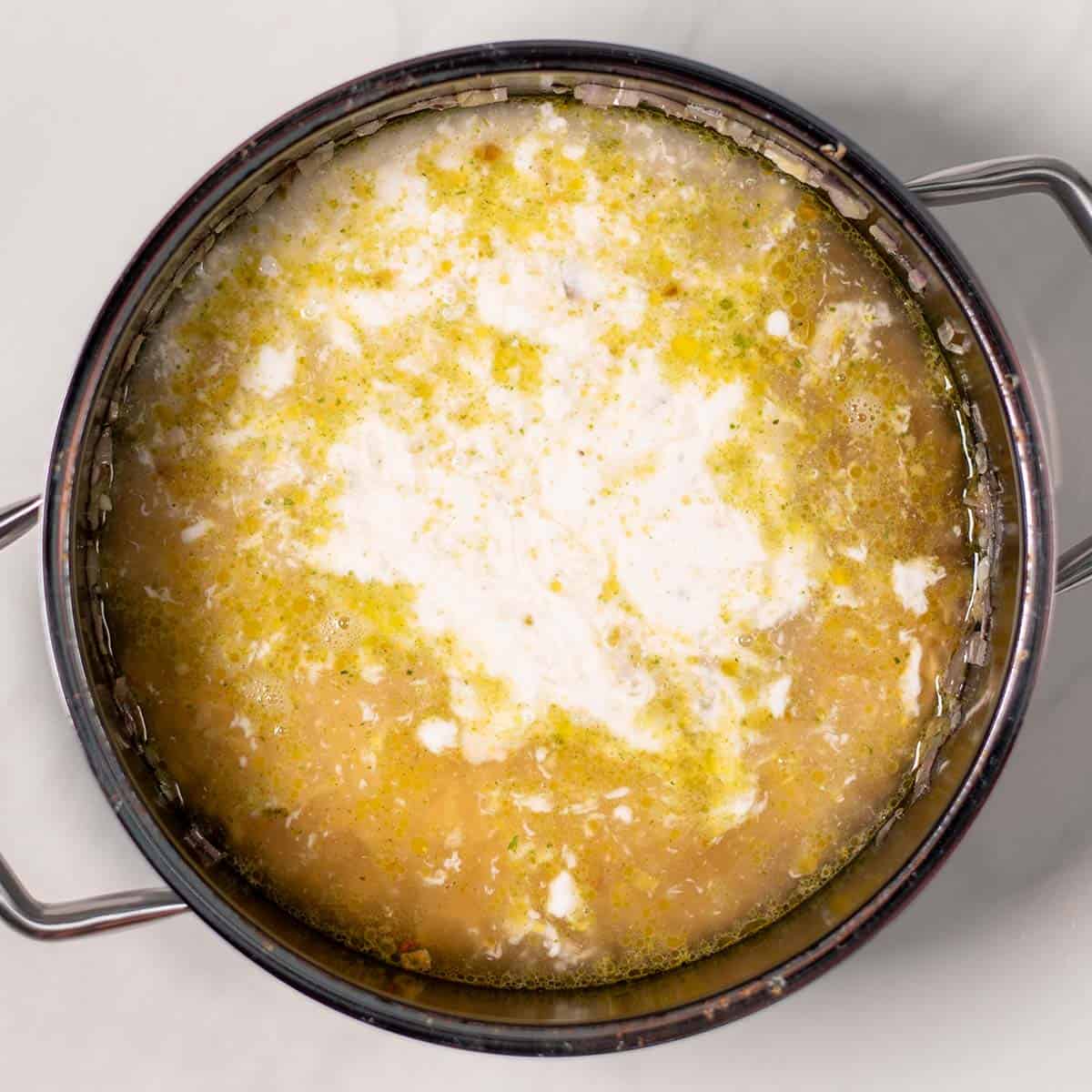
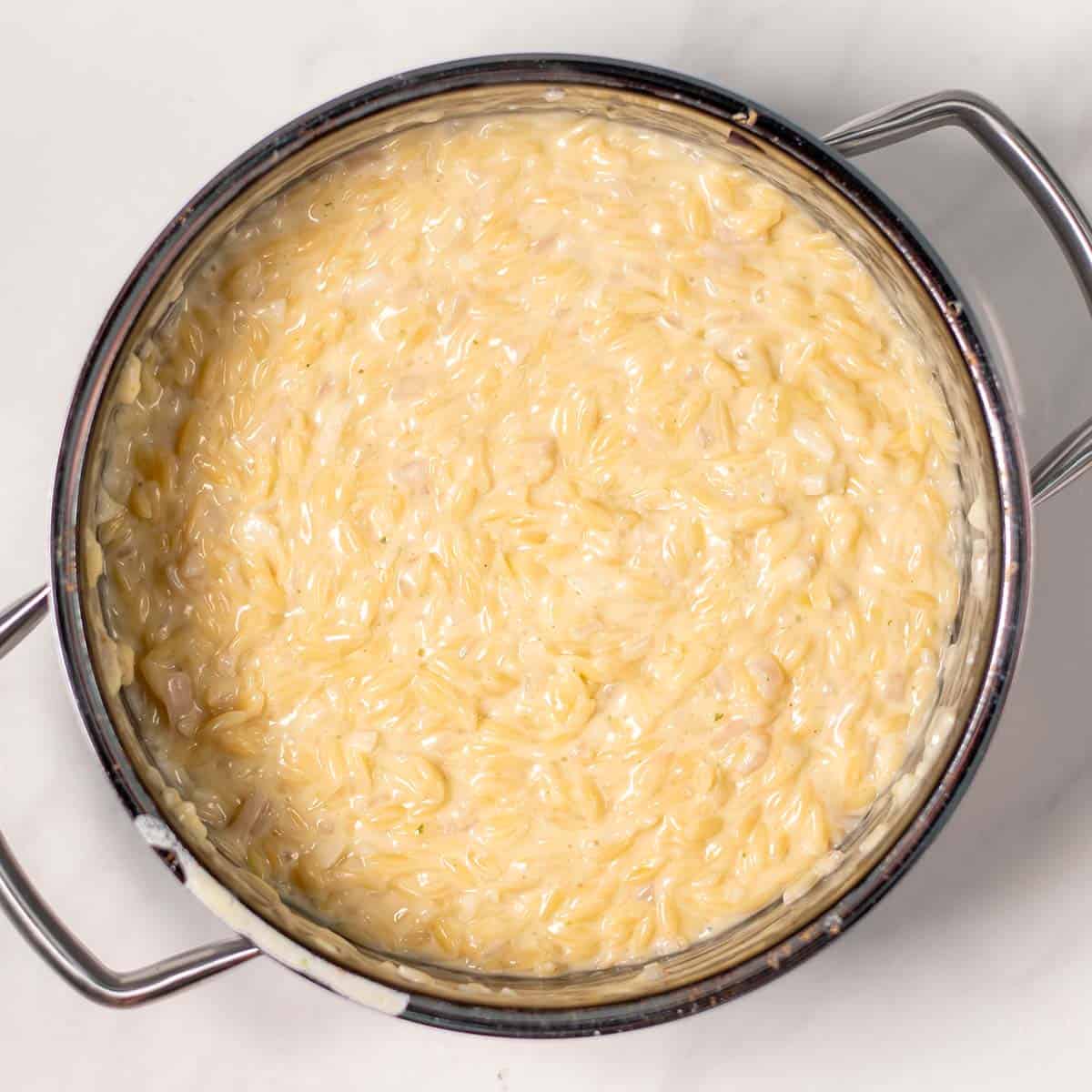
Pour in the vegetable broth and coconut milk, and bring to a gentle simmer. Cook uncovered for 8-10 minutes, stirring every minute or two, until most of the broth has been absorbed and the orzo is nearly tender. The orzo will release starch into the broth as it cooks, creating a naturally thick, creamy base.
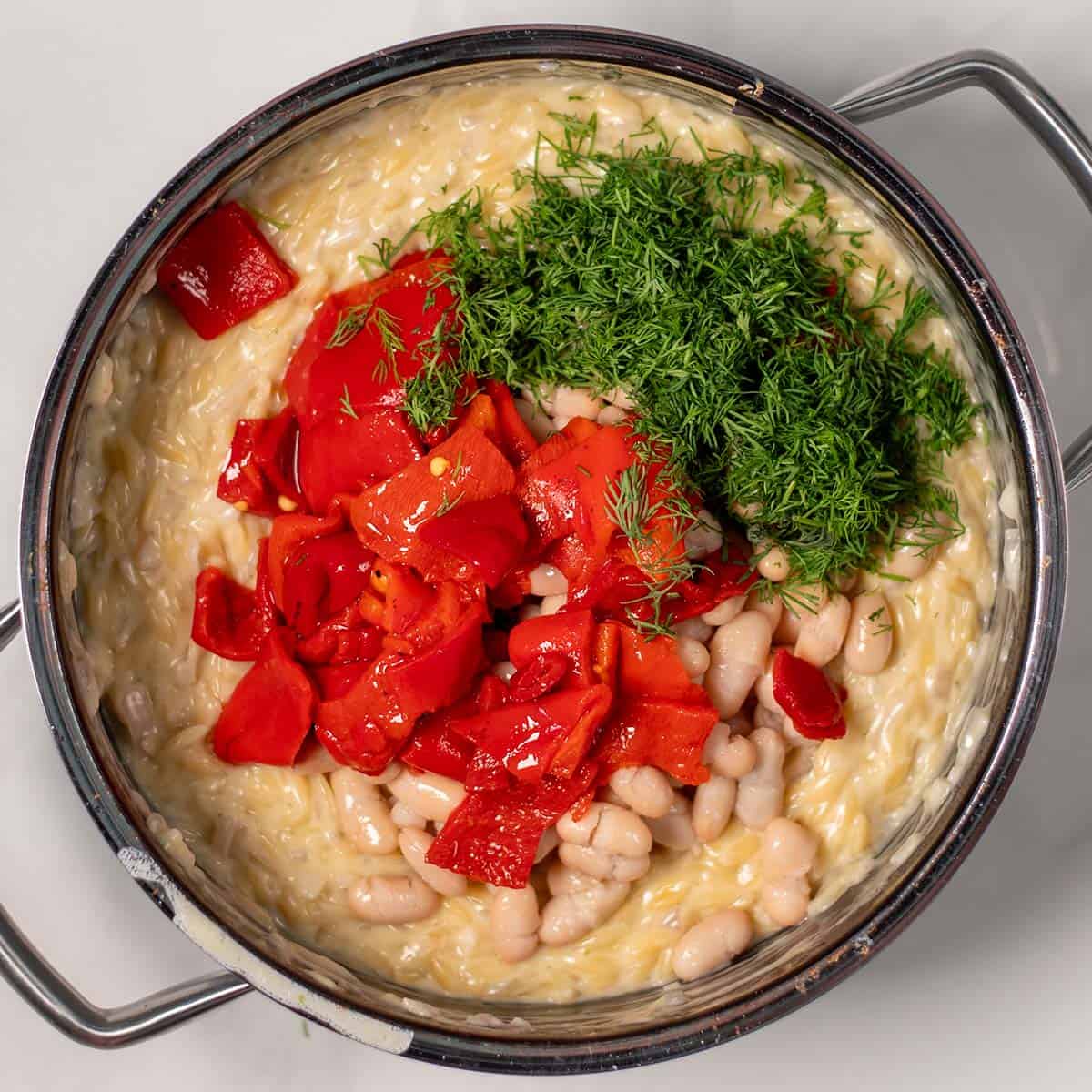
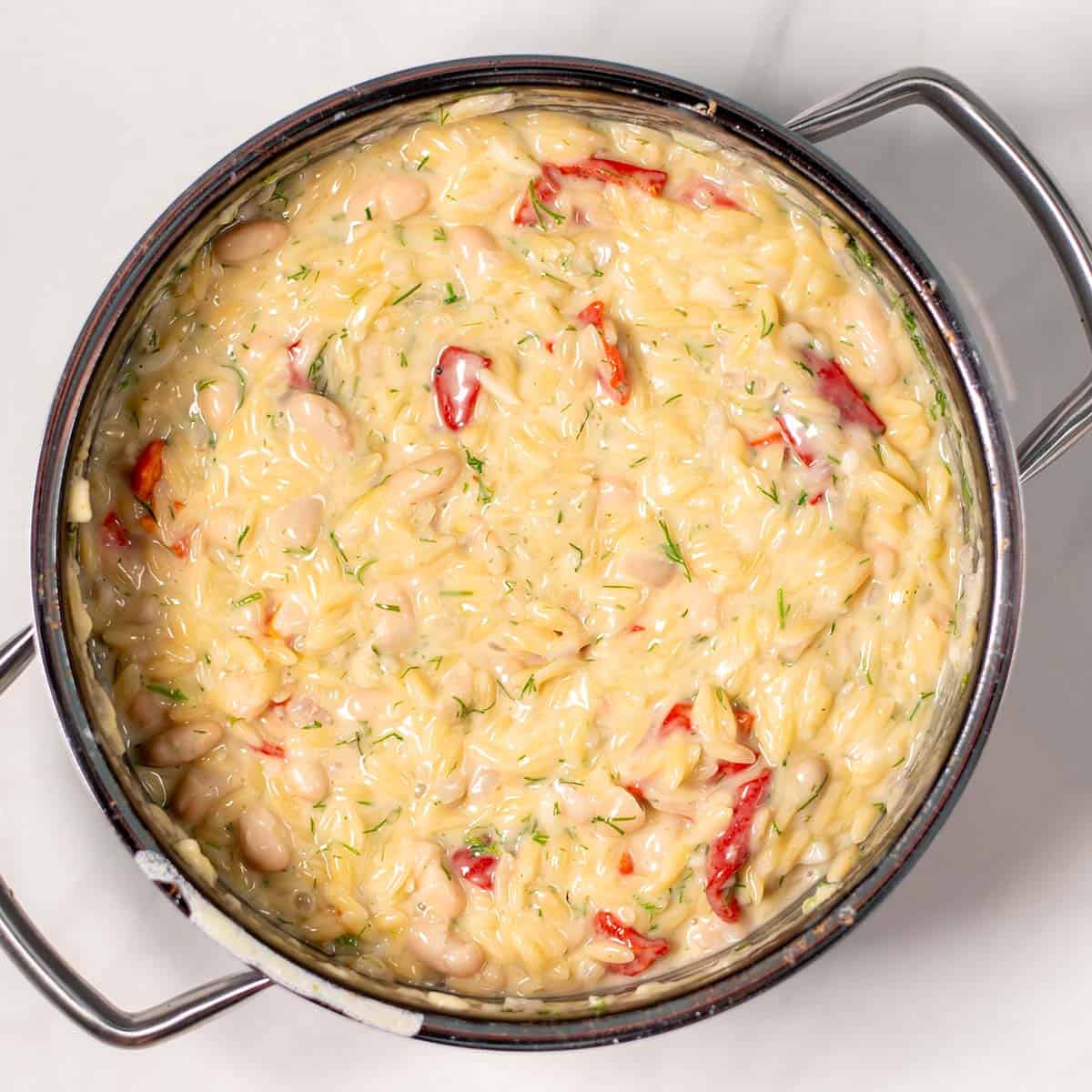
Add the chopped roasted red peppers, and drained cannellini beans. Stir to combine. Cook for a further 4-5 minutes, stirring occasionally, until the sauce is creamy and the orzo is fully cooked. The beans will warm through and some will begin to soften slightly into the sauce. Season generously with salt and pepper.
Remove from the heat and stir in the lemon juice. Taste and adjust seasoning - the lemon should brighten the dish noticeably. Stir through most of the fresh dill, reserving a small amount for serving.
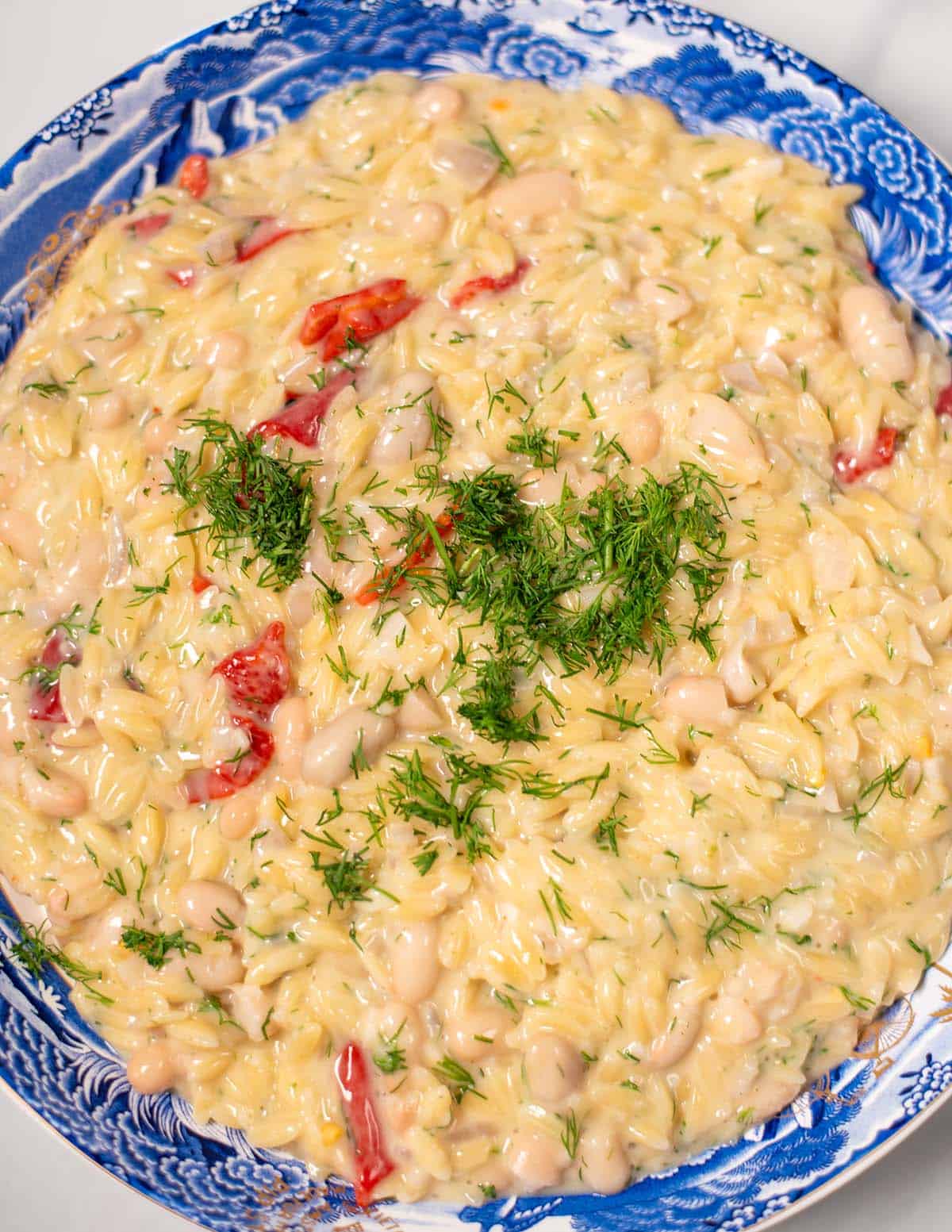
Divide into bowls and scatter the remaining dill over the top. Serve immediately.
Ways to serve
As a standalone bowl - the orzotto is filling and nutritionally complete on its own, thanks to the cannellini beans and the substantial volume of the coconut sauce.
With crusty bread - the creamy sauce is too good to leave in the bowl. A piece of good bread for mopping is the natural accompaniment.
With a simple green salad - a lightly dressed arugula or mixed green salad alongside cuts through the richness of the coconut sauce and adds freshness to the meal.
As part of a Mediterranean spread - works well alongside the Balela Salad, the Olive Salad, or roasted vegetables as part of a larger plant-based spread.
Topped with crispy chickpeas - a handful of pan-fried or roasted chickpeas scattered on top adds texture contrast and additional protein. Toss with smoked paprika and olive oil before frying.
Storage and meal prep
Refrigerator: Store in an airtight container for up to 3 days. The orzotto will thicken significantly as it sits because the orzo continues to absorb the sauce. Reheat in a pot over gentle heat with a splash of vegetable broth or water to restore a creamy consistency - stir continuously as it warms.
Consistency on reheating: Start with 2-3 tablespoons of broth per serving, add more as needed. The reheated orzotto will be slightly thicker and denser than the freshly made version but still very good.
Meal prep: This orzotto is a good meal prep candidate - the flavor improves overnight as the beans and orzo absorb the lemon and dill. Make a full batch and reheat portions through the week.
Freezer: Not recommended - orzo changes texture significantly on freezing and thawing, and the coconut milk sauce may separate.
Frequently asked questions
No - not noticeably. The garlic, lemon, roasted red peppers, and dill are all stronger flavors than coconut, and full-fat coconut milk in a savory context reads as richness rather than coconut flavor. Most people served this without knowing the ingredients cannot identify it.
The sauce will be noticeably thinner and less creamy. If light coconut milk is all that's available, reduce the vegetable broth by half a cup to compensate for the extra liquid.
Technically no, but it is worth doing. Toasting the orzo in oil for a couple of minutes before adding liquid adds a faint nuttiness and depth to the finished dish that untoasted orzo cannot provide. It also helps the orzo hold its shape better during cooking.
Fresh red peppers can be added with the shallots and cooked down, but they will take significantly longer to soften and their flavor will be brighter and more acidic rather than sweet and smoky. Jarred roasted peppers are the better choice for the flavor this recipe is building toward.
Fresh flat-leaf parsley is the closest substitute and works well. Fresh basil produces a more Italian-flavored result. Fresh mint is a less common but genuinely good pairing with the lemon and roasted peppers. Dried dill is not a substitute - use a different fresh herb rather than dried dill.
When freshly made it should be creamy and saucy - flowing rather than stiff, with the orzo held in a coating of sauce rather than sitting in a pool of liquid or clumping together. If it is too thick, add a splash of broth and stir over heat. If it is too loose, cook uncovered for an additional minute or two.
More recipes you'll love
- Pesto Orzo with Edamame and White Beans
- Creamy Tomato Pasta
- Pesto Gnocchi with Smoked Tofu and Chickpeas
- Lemon Pasta Salad
- Creamy Harissa Butter Beans
- Easy Vegan One Pot Meals
Made this Orzotto? Leave a comment below and rate the recipe - it helps more people find it. Tag me on Instagram or Facebook with a photo. Florian.

Creamy Lemon Orzotto with Cannellini Beans and Roasted Red Peppers (30 Minutes)
Orzo cooked risotto-style in vegetable broth, then finished with coconut milk, cannellini beans, roasted red peppers, lemon, and fresh dill. No cream, no parmesan, fully plant-based. One pot, 30 minutes.
Ingredients
- 1½ cups orzo, uncooked
- 3 cups vegetable broth
- 1 lemon, juiced
- 6 cloves garlic, minced
- 3 shallots, chopped
- 2 tablespoons olive oil
- ⅓ cup fresh dill, chopped, divided
- 1 × 15 oz can cannellini beans, drained and rinsed
- 1 cup roasted red peppers, chopped (from a jar)
- 1 cup coconut milk, full-fat canned
- Salt and pepper to taste
Instructions
- Heat the olive oil in a large wide pot or deep skillet over medium heat. Add the chopped shallots and cook for 3–4 minutes, stirring occasionally, until softened and translucent. Add the minced garlic and cook for a further 1–2 minutes until fragrant.
- Add the dry orzo to the pot and stir to coat in the oil and aromatics. Cook for 1–2 minutes, stirring frequently, until the orzo turns very lightly golden at the edges. This brief toasting step adds flavor and helps the orzo hold its shape.
- Pour in the vegetable broth and coconut milk, and bring to a gentle simmer. Cook uncovered for 8–10 minutes, stirring every minute or two, until most of the broth has been absorbed and the orzo is nearly tender. The orzo will release starch and create a naturally thick base.
- Add the chopped roasted red peppers, and drained cannellini beans. Stir to combine and cook for a further 4–5 minutes, stirring occasionally, until the sauce is creamy and the orzo is fully cooked. Season generously with salt and pepper.
- Remove from the heat. Stir in the lemon juice and most of the fresh dill, reserving a small amount for serving. Taste and adjust seasoning — the lemon should brighten the dish noticeably.
- Divide into bowls and scatter the remaining fresh dill over the top. Serve immediately.
Notes
- Toast the orzo: The 1–2 minute toasting step in olive oil adds depth and helps the orzo hold its shape. Do not skip it.
- Stir regularly: Orzotto is less demanding than risotto but still benefits from stirring every minute or two to prevent sticking and ensure even cooking.
- Full-fat coconut milk: Light coconut milk produces a noticeably thinner sauce. If using light, reduce the broth by half a cup.
- Coconut flavor: The garlic, lemon, and roasted peppers mask any coconut flavor — the coconut milk reads as richness rather than taste.
- Roasted red peppers: Jarred roasted peppers are preferred over fresh for their sweet, smoky depth. Drain and pat dry before chopping.
- Fresh dill at the end: Add off the heat to preserve its aromatic character. Dill cooked into the sauce loses most of its flavor.
- Lemon: Add to taste — some lemons are much more acidic than others. Start with three-quarters of the juice and add more to preference.
- Consistency: Freshly made it should be creamy and flowing. It will thicken as it sits — reheat with a splash of broth and stir to restore consistency.
- Refrigerator: Stores for up to 3 days. Reheat with additional broth over gentle heat, stirring continuously.
- Freezer: Not recommended — orzo texture deteriorates significantly on freezing.
Nutrition Information:
Yield: 4 Serving Size: 1.5 cupsAmount Per Serving: Calories: 563Total Fat: 24gSaturated Fat: 13gUnsaturated Fat: 11gSodium: 641mgCarbohydrates: 77gFiber: 7gSugar: 5gProtein: 16g