Piyaz (Turkish White Bean Salad with Sumac and Aleppo Pepper)
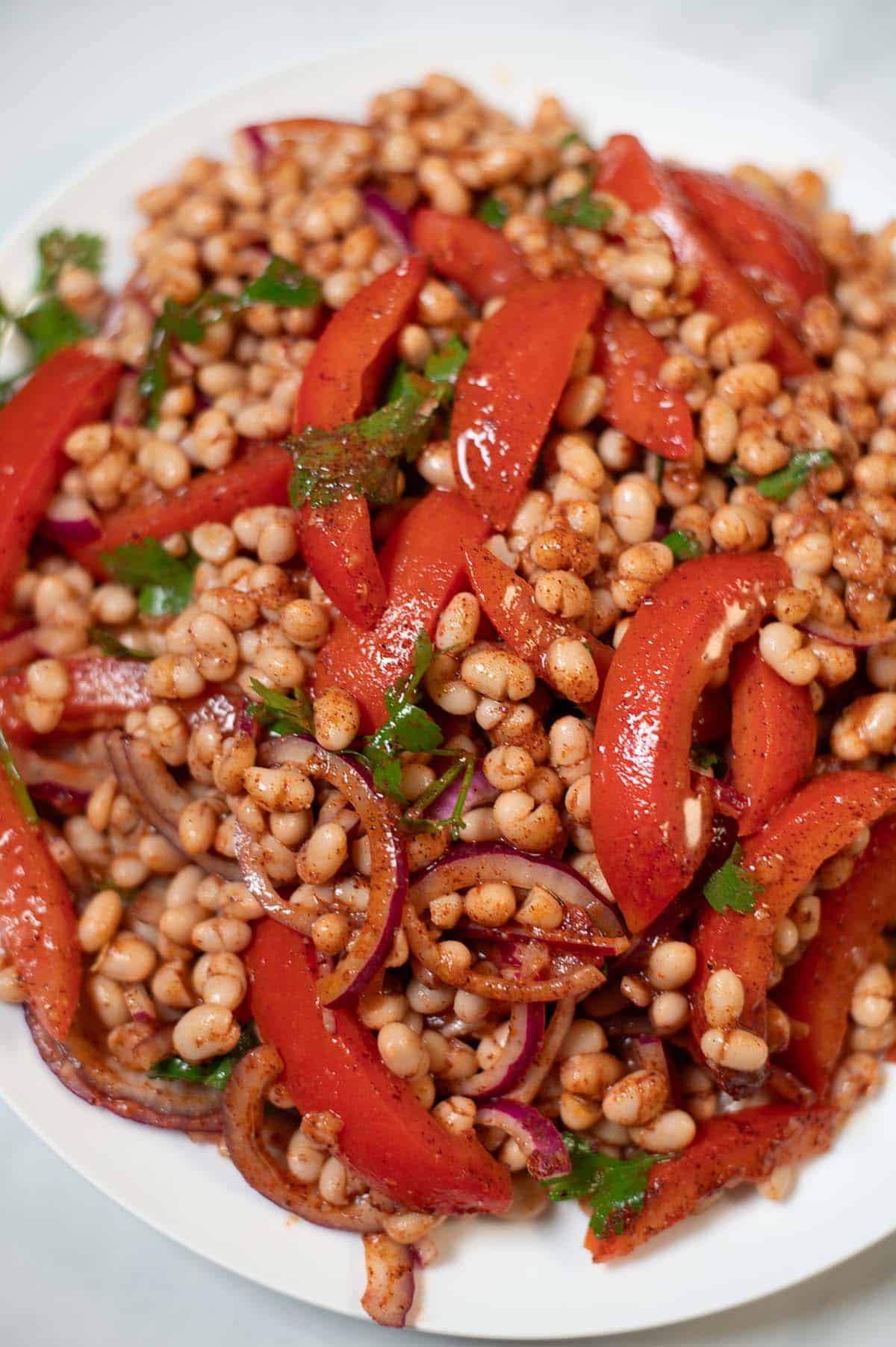
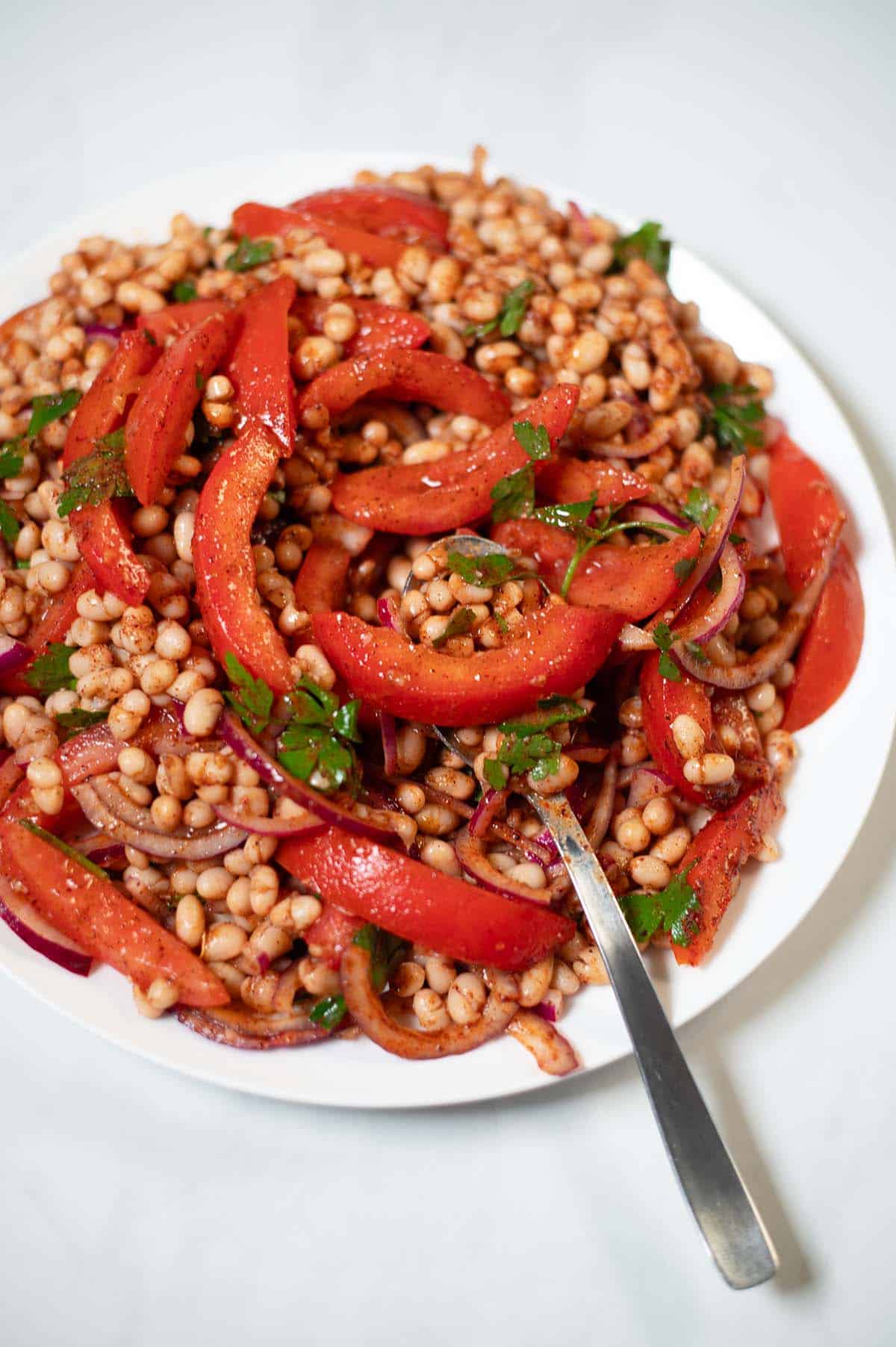
Piyaz is a Turkish white bean salad dressed with sumac, Aleppo pepper, lemon juice, and vinegar - sharp, smoky, and deeply flavoured. Thinly sliced red onion, fresh tomato, and parsley round it out. No cooking required, ten minutes, and it gets better the longer it sits.
Table of contents
What piyaz is
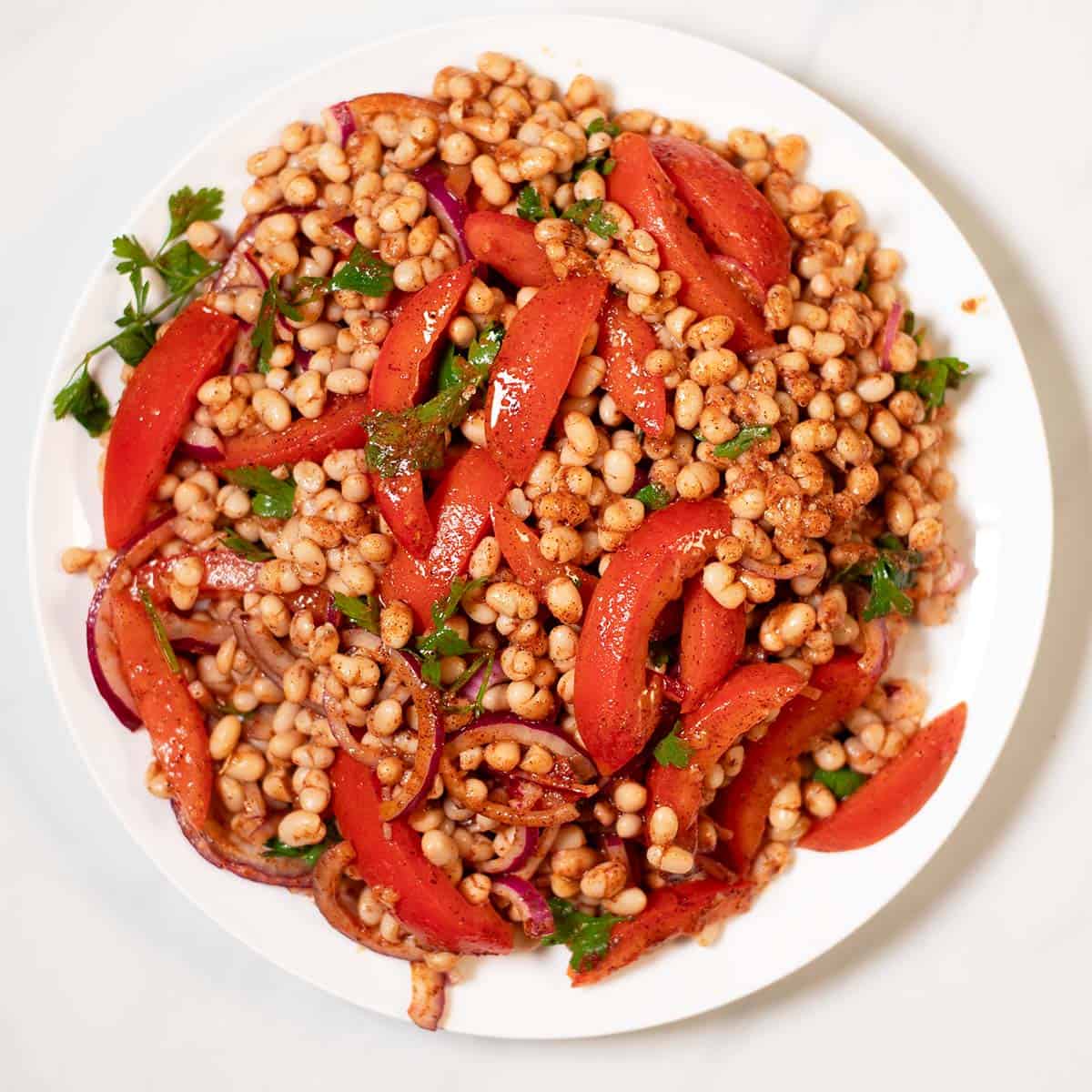
Piyaz (pronounced pee-YAHZ) is a classic Turkish salad built around white beans - usually cannellini or haricot - dressed with olive oil, lemon, and vinegar, and layered with red onion, tomato, and fresh parsley. It's eaten across Turkey as a side dish, a meze, or a light meal on its own, and it's one of those dishes that looks simple but has a lot of flavour going on once the dressing gets into the beans.
The name comes from the Persian word for onion, and onion is genuinely central to the dish - not just garnish. Thinly sliced red onion, softened slightly by the acidic dressing, is as much a part of piyaz as the beans themselves.
What makes this version different
Most piyaz recipes use a straightforward lemon and olive oil dressing, sometimes with a splash of vinegar. This version goes further - sumac and Aleppo pepper are both in the dressing, not just sprinkled on top, and they give it a different character.
Sumac brings a tartness that's distinct from lemon - fruity and deep rather than sharp. Combined with lemon juice and vinegar, the dressing has real acidity with layers to it.
Aleppo pepper adds mild heat with a slightly smoky, raisin-like sweetness. It's nothing like chilli flakes - it doesn't spike, it builds. Together with the sumac, it turns a simple bean salad into something that tastes properly spiced.
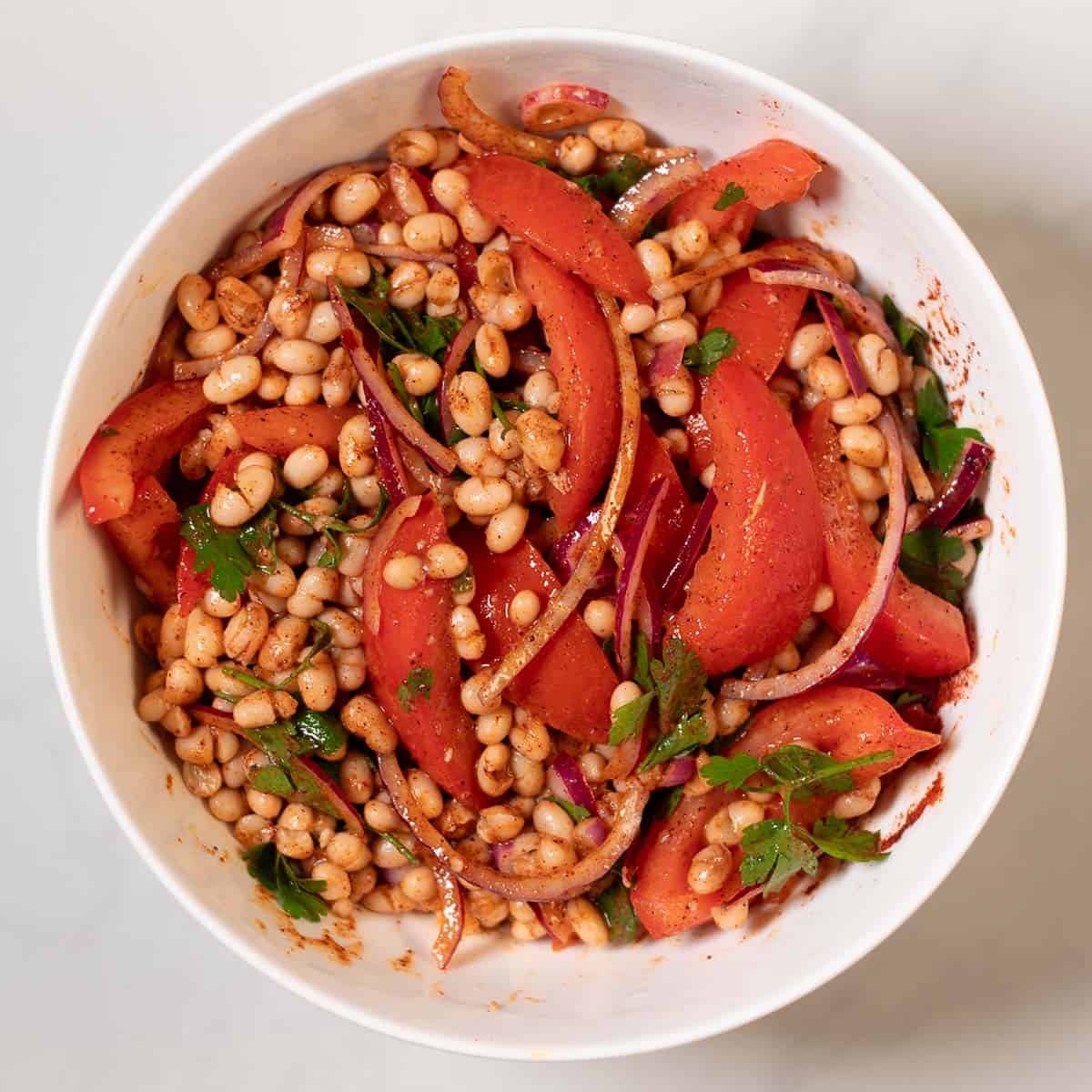
The result is a piyaz with more depth and more colour - the sumac stains the dressing a deep brick red, which coats the beans and makes the whole salad look as bold as it tastes.
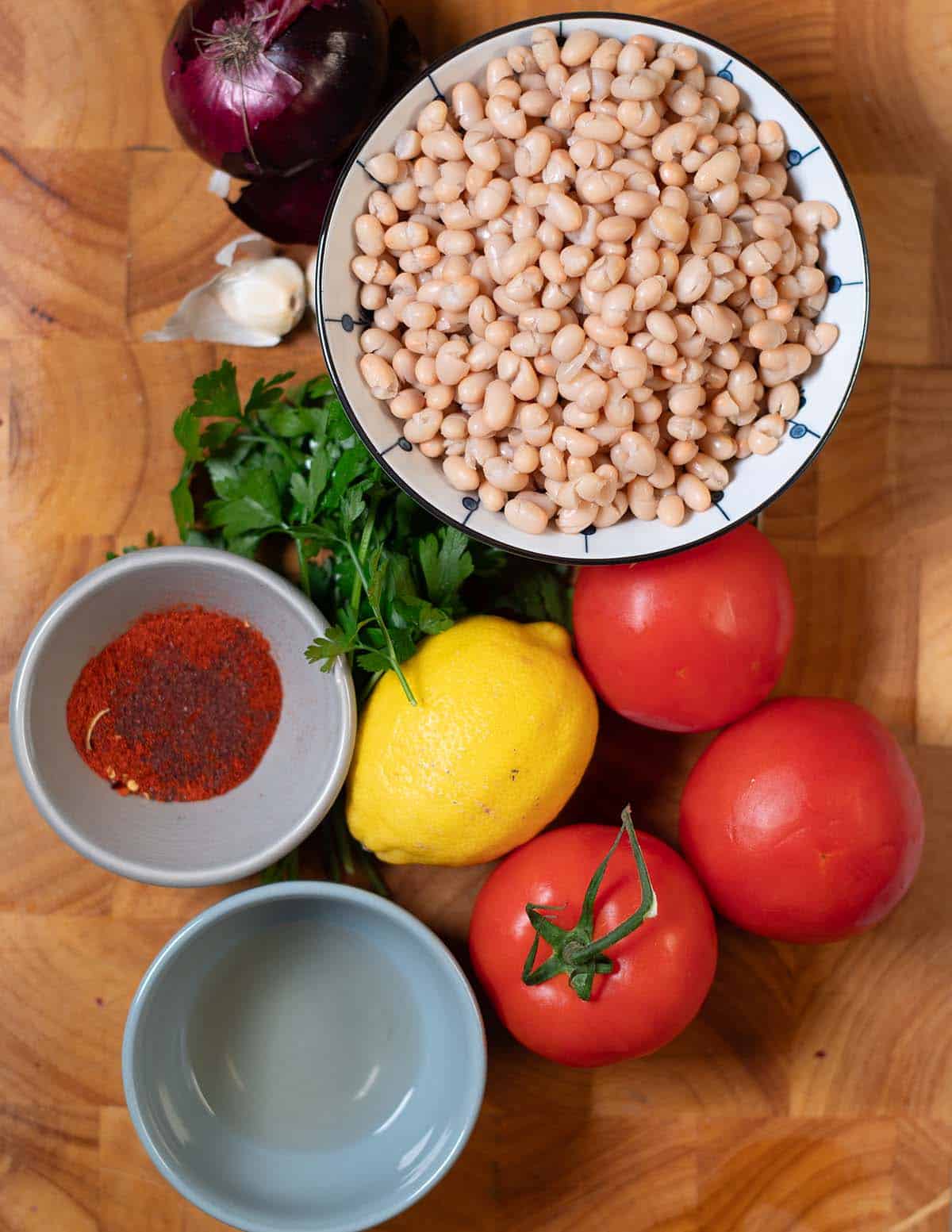
Ingredient notes
White beans. Two 14 oz (400g) cans of white beans - cannellini, haricot, or navy beans all work. Drain and rinse them well. If you have time, pat them dry so the dressing clings rather than sliding off watery beans.
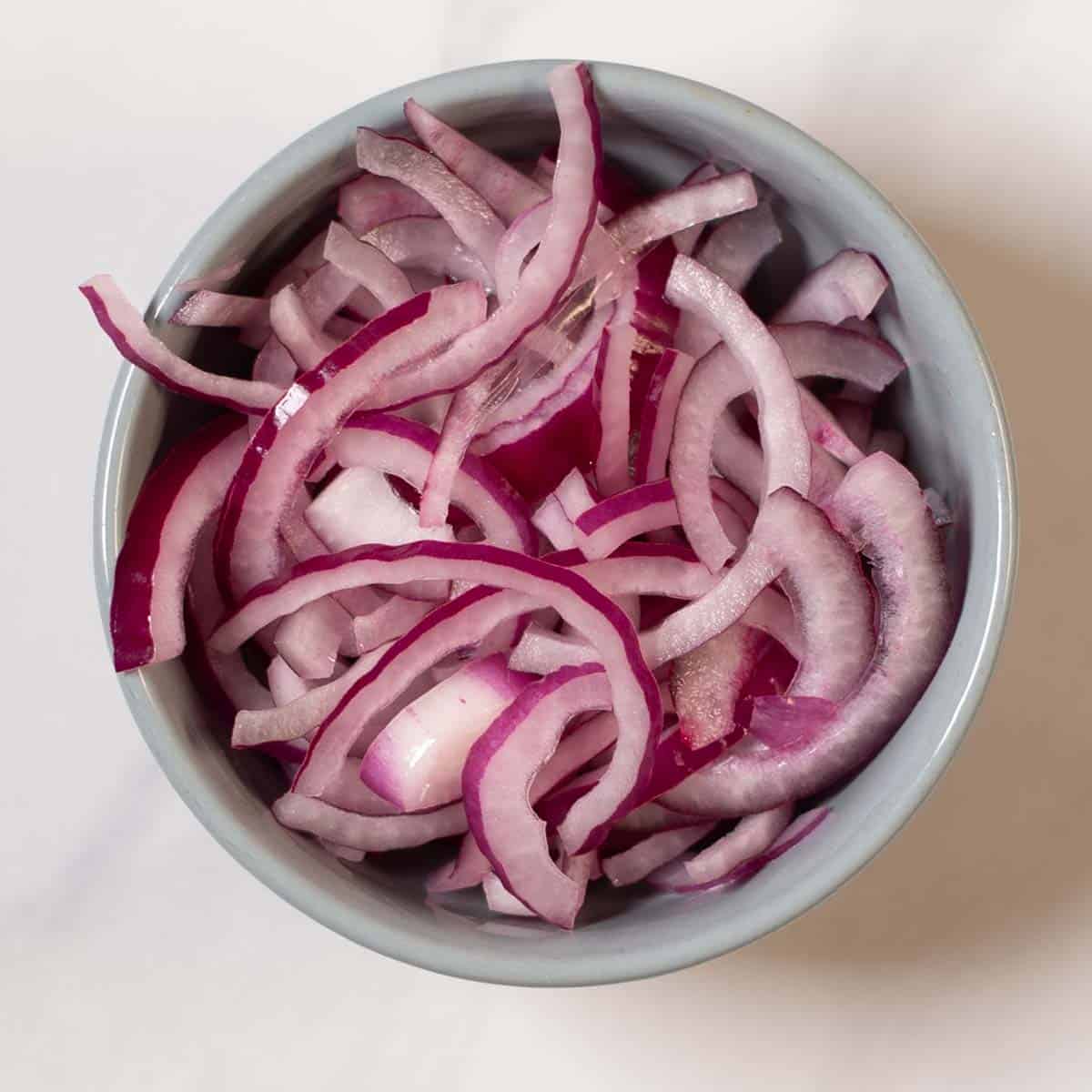
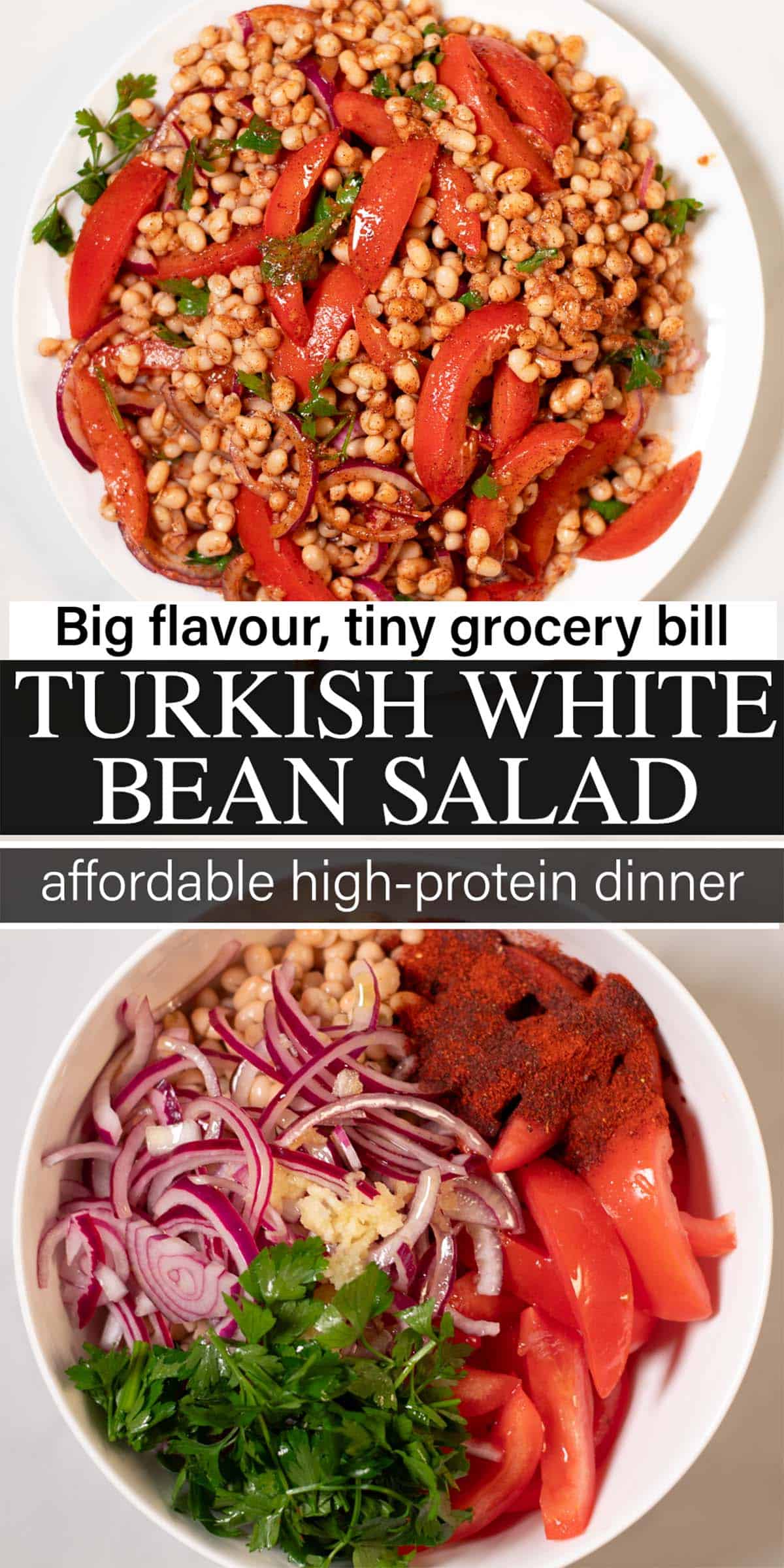
Red onion. One medium red onion, sliced as thinly as you can. The acidity in the dressing softens it as it sits. If raw onion is too sharp for you, soak the slices in cold water for 10 minutes before adding them.
Garlic. Two cloves, minced or pressed. Goes directly into the dressing.
Sumac. One tablespoon. Sumac is a ground dried berry with a tart, fruity acidity - available in Middle Eastern grocery stores and increasingly in mainstream supermarkets. It's worth having in your pantry for dishes like this, as well as for sprinkling over hummus, roasted vegetables, and grain bowls.
Aleppo pepper. One teaspoon. A mildly hot, slightly sweet dried chilli from the Aleppo region of Syria. It has a fruitiness and depth that regular chilli flakes don't have. If you can't find it, a pinch of smoked paprika plus a small amount of chilli flakes is a rough substitute, but the flavour will be different.
Olive oil. Three tablespoons of a good extra virgin olive oil. This is a raw dressing so the quality of the olive oil matters.
Lemon. One lemon, juiced. Fresh only.
Vinegar. Two tablespoons. Red wine vinegar or apple cider vinegar both work.
Tomatoes. Three medium tomatoes, chopped. Use the ripest, most flavourful tomatoes you can find - they're not an afterthought here. In winter, cherry tomatoes often taste better than large out-of-season ones.
Parsley. Half a cup, roughly chopped. Flat-leaf parsley is traditional and has more flavour than curly.
How to make Piyaz
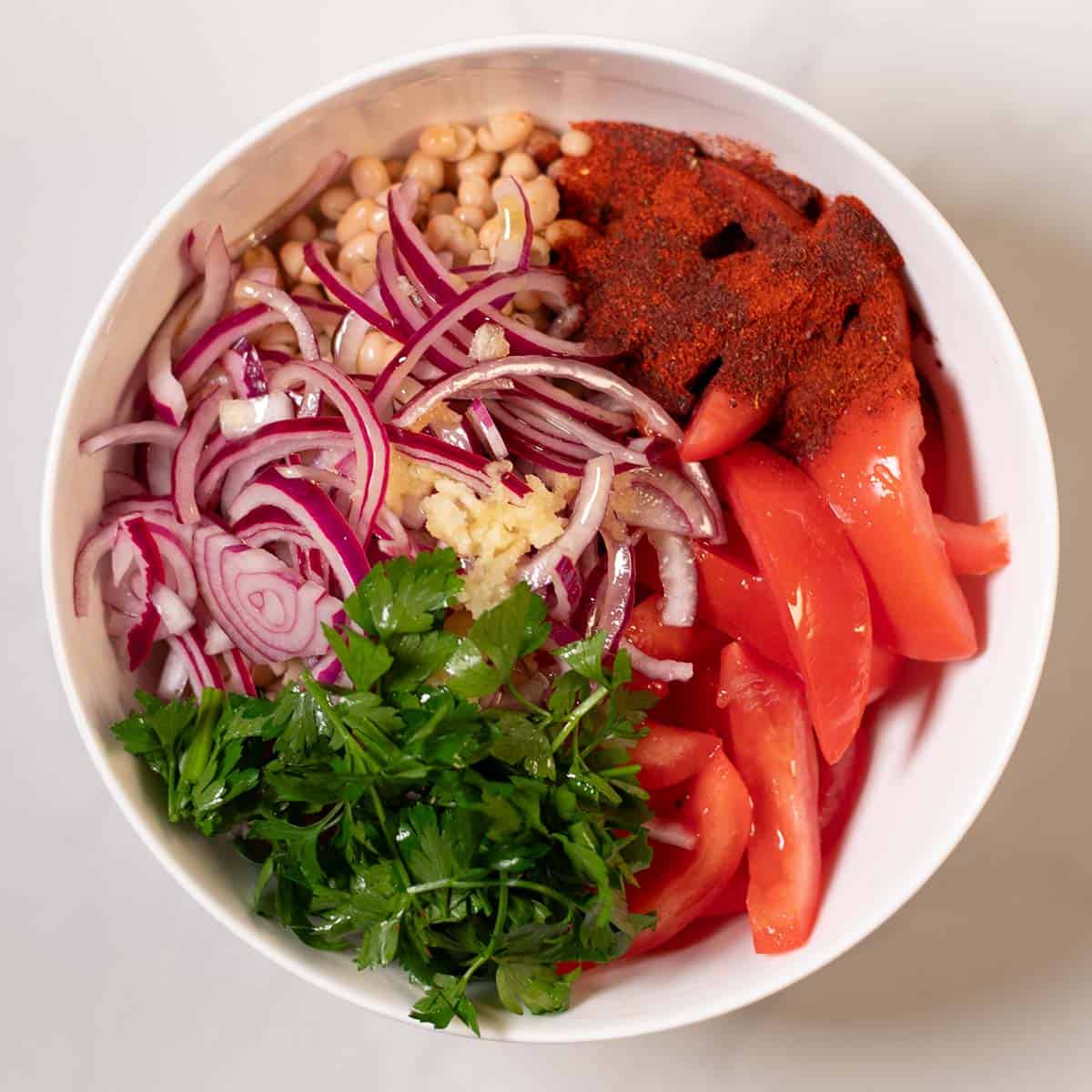
Step 1: Make the dressing. In a large bowl, whisk together the olive oil, lemon juice, vinegar, sumac, Aleppo pepper, minced garlic, salt, and pepper. Taste it - it should be sharp and well-seasoned.
Step 2: Add the onion. Add the thinly sliced red onion to the dressing and toss to coat. Let it sit for 5 minutes. The acid will begin to soften the onion and take the raw edge off.
Step 3: Add the beans and tomatoes. Add the drained white beans and chopped tomatoes to the bowl. Toss gently to coat everything in the dressing without breaking the beans.
Step 4: Finish with parsley. Add the chopped parsley and toss once more. Taste for salt, pepper, and acidity, and adjust as needed. Serve immediately or let it rest for 10-15 minutes for the flavours to develop further.
Ways to serve
As a meze. Serve piyaz alongside hummus, muhammara, roasted vegetables, and warm flatbread as part of a spread. It holds its own as part of a table rather than just sitting quietly next to the main dish.
As a side dish. Piyaz works alongside anything grilled - grilled vegetables, plant-based kebabs, or a simple grain. The sharpness of the dressing cuts through richer mains.
As a light meal. Two servings of piyaz with good bread is a satisfying lunch. The beans make it filling enough to stand alone.
Over grains. Spoon it over bulgur wheat, couscous, or farro for a more substantial bowl. The dressing soaks into the grains and the whole thing becomes even better.
Storage and make-ahead
Fridge: Store in an airtight container for up to 3 days. The flavours deepen as it sits and the dressing penetrates the beans more fully. The tomatoes will soften slightly - if you prefer them firmer, add them fresh each time you serve.
Make-ahead tip: Make the dressing and onion mixture up to a day ahead and refrigerate. Add the beans, tomatoes, and parsley when you're ready to serve.
Freezing: Not suitable - the texture of the beans and tomatoes doesn't hold after freezing.
FAQ
Sharp, savoury, and herby - the sumac and lemon give it a bright acidity, the Aleppo pepper adds gentle warmth, and the olive oil rounds everything out. It's not mild or subtle. It's a salad with a point of view.
Yes. Cook 1 cup of dried white beans until tender, then drain and cool completely before using. The texture of home-cooked beans is slightly better but canned is perfectly fine and much faster.
Yes, as written.
You can, but sumac is what gives this version its character. A squeeze of extra lemon and a pinch of smoked paprika is the closest substitute, but tracking down sumac is worth it - once you have it you'll use it constantly.
Up to 3 days in the fridge. It actually improves after the first day as the dressing absorbs into the beans. Add fresh parsley and tomato if you're serving it on day 2 or 3.
More recipes you'll love
Made this Piyaz? Leave a comment below and rate the recipe - it helps more people find it. Tag me on Instagram or Facebook with a photo. Florian.

Piyaz (Turkish White Bean Salad)
A bold Turkish white bean salad dressed with sumac, Aleppo pepper, lemon, and vinegar — sharp, smoky, and ready in 10 minutes.
Ingredients
- 2 × 14 oz (2 × 400g) cans white beans (cannellini, haricot, or navy), drained and rinsed
- 1 medium red onion, thinly sliced
- 2 cloves garlic, minced
- 1 tablespoon sumac
- 1 teaspoon Aleppo pepper
- 3 tablespoon extra virgin olive oil
- 1 lemon, juiced
- 2 tablespoon red wine vinegar or apple cider vinegar
- 3 medium tomatoes, chopped
- ½ cup (15g) flat-leaf parsley, roughly chopped
- Salt and pepper to taste
Instructions
- Soften the onion. Add the sliced red onion to the vinegar and toss to coat. Let it sit for 5 minutes.
- Add the drained white beans and chopped tomatoes to a large bowl.
- Also add the red onion, parsley, and all the spices, as well as lemon juice and the softened Toss gently to coat without breaking the beans.
- Finish and serve. Add the chopped parsley and toss once more. Taste and adjust seasoning.
- Serve immediately or rest for 10–15 minutes for deeper flavour.
Notes
- Thinly sliced onion is key. The onion needs to be as thin as possible so the dressing softens it properly. Use a mandoline if you have one. If raw onion is sharp for you, soak the slices in cold water for 10 minutes before adding.
- The dressing is the dish. Taste it before you add the beans — it should be bold and well-seasoned on its own. Adjust sumac, lemon, or salt at this stage rather than after everything is combined.
- Sumac behaves like an acid as well as a spice. It's doing two jobs in this dressing — contributing tartness and depth. Don't treat it as optional.
- Aleppo pepper heat level. One teaspoon gives a warm background heat without sharpness. Add more if you want the spice to be more present. If you can't find Aleppo pepper, use ½ teaspoon smoked paprika + a small pinch of chilli flakes.
- Best after resting. Piyaz improves significantly after 15–20 minutes as the dressing soaks into the beans. If you have time to make it slightly ahead, do — it's noticeably better.
- Tomatoes on day 2. If storing leftovers, the tomatoes soften overnight. For best texture on day 2, add a fresh chopped tomato before serving.
Nutrition Information:
Yield: 4 Serving Size: 1 cupAmount Per Serving: Calories: 305Total Fat: 12gSaturated Fat: 2gUnsaturated Fat: 11gSodium: 166mgCarbohydrates: 41gFiber: 10gSugar: 5gProtein: 12g