
Eggplant Curry (Thai-Style, One Pot, 25 Minutes)
This Eggplant Curry is a Thai-style coconut milk curry made with yellow curry paste, eggplant, and bell pepper - all in one pot in 25 minutes. Creamy, bold, and completely plant-based.
Table of contents
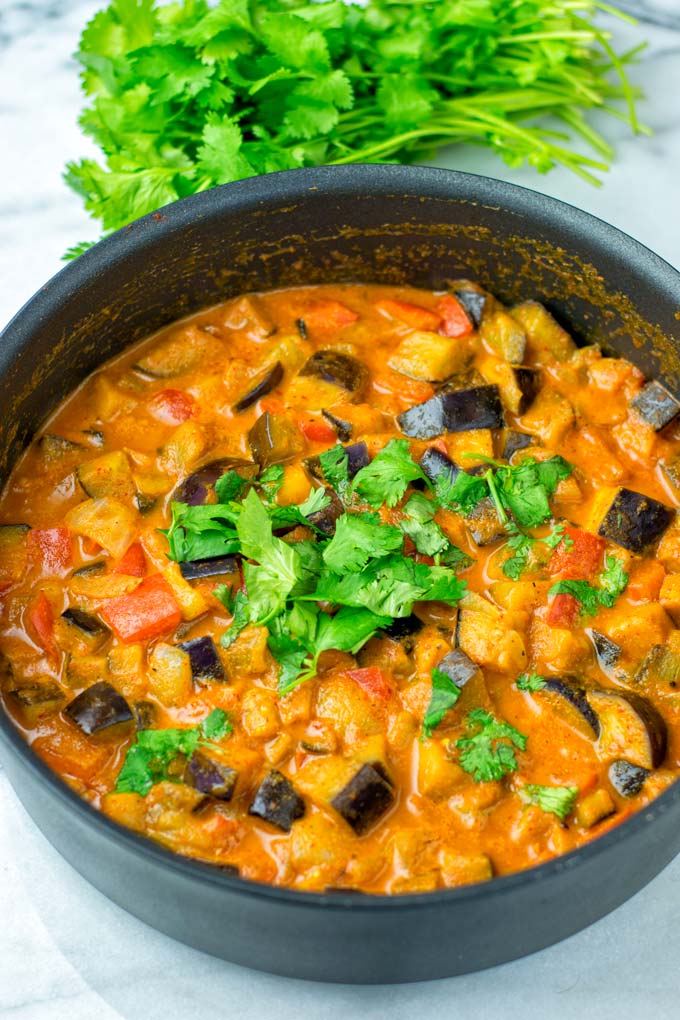
Most eggplant curry recipes are Indian-style - long spice lists, toasted mustard seeds, garam masala, sometimes an hour in the oven. This one is different. It is Thai-style, built on yellow curry paste and coconut milk, and it comes together in one pot in 25 minutes with no roasting, no toasting, and no spice drawer required.
Yellow curry paste does the heavy lifting. It carries lemongrass, galangal, turmeric, and chili in a single ingredient, which means you get a complex, layered flavor with none of the prep work. The coconut milk creates a naturally creamy sauce that coats the eggplant as it cooks - and unlike roasted eggplant curries, this method keeps the eggplant tender and intact rather than collapsed and silky. The texture is different, and for a quick weeknight curry, it is exactly right.
If you want the roasted version - deeper, smokier, more concentrated - the recipe includes that as a variation. But the one-pot stovetop method is the reason this recipe gets made on repeat.
Thai vs Indian eggplant curry - what's the difference?
Both are delicious but they are genuinely different dishes.
Indian-style eggplant curry - often called brinjal curry or baingan bharta - is built on individual spices: cumin, coriander, turmeric, garam masala, mustard seeds. The eggplant is typically roasted or charred first for smokiness, and the sauce is tomato-based with a complex, earthy depth. It takes more time and more ingredients.
Thai-style eggplant curry uses curry paste - a pre-made blend of lemongrass, galangal, chili, and aromatics - as the flavor base, and coconut milk as the sauce. It is faster, lighter, and more fragrant than Indian-style curry. The flavor profile is citrusy, aromatic, and mildly spiced rather than smoky and earthy.
This recipe is Thai-style. If you are looking for an Indian-style eggplant curry, it is worth knowing that going in - the flavors are quite different.
Why this recipe works
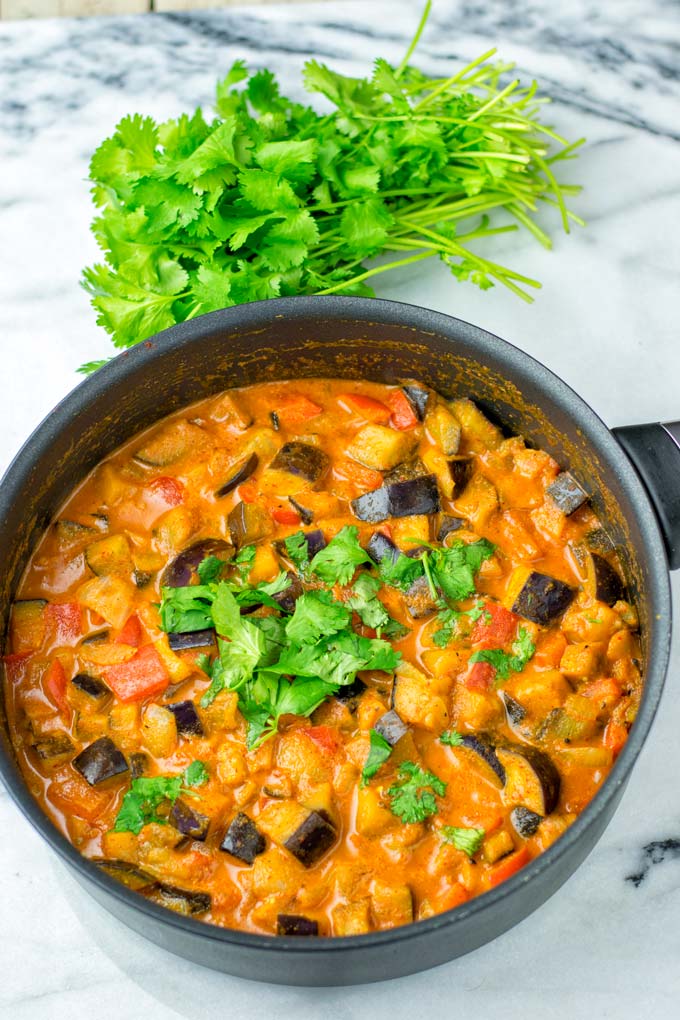
Yellow curry paste is the shortcut that works. A good yellow curry paste contains lemongrass, galangal, turmeric, shallots, and chili - all the aromatics that would take significant prep time to build individually. One tablespoon of paste delivers more complexity than most home cooks could achieve from scratch in the same timeframe.
Eggplant absorbs the sauce as it cooks. Eggplant has a spongy cell structure that soaks up liquid and flavor during cooking. Cooked directly in the coconut milk and curry paste, it becomes deeply flavored all the way through - not just on the surface.
One pot, 25 minutes. No roasting required for the base recipe. Everything cooks on the stovetop in a single casserole from start to finish.
It works for everyone. Yellow curry paste is typically milder than red or green, making this accessible to people who find other curries too hot. The heat level is easy to adjust.
Ingredient notes
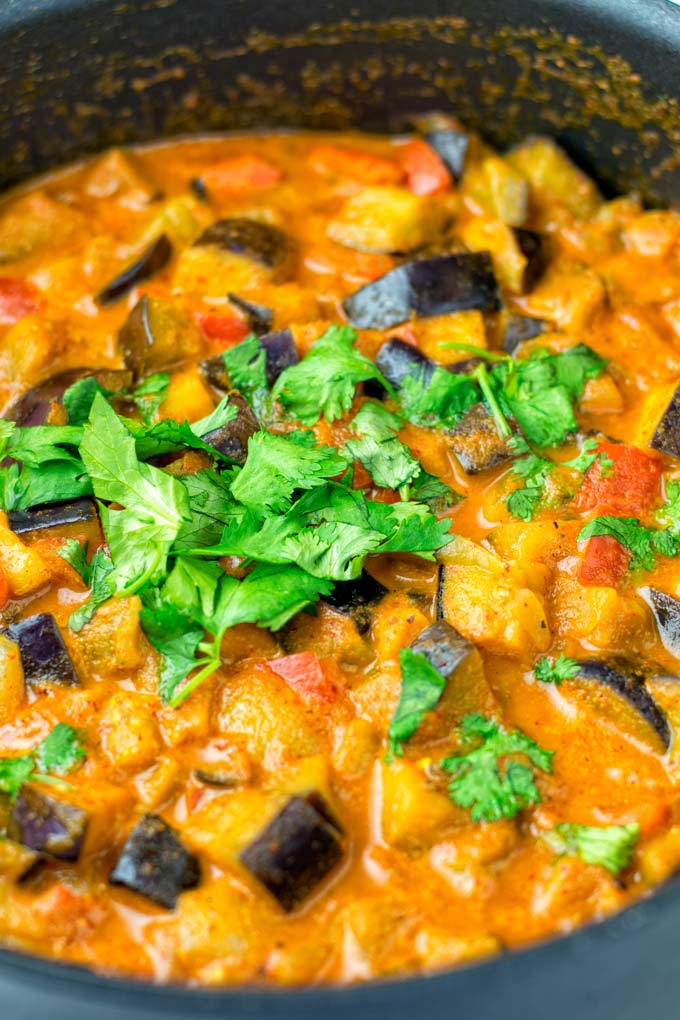
Eggplant - standard globe eggplant works well. Cut into even 2cm / ¾ inch cubes so everything cooks at the same rate. No need to peel - the skin holds the pieces together during cooking and softens completely by the time the curry is done. If your eggplant is very large or has been stored for a while, salting the cubes for 15 minutes before cooking draws out bitterness - rinse and pat dry before using.
Yellow curry paste - the central ingredient. Maesri and Mae Ploy are widely available and reliably good. Thai Kitchen is milder and more widely available in US supermarkets. Check the label - most are naturally plant-based but some brands include shrimp paste. Look for a vegan-certified brand if needed.
Coconut milk - full fat from a can. Do not use the carton variety sold as a dairy alternative - it is too thin and will produce a watery sauce. Shake the can before opening, or stir the contents together if separated.
Bell pepper - adds color, sweetness, and slight crunch. Red or yellow bell pepper work best for sweetness. Green bell pepper gives a more bitter edge.
Smoked paprika and cumin - both are optional but recommended. Smoked paprika adds a subtle depth and warmth that complements the curry paste without overpowering it. Cumin reinforces the earthy notes already present in the yellow curry paste.
How to make eggplant curry
Start by frying the onion, garlic, and bell pepper for a few minutes until softened - this builds the flavor base before anything else goes in. The eggplant goes in next and gets a couple of minutes in the oil before the liquid is added, which helps it start absorbing flavor and softens the edges slightly so it cooks more evenly once the sauce is on.
The coconut milk and yellow curry paste go in together. The key here is stirring until the paste is completely dissolved into the coconut milk - if you add them separately the paste tends to clump rather than distribute evenly through the sauce. Once combined, a lid goes on and the curry cooks on medium heat for around 15 minutes.
The eggplant is done when it is tender to a fork but still holding its shape. This is the window to aim for - past it and the pieces collapse into the sauce, which is fine for flavor but loses the texture. Check at 12 minutes the first time you make it to get a feel for your stove.
How to make roasted eggplant curry
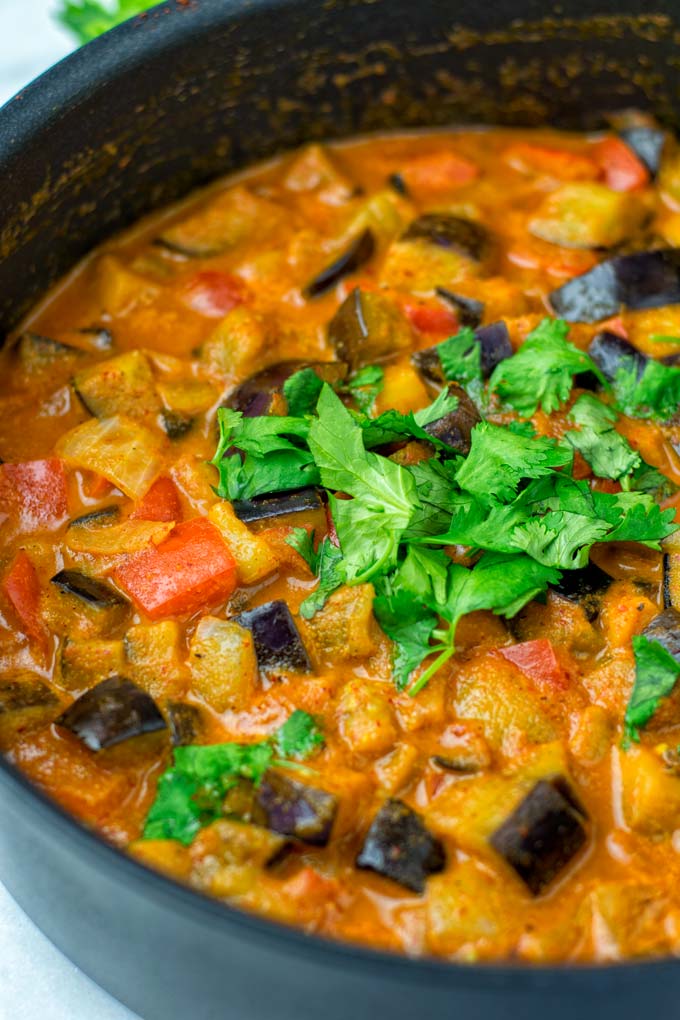
Roasting the eggplant first adds a deeper, smokier flavor at the cost of 25 extra minutes. This is the better version for a weekend meal when time is not a constraint.
Preheat the oven to 425°F / 220°C. Toss the eggplant cubes with olive oil, salt, and pepper and spread in a single layer on a baking sheet lined with parchment paper. Roast for 25 minutes until golden at the edges and slightly collapsed. Then proceed with the recipe from step 1, skipping the 2-minute eggplant frying in step 2 - add the roasted eggplant directly when you add the coconut milk in step 3. Reduce the stovetop cooking time to 8-10 minutes since the eggplant is already cooked.
Variations
Add potatoes - add 2 cups of cubed potato with the eggplant in step 2. You may need to add ½ cup of vegetable broth to keep enough liquid for the potatoes to cook through. Check for tenderness - potatoes take slightly longer than eggplant.
Thai eggplant curry - add 1 teaspoon of freshly grated ginger, the zest and juice of half a lemon, and a handful of Thai basil stirred in at the end for a brighter, more distinctly Thai flavor profile.
Add chickpeas - stir in one drained can of chickpeas with the coconut milk in step 3 for extra protein and a heartier texture.
Add spinach - stir in a large handful of fresh spinach in the final 2 minutes of cooking. It wilts quickly and adds color and nutrition without changing the flavor.
Red curry paste - substitute yellow curry paste for red curry paste for a spicier, more aromatic result with a deeper color. Use the same quantity and adjust to taste.
Make it creamier - stir in 2 tablespoons of peanut butter with the coconut milk for a satay-style eggplant curry with a nutty richness.
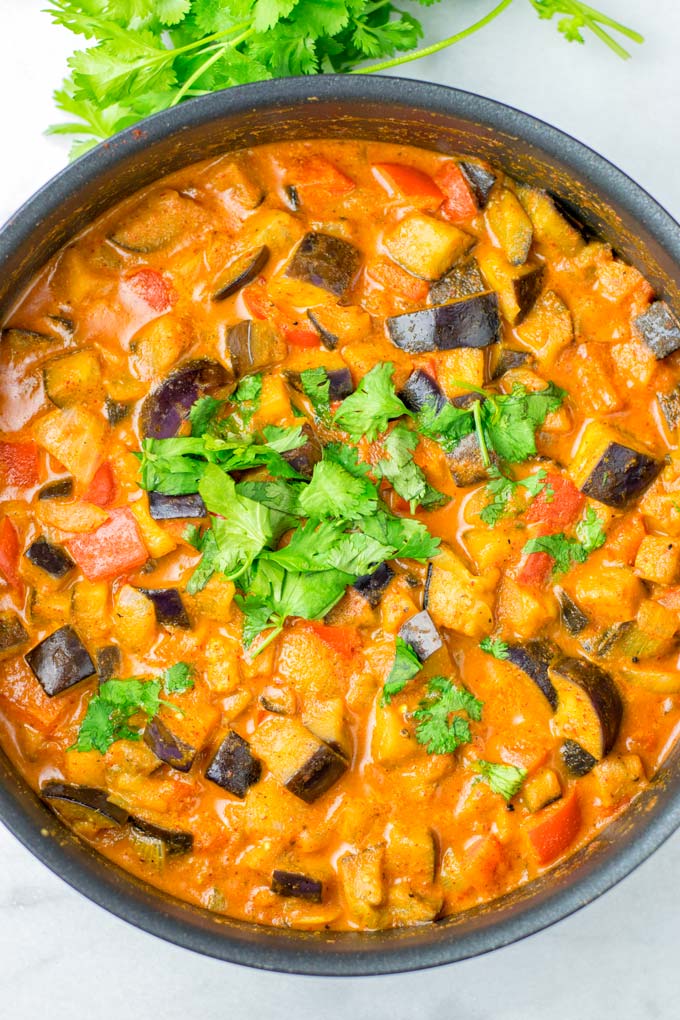
Serving suggestions
- Jasmine rice - the classic pairing, absorbs the coconut sauce beautifully
- Brown rice - for a heartier, more nutritious base
- Rice noodles - for a lighter, broth-forward serving style
- Flatbread or naan - for scooping directly from the pot
- Quinoa - a higher-protein alternative to rice
- Plain - this curry is rich enough to eat as a standalone bowl without a starch
Garnishes worth adding: Fresh cilantro, Thai basil, sliced red chili, a squeeze of lime, toasted sesame seeds, or a drizzle of chili oil all work well.
Storage and freezing
Refrigerator: Store in an airtight container for up to 4 days. The curry often tastes better the next day as the flavors deepen. Reheat gently on the stovetop with a splash of water or coconut milk if needed.
Freezer: Allow to cool completely before transferring to a freezer-safe container. Freeze for up to 3 months. Thaw overnight in the fridge. The eggplant will be softer after thawing but the flavor is unaffected. Stir well while reheating.
Meal prep: This curry scales easily - double the batch and freeze half in individual portions for effortless weeknight meals.
Frequently asked questions
No. The skin softens completely during cooking and holds the pieces together so they do not fall apart in the sauce. Peeling is optional and not recommended.
Not usually. Modern eggplant varieties have been bred with less bitterness than older ones. Salting is only worth doing if your eggplant is very large, has been stored for a long time, or tastes bitter when you cut into it.
Yes. Red curry paste gives a spicier, more intensely flavored result. Green curry paste is the hottest of the three and produces a brighter, more herbal flavor. Yellow is the mildest and most approachable. Use the same quantity and adjust to taste.
Two likely causes. First: the eggplant was cut too small - pieces under 1.5cm tend to collapse before the 15 minutes is up. Second: the heat was too high. Cook on medium rather than medium-high and check at the 12-minute mark.
Yes, but the sauce will be thinner and less rich. Full fat coconut milk produces the best result. If using light, reduce the amount slightly and add a tablespoon of coconut cream if available to compensate.
Yellow curry paste is the mildest of the Thai curry pastes. The base recipe produces a gently spiced curry that most people, including those sensitive to heat, find manageable. For more heat, add extra curry paste or a pinch of red chili flakes.
See the section above - they are genuinely different dishes with different flavor profiles. This is Thai-style (coconut milk, curry paste, fragrant and light). Indian-style uses individual spices and is typically tomato-based with a deeper, earthier flavor.
More recipes you'll love
- 15 Easy Vegan One Pot Meals
- Sweet Potato Curry
- Lentil Chickpea Yellow Curry
- Vegetable Panang Curry
- Massaman Curry with Roasted Potatoes
- Chickpea Tikka Masala
Give this Eggplant Curry a try, tag me on Instagram or Facebook with a taken picture so I can see them all.
Looking for more easy vegan one pot meals? See the full collection: 15 Easy Vegan One Pot Meals
Cheers, Florian.

Eggplant Curry (Thai-Style, One Pot, 25 Minutes)
Thai-style eggplant curry made with yellow curry paste and coconut milk in one pot in 25 minutes. Creamy, bold, and completely plant-based. Easy weeknight dinner.
Ingredients
- 2 medium eggplants, cubed
- 5 cloves garlic, minced
- 4 tablespoons yellow curry paste
- 1 14 ounce can coconut milk
- 1 cup onions, chopped
- 1 cup bell pepper, chopped
Optional:
- 2 teaspoons cumin
- 1 teaspoon smoked paprika
Instructions
- Heat a small amount of oil — or vegetable broth for oil-free cooking — in a large casserole over medium heat. Add the onions, garlic, and bell pepper and fry for around 3 minutes, stirring occasionally, until the onion is softened and translucent and the garlic is fragrant. Do not let the garlic brown.
- Add the eggplant cubes and stir to combine with the aromatics. Fry for a further 2 minutes, stirring occasionally. The eggplant will begin to absorb the oil and soften slightly at the edges — this helps it take on flavor before the liquid is added.
- Add the coconut milk and yellow curry paste. Stir well until the curry paste is fully dissolved — no streaks should remain. Add the optional smoked paprika and cumin if using. Season with salt and pepper and stir to combine.
- Place a lid on the pot and cook on medium heat for 15 minutes, stirring occasionally. The curry is ready when the eggplant is tender when pierced with a fork but still holding its shape — not mushy or collapsed. Taste and adjust seasoning. Add more curry paste for extra heat or a splash more coconut milk to mellow the sauce.
- Serve in bowls or over rice on plates, garnished with fresh cilantro or Thai basil if available.
Notes
- Curry paste brands: Maesri and Mae Ploy give the most authentic flavor. Thai Kitchen is milder and widely available in US supermarkets. Most yellow curry pastes are plant-based but check the label — some contain shrimp paste.
- Eggplant size: Cut into even 2cm / ¾ inch cubes so everything cooks at the same rate. No need to peel.
- Coconut milk: Use full fat canned coconut milk, not the carton variety. Shake or stir before using if separated.
- Roasted version: For a deeper, smokier flavor roast the eggplant at 425°F / 220°C for 25 minutes before adding to the pot. Skip step 2 and add roasted eggplant directly with the coconut milk. Reduce stovetop cooking to 8–10 minutes.
- Add protein: Stir in one drained can of chickpeas with the coconut milk in step 3 for a heartier curry.
- Heat level: Yellow curry paste is the mildest Thai paste. For more heat add extra paste or a pinch of red chili flakes. For less heat reduce the curry paste to 2 tablespoons.
- Refrigerator: Keeps for up to 4 days. Tastes better the next day as flavors develop.
- Freezer: Freeze for up to 3 months. Eggplant softens slightly after thawing but flavor is unaffected.
Nutrition Information:
Yield: 4 Serving Size: 2 cupsAmount Per Serving: Calories: 347Total Fat: 26.1gSaturated Fat: 22.6gTrans Fat: 0gUnsaturated Fat: 0.2gCholesterol: 0mgSodium: 25mgCarbohydrates: 30gFiber: 11.7gSugar: 14.7gProtein: 6.5g


Just learning recently to appreciate curry, but all the steps and spices have prevented me from trying at home. I had a couple of lonely eggplants and wanted to try curry. Your recipe was perfect! Basic ingredients, one pot! I had only green curry paste so used that and still good. One step I added was to blend curry paste into coconut milk first before adding to veggies. Am already thinking about other veggie variations. Thanks again!
So good! I added potatoes and ginger as per the suggestion, as well as cumin.
Thanks for sharing and making it, Julie! Would you mind leaving a star rating with your review? This is super helpful for other readers. Thanks so much.
I had just made this today. I was looking for another way to make eggplant, I generally make Eggplant Parmesan but wanted to try something different. I came across your recipe and WOW!!! SO DELICIOUS!!! I have not worked with curry before, so I found a recipe for yellow curry paste, though i didn’t have the time to prepare it; Dinner was late already, so I used store bought; go figure- no yellow curry paste, so I used the green curry paste. I most certainly will make try this. The flavor is great, smooth and so delicious. I added the cumin and smoked paprika. Thank you for sharing your recipe. This will be a regular on own home menu.
Delicious and easy! Would recommend and will add it to the rotation!
Quick and Easy but lacking something. We used red curry paste because the grocery store did not have yellow curry paste. I think the addition of pineapple and more spices might help. We did love that it was very fresh and quick to make.
Thanks for sharing, Linda! You can always add additional spices and ingredients to your liking. I hope you'll find lots of more recipes to try.
Love this recipe!! I make your lentil chickpea curry a lot too and am trying to combine somehow to add some protein to this dish! Any suggestions for adding lentils - how much, when to add, etc? Thank you!
Hi Ali! I would add 1/2 cup cooked (1/4 cup dried) lentils. Keep in mind you will need more liquid. Hope that helps. Let me know what you think.
@Florian, thank you! Will try it out this weekend!
This was an amazing dish. Unfortunately I didn’t have yellow curry paste. I only had red curry paste. It was absolutely delicious. I did add some turmeric & cumin. Will definitely make again & try it with yellow curry paste.
Thanks for the great feedback and making it. Of course red curry paste is amazing here as well. Please do a star rating with your review. So helpful for other readers, thank you.