Creamy Harissa Butter Beans (One Pan, 20 Minutes)
These Creamy Harissa Butter Beans are made with a triple fat technique - olive oil for depth, dairy-free butter for richness, and coconut milk for creaminess. With red bell pepper, garlic, onion, and fresh parsley. One pan, 20 minutes, completely plant-based.
Table of contents
Why three fats?
Most creamy harissa butter bean recipes use a single fat for the sauce - usually double cream, vegan cream cheese, or a splash of plant milk. That works, but it produces a one-dimensional creaminess. This recipe uses three different fats, each doing a different job.
Olive oil goes in first, as the cooking fat for the aromatics. Onion, garlic, and bell pepper fried in olive oil at the start build the flavor base for the entire dish. Olive oil carries fat-soluble aromatic compounds that other fats cannot replicate - it is not just a cooking medium, it is a flavor ingredient.
Dairy-free butter goes in with the harissa. Where olive oil contributes depth and aromatics, vegan butter contributes richness - a fuller, rounder mouthfeel that makes the sauce feel substantial rather than thin. The combination of harissa cooked briefly in butter creates a more complex, caramelized spice flavor than harissa added directly to liquid.
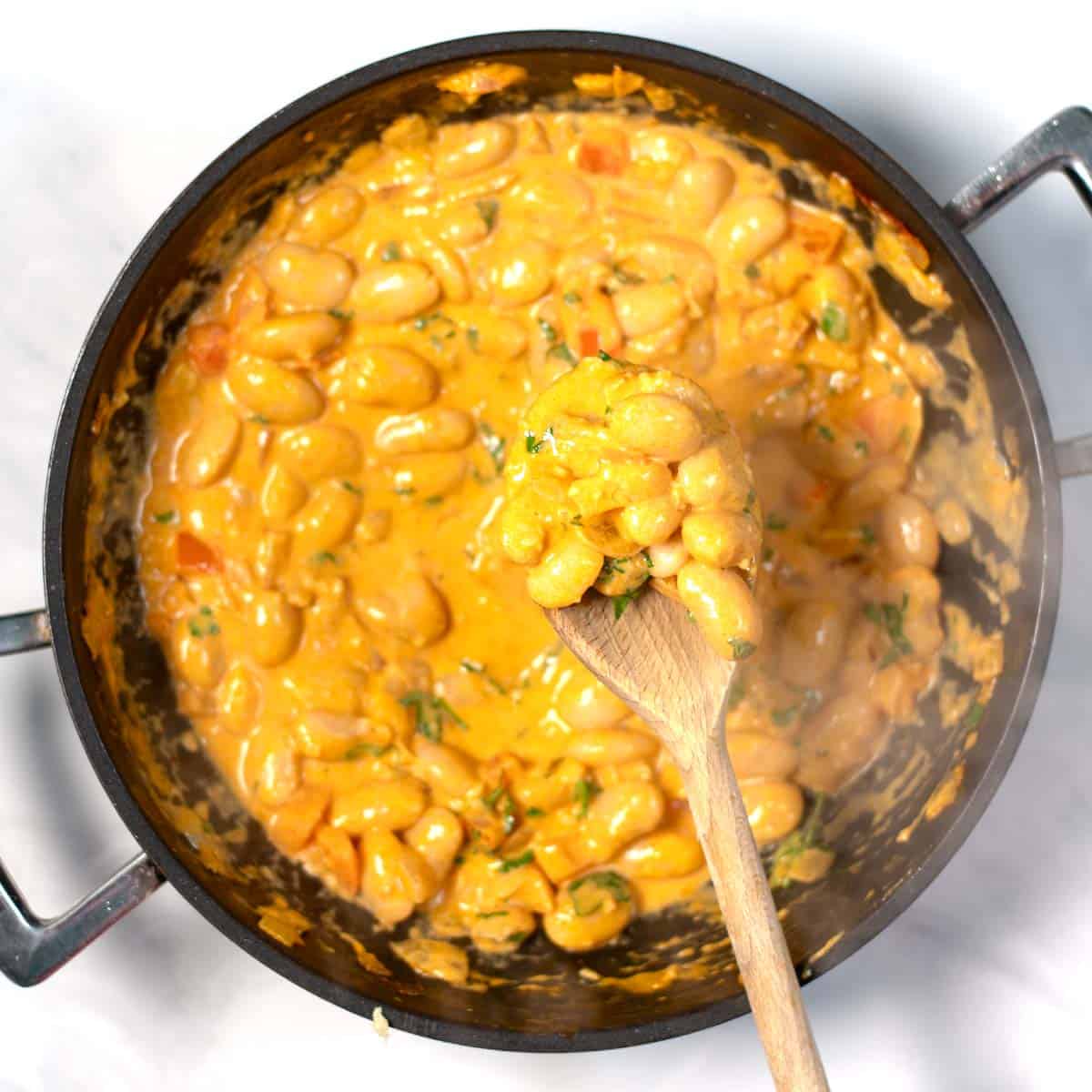
Coconut milk finishes the sauce. It brings creaminess and a subtle sweetness that balances the heat of the harissa without dulling it. Full fat canned coconut milk - not the carton variety - is what creates the glossy, coating sauce that distinguishes this recipe.
The result is a sauce with genuine depth and layered richness. Serve it on toast and the richness carries the beans. Serve it over rice and the sauce soaks in. Spoon it straight from the pan because you cannot wait - the sauce is that good.
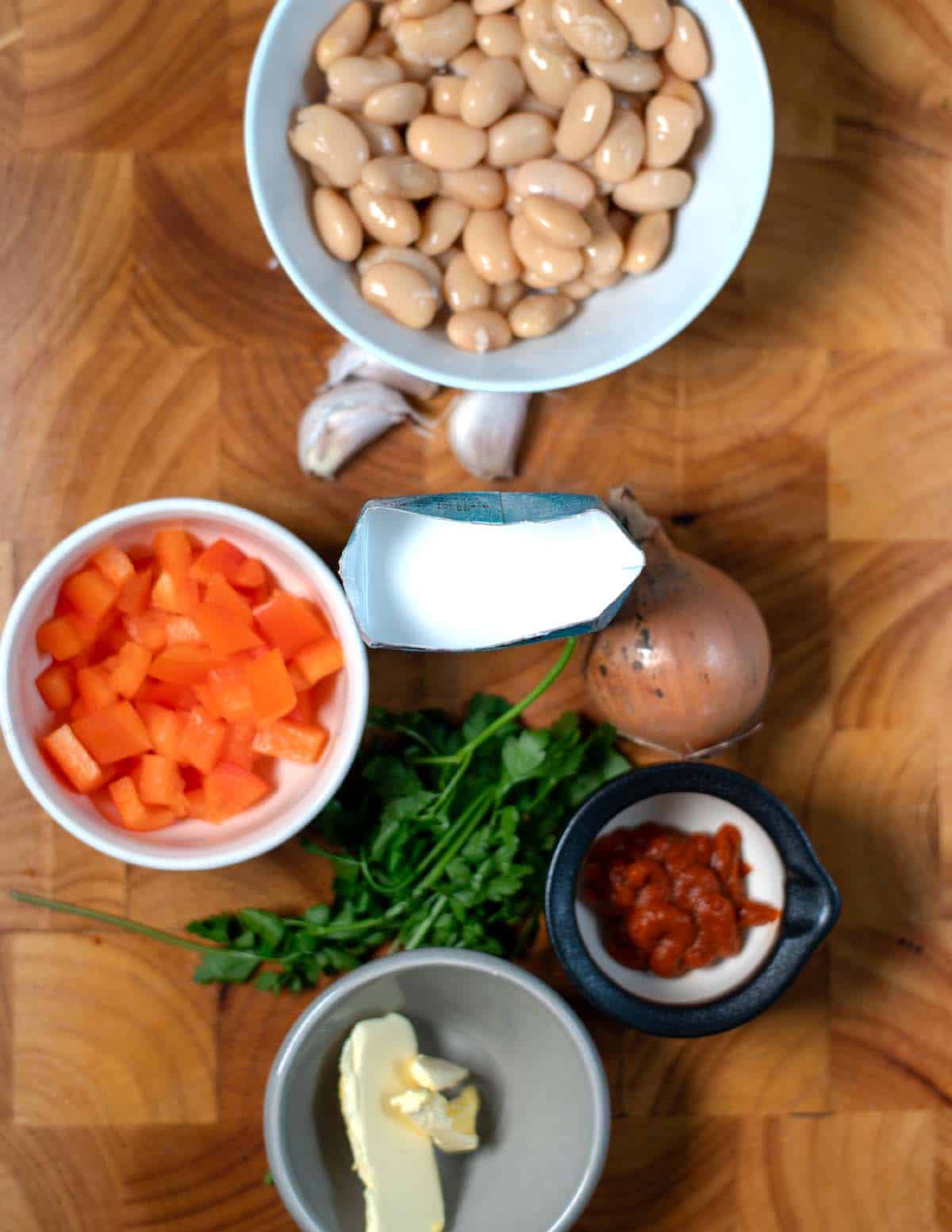
Why this recipe works
The triple fat technique. As described above - olive oil for aromatics, dairy-free butter for richness, coconut milk for creaminess. Each fat does something distinct. The combination produces a sauce that is more complex than any single-fat version.
Harissa cooked in butter. Adding the harissa paste to melted butter and allowing it to cook briefly - 30 seconds to a minute - before adding the coconut milk blooms the spices and caramelizes the sugars in the harissa. This step takes seconds and makes a noticeable difference to the depth of the finished sauce.
Red bell pepper for sweetness. Bell pepper adds natural sweetness that balances the heat of the harissa without any added sugar. It also contributes texture - soft but not collapsed, holding its shape in the finished dish and adding color.
One pan, 20 minutes. Everything happens in a single skillet or casserole from start to finish. Nothing needs to be made separately.
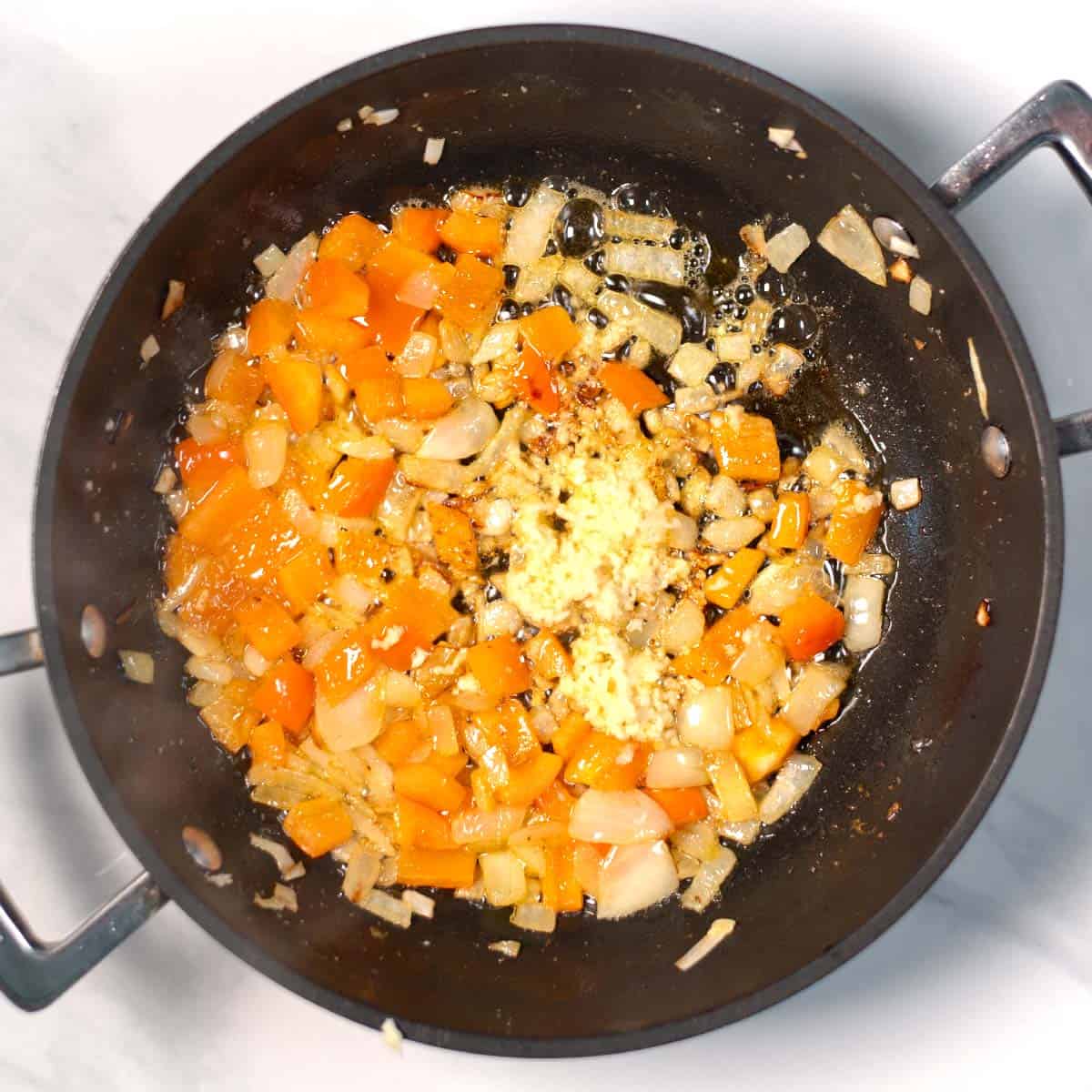
Ingredient notes
Butter beans - one 15 oz can, drained and rinsed. Butter beans are the right choice for this recipe - their large size and creamy interior hold up well in a rich sauce and absorb flavor beautifully without falling apart. Lima beans are the same thing under a different name and work identically. Cannellini beans can substitute if butter beans are unavailable - the texture will be slightly different but the flavor equally good.
Olive oil - two tablespoons. Extra virgin for preference. This is not just a cooking medium - it contributes flavor throughout the dish.
Onion - one medium, finely diced. Yellow or white onion both work. The onion should be cooked until genuinely soft and translucent before anything else is added - this takes around 5 minutes and is the flavor foundation of the dish.
Garlic - three cloves, minced. Added after the onion has softened. Cook until fragrant but not browned - browned garlic becomes bitter in a cream sauce.
Red bell pepper - one, finely diced. Red for sweetness. Green bell pepper is too bitter for this recipe. Yellow works as a substitute.
Dairy-free butter - one tablespoon. Any plant-based block butter works well. Avoid spreads or margarine with a high water content - they do not give the same richness. The butter is added with the harissa for the blooming step.
Harissa - three tablespoons. Harissa varies considerably in heat level between brands. Rose harissa is milder and more floral. Standard harissa paste is more pungent and fiery. Start with two tablespoons if heat-sensitive and add more to taste. See the heat level guide below.
Coconut milk - half a cup, full fat canned. The fat content of full fat coconut milk is what creates the glossy, creamy sauce. Light coconut milk will produce a thinner result. Do not use the carton variety sold as a dairy alternative - it is too watery.
Parsley - a quarter cup, roughly chopped. Added at the end as a garnish and freshness element. Flat-leaf parsley is preferred for its cleaner flavor.
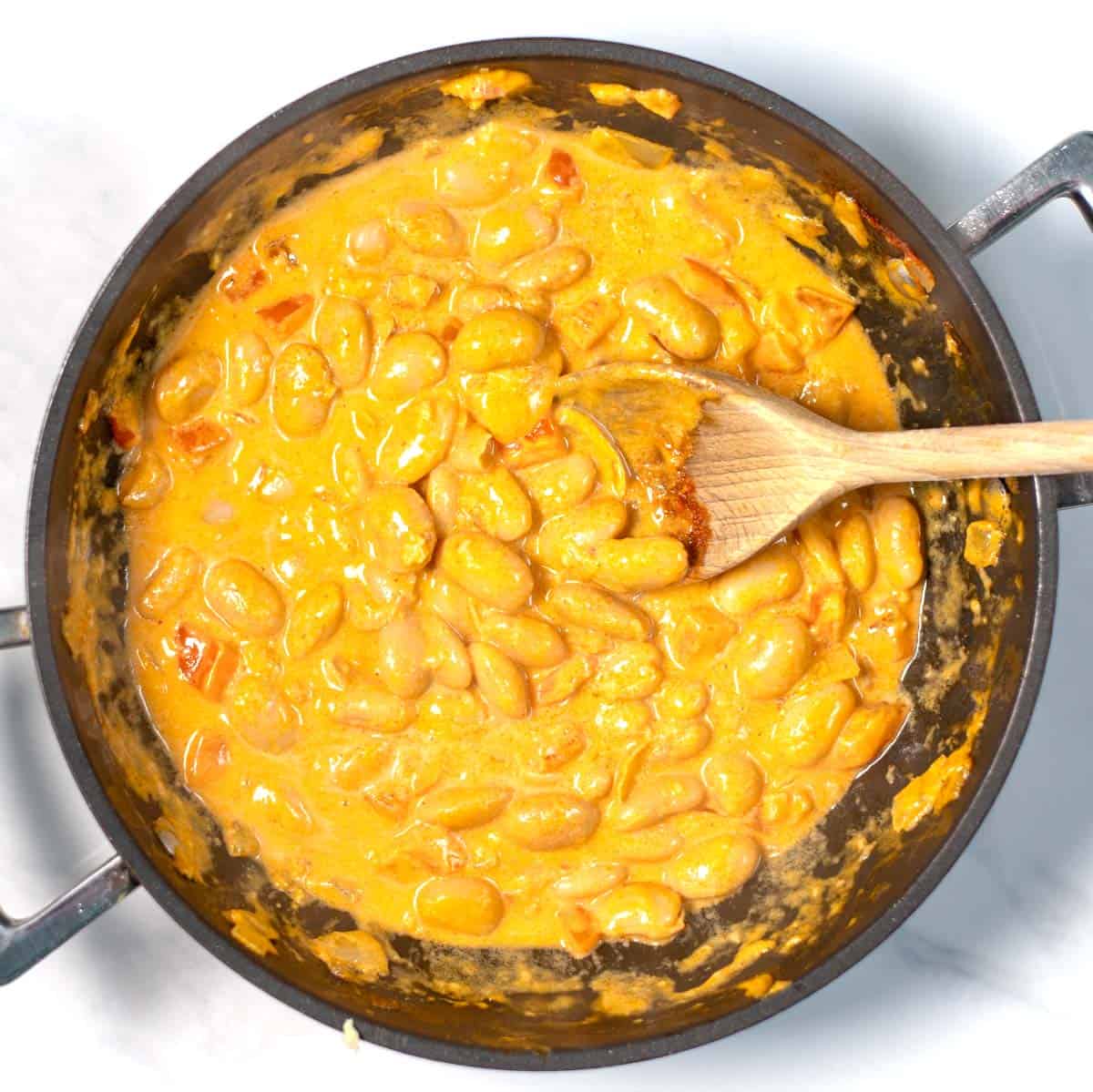
How to make creamy harissa butter beans
The technique is more important than the ingredient list here. Follow the order carefully for the best result.
Start with the aromatics. Heat the olive oil in a large skillet or casserole over medium heat. Add the diced onion and cook for 4-5 minutes, stirring occasionally, until soft and translucent. Add the garlic and red bell pepper and cook for a further 2-3 minutes until the pepper has softened and the garlic is fragrant. Do not rush this step - properly softened aromatics are the flavor base for everything that follows.
Add the dairy-free butter to the pan and let it melt into the vegetables. Add the harissa paste and stir everything together. Cook for around 30-60 seconds, stirring continuously. The harissa will combine with the butter and the mixture will become fragrant and slightly darker. This blooming step is brief but important.
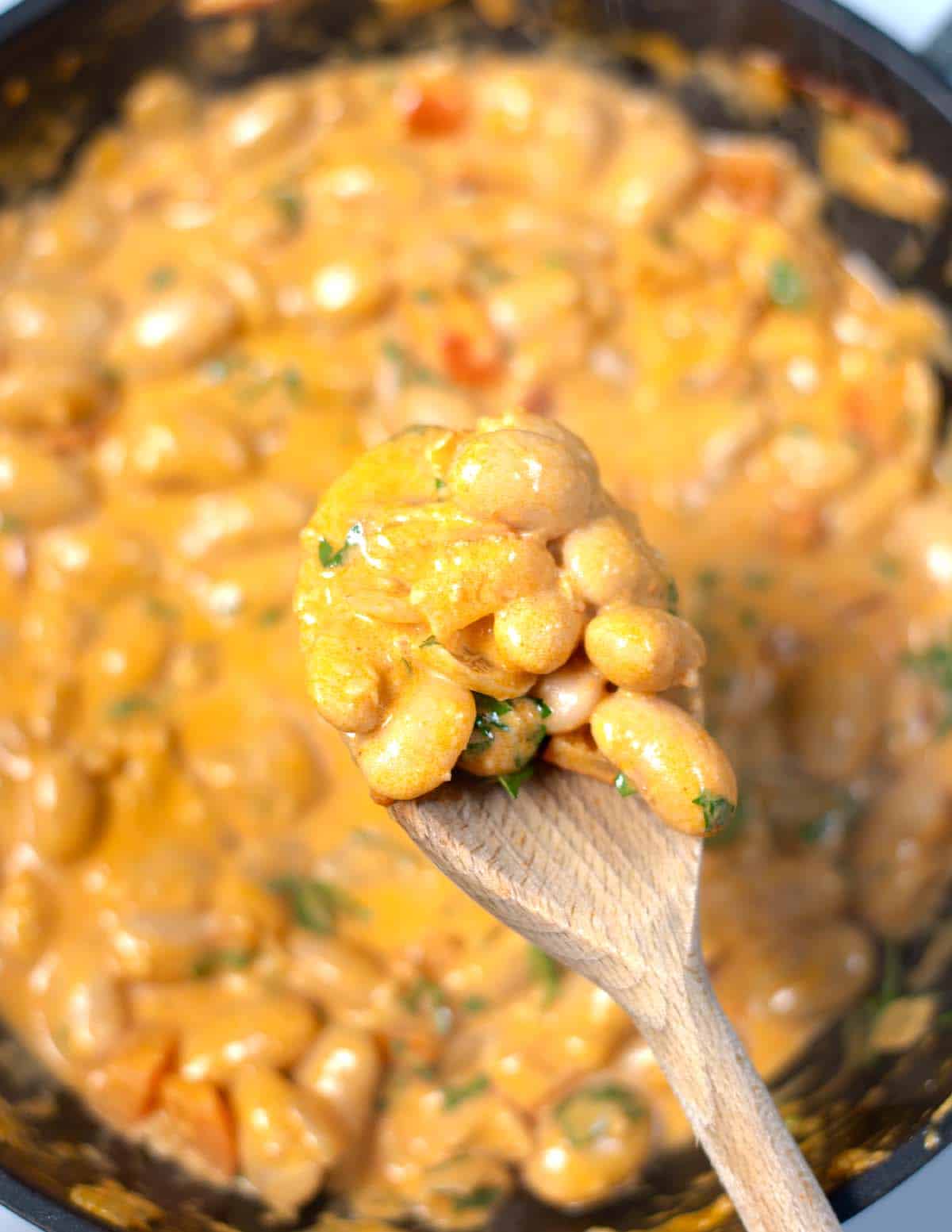
Pour in the coconut milk and stir well to combine. Add the drained butter beans and stir to coat. Season generously with salt and pepper. Cook on medium heat for 8-10 minutes, stirring occasionally, until the sauce has thickened slightly and the beans are heated through and coated in the glossy sauce.
Taste and adjust seasoning - more harissa for heat, more coconut milk to mellow. Scatter fresh parsley over the top and serve immediately.
Adjusting the heat level
Harissa is the heat source in this recipe and brands vary considerably. Use this as a guide:
| Heat preference | Harissa amount | Notes |
|---|---|---|
| Mild | 1½ tbsp | Flavor without significant heat |
| Medium | 2 tbsp | A noticeable warmth |
| Bold (base recipe) | 3 tbsp | Full harissa character |
| Extra hot | 3 tablespoon + chili flakes | For serious heat lovers |
Rose harissa vs standard harissa: Rose harissa is made with rose petals and tends to be milder and more floral - the better choice for heat-sensitive palates. Standard harissa paste is more pungent and fiery. Both work in this recipe - the character of the finished dish will differ slightly but both are excellent.
Reducing heat after cooking: If the dish is hotter than expected, stir in an extra splash of coconut milk. The fat will temper the capsaicin and noticeably reduce the heat.
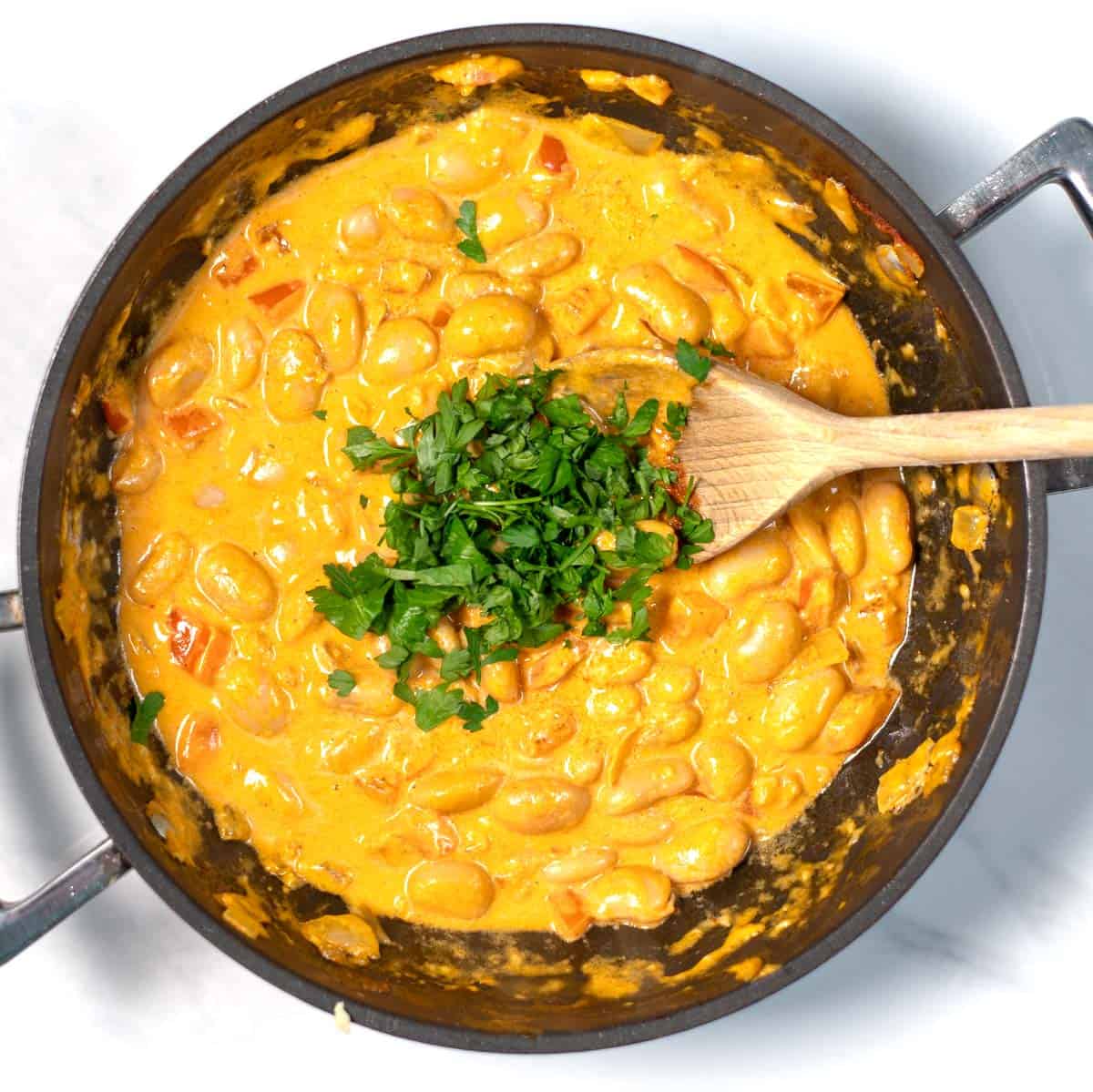
Ways to serve
On toast - the classic presentation. Thick-sliced sourdough or crusty bread, toasted until golden, topped generously with the beans and sauce. One of the best quick meals on this site.
Over rice - the sauce soaks into the rice and the beans provide protein and substance. A complete meal in one bowl.
With flatbread or pita - for scooping directly from the pan or bowl. Ideal for sharing.
Over couscous - the couscous absorbs the sauce beautifully and adds a textural contrast to the soft beans.
As part of a mezze spread - alongside hummus, the Smashed Chickpea Salad, olives, and warm flatbread. Bold enough to hold its own against other strong flavors.
With a side of greens - a simple arugula salad or wilted spinach alongside provides freshness and contrast to the richness of the sauce.
Storage
Refrigerator: Store in an airtight container for up to 4 days. The sauce thickens as it cools - add a splash of water or coconut milk when reheating on the stovetop and stir to restore the original consistency.
Freezer: Allow to cool completely before transferring to a freezer-safe container. Freeze for up to 2 months. Thaw overnight in the fridge. The coconut milk sauce may separate slightly when frozen - stir vigorously while reheating and it will come back together.
Meal prep: This dish is excellent for batch cooking. The flavors deepen as it sits - day two is noticeably better than freshly made. Make a double batch and portion into containers for the week.
Frequently asked questions
Harissa is a North African chili paste made from roasted red peppers, chili peppers, garlic, olive oil, and spices - typically cumin, coriander, and caraway. It is the defining condiment of Tunisian and Moroccan cooking and is now widely available in most supermarkets, either as a paste in jars or a paste in tubes. Rose harissa is a milder, more floral variation made with rose petals.
You can, but the sauce will be noticeably thinner and less glossy. Full fat canned coconut milk is what creates the rich, coating texture that makes this dish so satisfying. If using light coconut milk, reduce the sauce for a few extra minutes to concentrate it.
Yes. Cannellini beans are the closest substitute in terms of texture and creaminess. Chickpeas work well for a firmer result. Navy beans or Great Northern beans also work. The butter beans are ideal for their large size and creamy interior, but any white bean produces a good result.
Yes - homemade harissa is excellent in this recipe and typically more vibrant than jarred. Use the same quantity and adjust to taste based on the heat level of your harissa.
Yes, though the character of the dish changes. Vegan cream cheese (2-3 tablespoons, thinned with a splash of vegetable broth) produces a similar richness. Oat cream or soy cream can substitute directly. Avoid thin plant milks - they do not create the same sauce texture.
Yes - all ingredients are naturally gluten free. Serve with gluten-free bread or over rice for a completely gluten-free meal.
The sauce is ready when it coats the back of a spoon and has reduced slightly from its original volume - 8-10 minutes of simmering. It should look glossy and cling to the beans rather than pooling around them.
More recipes you'll love
- White Bean Salad
- Smashed Chickpea Salad
- Cuban Rice and Beans
- Moroccan Spiced Lentils
- Moroccan Chickpea Lentil Potato Casserole
- Vegetarian White Chili
Made these Creamy Harissa Butter Beans?
Leave a comment below and rate the recipe - it helps more people find it.
Tag me on Instagram or Facebook with a photo. Florian.

Creamy Harissa Butter Beans (One Pan, 20 Minutes)
Creamy harissa butter beans made with a triple fat technique — olive oil for depth, dairy-free butter for richness, and coconut milk for creaminess. One pan, 20 minutes, completely plant-based.
Ingredients
- 15 ounce canned butter beans, drained
- 2 tablespoons olive oil
- 1 medium onion, chopped
- 3 cloves garlic, pressed
- 1 red bell pepper, diced
- 1 tablespoon dairy free butter
- 3 tablespoons Harissa
- ½ cup coconut milk
- ¼ cup parsley
- salt, pepper to taste
Instructions
- Heat the olive oil in a large skillet or casserole over medium heat. Add the diced onion and cook for 4–5 minutes, stirring occasionally, until soft and translucent. The onion should be genuinely soft before proceeding — this is the flavor foundation of the dish.
- Add the minced garlic and diced red bell pepper. Cook for a further 2–3 minutes, stirring occasionally, until the pepper has softened and the garlic is fragrant. Do not let the garlic brown.
- Add the dairy-free butter and let it melt into the vegetables. Add the harissa paste and stir everything together. Cook for 30–60 seconds, stirring continuously, until the harissa is fully combined with the butter and the mixture is fragrant and slightly darker. This blooming step deepens the spice flavor of the finished sauce.
- Pour in the coconut milk and stir well to combine with the harissa butter mixture. Add the drained butter beans and stir to coat everything evenly. Season generously with salt and pepper.
- Cook on medium heat for 8–10 minutes, stirring occasionally, until the sauce has thickened slightly and is glossy — it should coat the back of a spoon and cling to the beans. Taste and adjust seasoning, adding more harissa for heat or more coconut milk to mellow.
- Scatter fresh parsley over the top and serve immediately over toast, rice, couscous, or with flatbread for scooping.
Notes
- Harissa heat: Brands vary enormously. Start with 1½ tablespoons if heat-sensitive and add more to taste. Rose harissa is milder and more floral; standard harissa paste is more fiery.
- The blooming step: Cooking the harissa in butter for 30–60 seconds before adding the coconut milk is brief but important — it deepens and caramelizes the spice flavor significantly.
- Coconut milk: Use full fat canned coconut milk only. Light coconut milk or carton varieties produce a thin sauce.
- Bell pepper: Use red specifically — it is sweeter than green and balances the harissa heat naturally.
- Butter beans: Lima beans are the same thing. Cannellini beans make a good substitute.
- Reducing heat: If the dish is too spicy, stir in an extra splash of coconut milk to temper the heat.
- Better the next day: The flavors deepen overnight — excellent for meal prep.
- Refrigerator: Stores for up to 4 days. Add a splash of water or coconut milk when reheating to restore sauce consistency.
- Freezer: Freeze for up to 2 months. The sauce may separate slightly — stir vigorously while reheating.
Nutrition Information:
Yield: 4 Serving Size: 1 cupAmount Per Serving: Calories: 331Total Fat: 20gSaturated Fat: 9gUnsaturated Fat: 11gCholesterol: 0mgSodium: 210mgCarbohydrates: 31gFiber: 10gSugar: 6gProtein: 11g