Cacio e Pepe Beans (One Pan, 15 Minutes, High Protein)
These Cacio e Pepe Beans swap pasta for butter beans or cannellini - more protein, more fiber, and the same bold black pepper and parmesan flavors. With fresh garlic, olive oil, dairy-free butter, and vegan parmesan. One pan, 15 minutes, completely plant-based.
Table of contents
Cacio e pepe - cheese and pepper - is one of the great Roman pasta dishes. The classic version is pasta, pecorino, black pepper, and pasta water. Nothing else. The genius of it is that pasta water, loaded with starch from cooking, emulsifies with the cheese and fat into a creamy sauce without any cream.
This version makes one substitution: pasta becomes beans. Butter beans or cannellini, both of which have a creamy texture and mild flavor that carry bold sauce beautifully. The protein content jumps significantly. The fiber content jumps more. The cooking time drops to 15 minutes. And the dish stays just as rich, just as satisfying, and just as craveable as the original.
The garlic is the deviation from tradition. Classical cacio e pepe contains no garlic - it is intentionally stripped back to its three core elements. But beans are a more assertive base than pasta, and garlic adds a savory depth that keeps the dish from tasting flat. It is not a loud presence in the finished bowl - it is the background note that makes everything else taste more complete.
The double fat approach - olive oil for depth and aromatic character, dairy-free butter for richness and a rounded mouthfeel - produces a sauce that is more layered than either fat alone. The parsley finishes it with freshness and color.
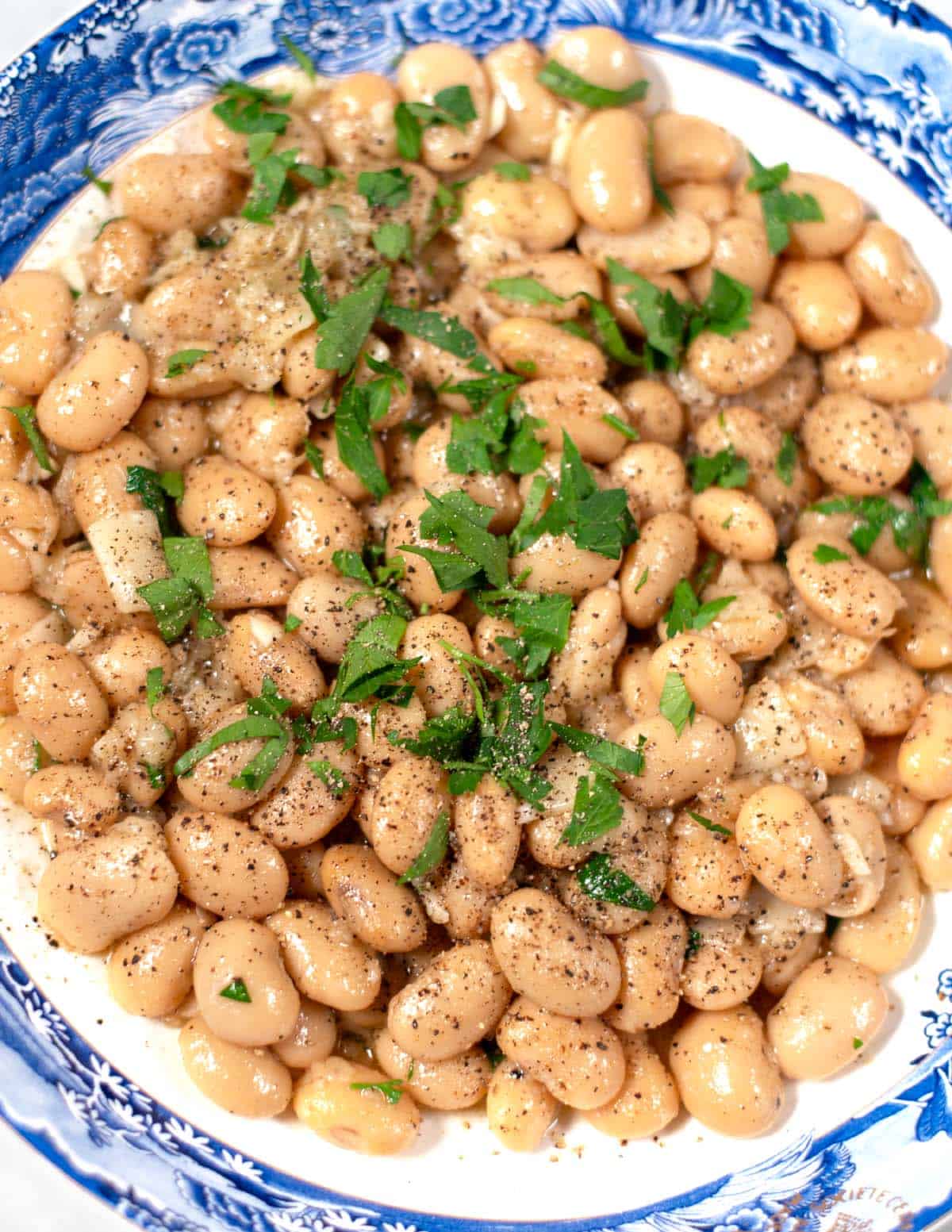
Cacio e pepe with beans instead of pasta
The pasta-to-beans swap does more than change the macronutrient profile. It changes the character of the dish in ways that are worth understanding.
Pasta in cacio e pepe is largely a delivery vehicle for the sauce - it contributes texture and starch, but its flavor is neutral. Beans bring more of themselves to the dish: a mild creaminess, a subtle nuttiness, and a density that makes a smaller portion more satisfying than the equivalent amount of pasta.
The starch that pasta water provides for emulsification can be replicated with a small amount of the bean liquid from the can - it serves the same purpose, loosening the sauce and helping it coat the beans evenly. If using dried beans, reserve some of the cooking liquid.
The net result is a dish that delivers the bold, peppery, cheesy richness of cacio e pepe with significantly more staying power. A bowl of cacio e pepe beans is a complete meal. A bowl of cacio e pepe pasta needs a side.
Why this recipe works
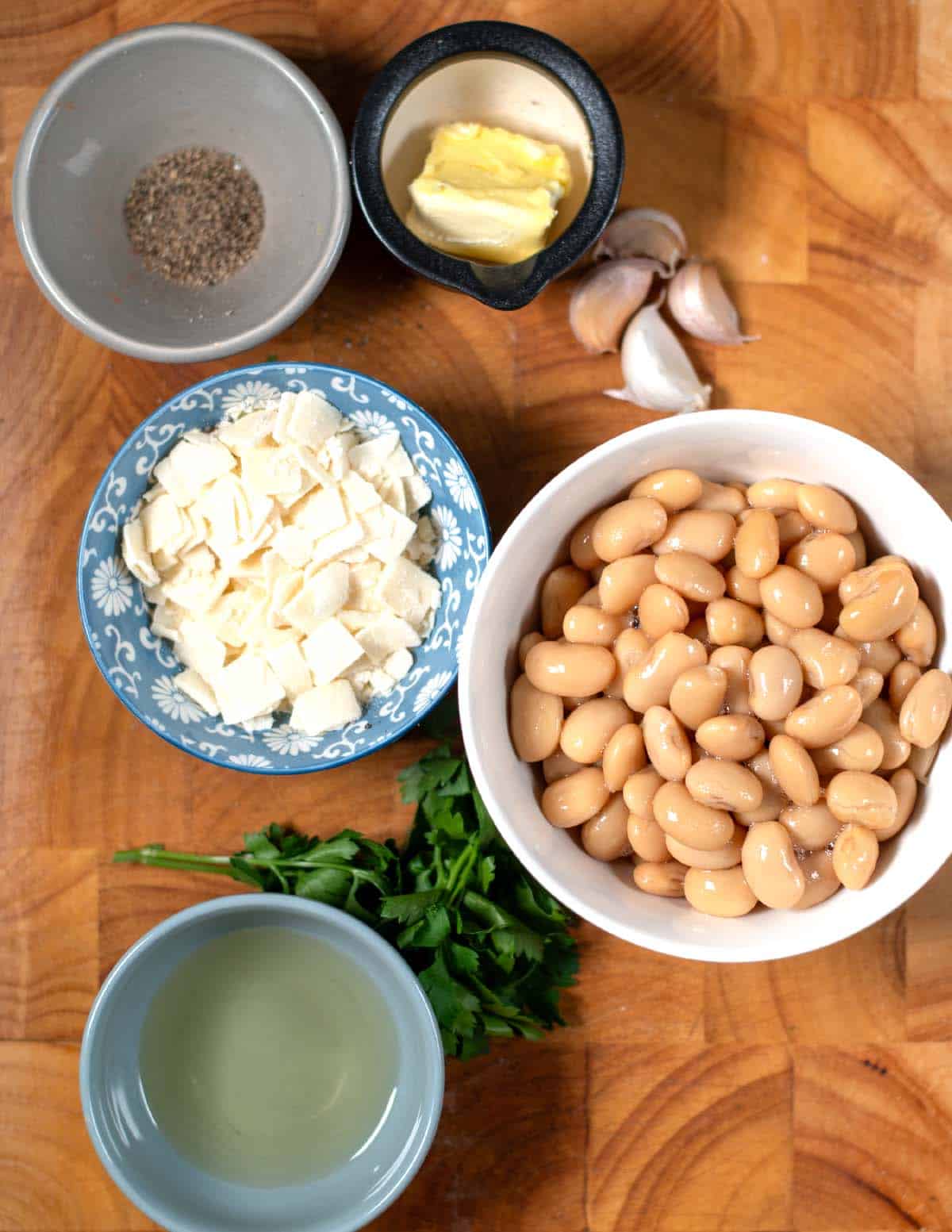
Beans instead of pasta. Two cans of butter beans or cannellini provide far more protein and fiber than the equivalent volume of pasta. The creamy texture of both bean varieties carries the sauce beautifully - they coat evenly, hold their shape, and deliver the richness of the sauce in every bite.
Garlic for depth. Traditional cacio e pepe has no garlic. This version adds four cloves, which provide the savory foundation that prevents the dish from relying entirely on cheese and pepper for flavor. The garlic is cooked briefly in olive oil at the start - gently, not browned - so its sharpness mellows into something aromatic and deep.
Olive oil and dairy-free butter together. Olive oil goes in first for the garlic step, contributing depth and a fruity, slightly peppery character. Dairy-free butter goes in second, adding a rounded richness that olive oil alone does not provide. The combination produces a more luxurious sauce than either fat would produce independently.
Vegan parmesan rather than nutritional yeast. Most vegan cacio e pepe bean recipes use nutritional yeast. This version uses vegan parmesan - a product that melts and integrates into the sauce rather than sitting on top of it, and that tastes more like the real thing than nutritional yeast can. The result is a cheesier, more convincing sauce.
Black pepper as a flavor - not just seasoning. Two teaspoons of black pepper in a dish this simple is significant. Pepper is not background seasoning here - it is a primary flavor, alongside the parmesan. Use freshly ground for the best result.
Ingredient notes
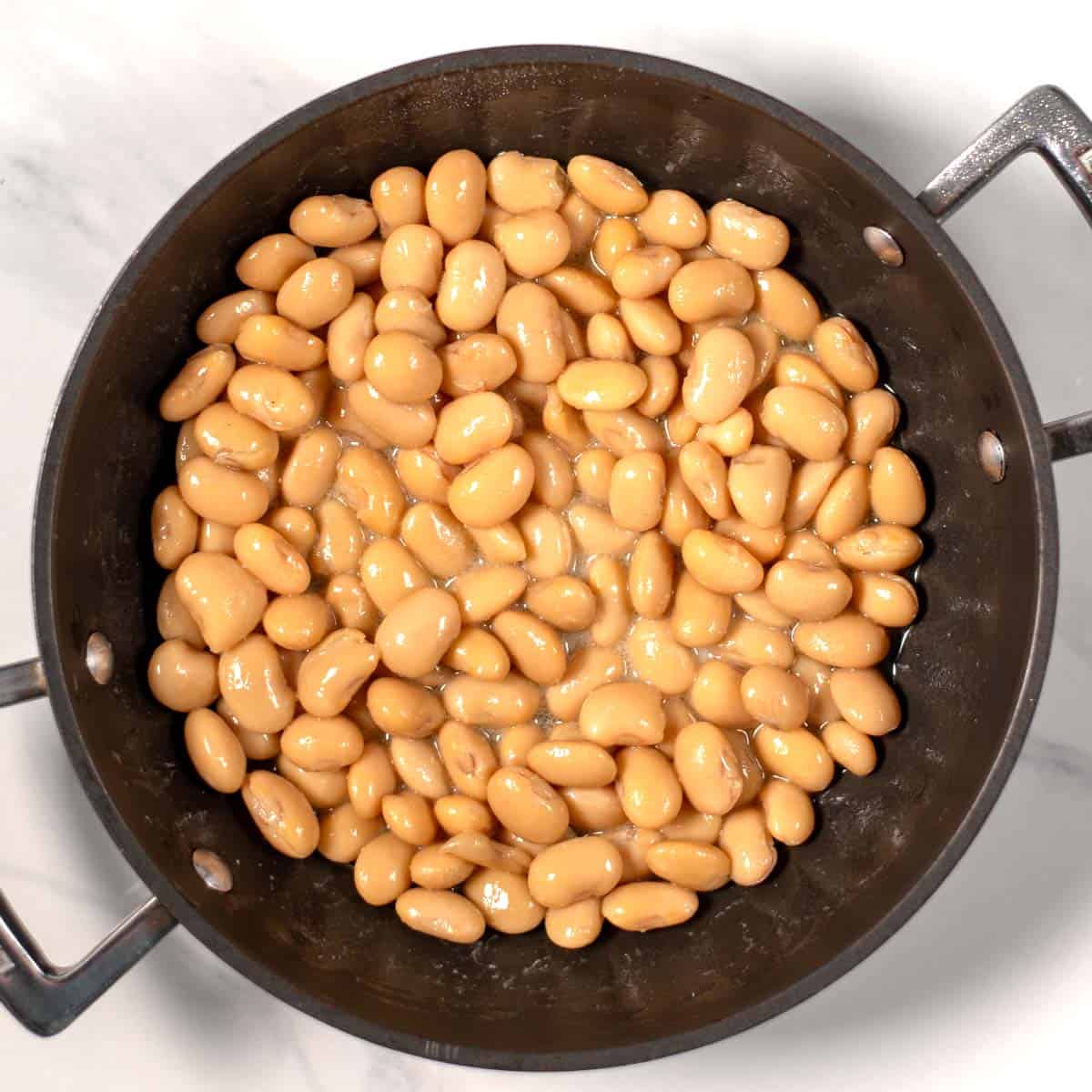
Butter beans or cannellini beans - two 15 oz cans, drained but with liquid reserved. Butter beans are larger, creamier, and more substantial - the closer match to the satisfying mouthfeel of thick pasta. Cannellini are slightly smaller with a firmer texture. Either works well. Reserve a few tablespoons of the liquid from the can - it contains starch that helps the sauce emulsify.
Olive oil - four tablespoons of good quality extra virgin. It is both a cooking fat and a flavor ingredient here.
Dairy-free butter - two tablespoons of any plant-based block butter. Added after the garlic step for richness. Avoid spreads with high water content - they do not provide the same mouthfeel.
Garlic - four cloves, thinly sliced or minced. Cook gently in the olive oil until fragrant and barely golden - not browned. Browned garlic becomes bitter in a dish as delicate as this.
Vegan parmesan - half a cup, finely grated. The finer the grating, the more smoothly it integrates into the sauce. Store-bought grated vegan parmesan works well. If unavailable, two tablespoons of nutritional yeast can substitute - the flavor is different but still good.
Black pepper - two teaspoons, freshly ground. This is a significant amount and intentional. Freshly ground black pepper is noticeably more aromatic and complex than pre-ground. Use a pepper mill if you have one.
Parsley - two tablespoons, finely chopped. Scattered over the finished dish for freshness and color.
Salt - half a teaspoon to taste. Add cautiously - the parmesan and bean liquid both carry saltiness.
How to make cacio e pepe beans
Heat the olive oil in a large skillet or casserole over medium-low heat. Add the sliced or minced garlic and cook gently for 2 minutes, stirring occasionally, until fragrant and barely golden at the edges. The heat should be gentle enough that the garlic softens rather than fries.
Add the dairy-free butter and let it melt into the olive oil. Next mix in the black pepper and stir through the fat for 30 seconds - the heat blooms the pepper and releases its aromatic oils, deepening its flavor in the finished dish.
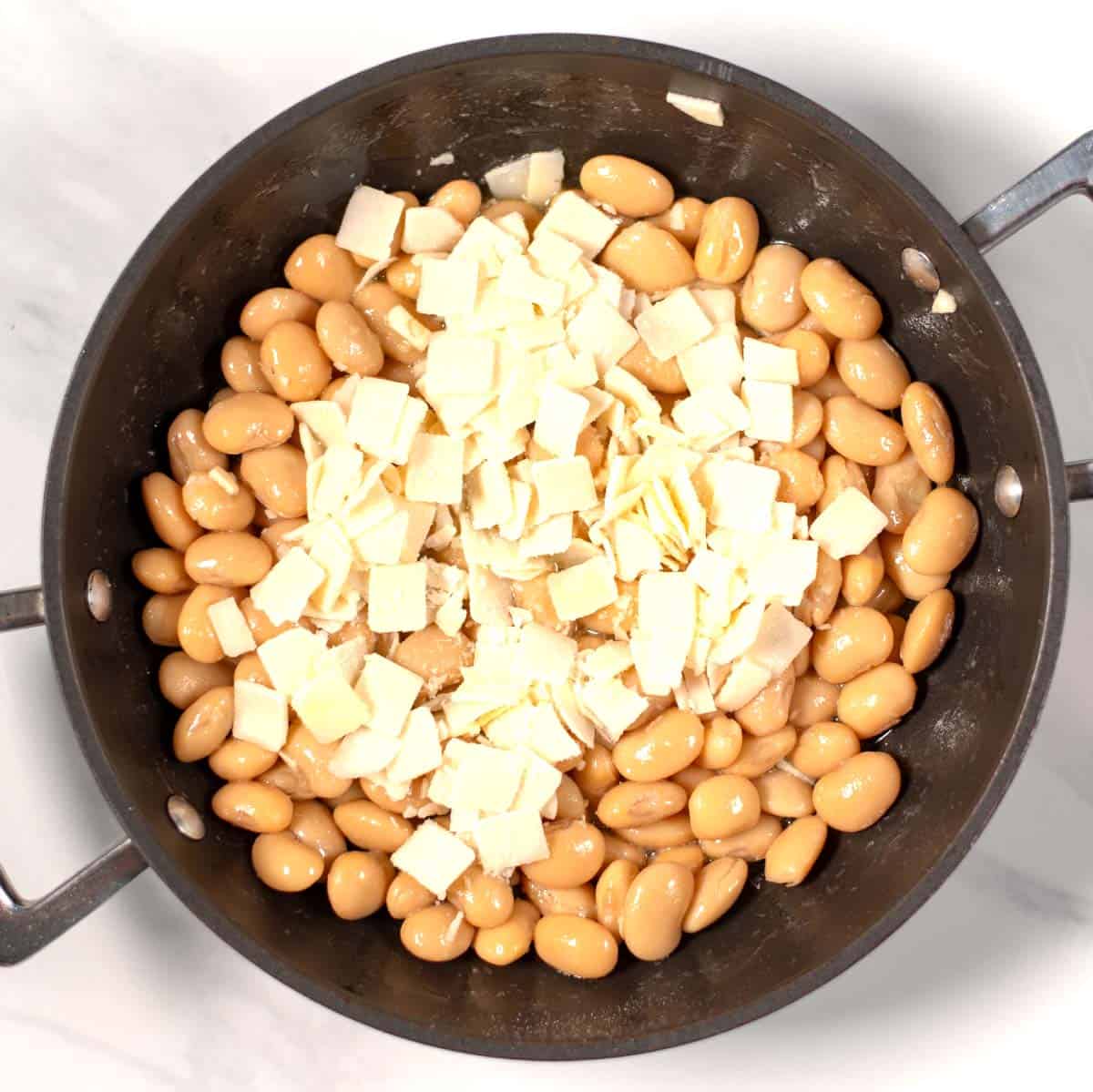
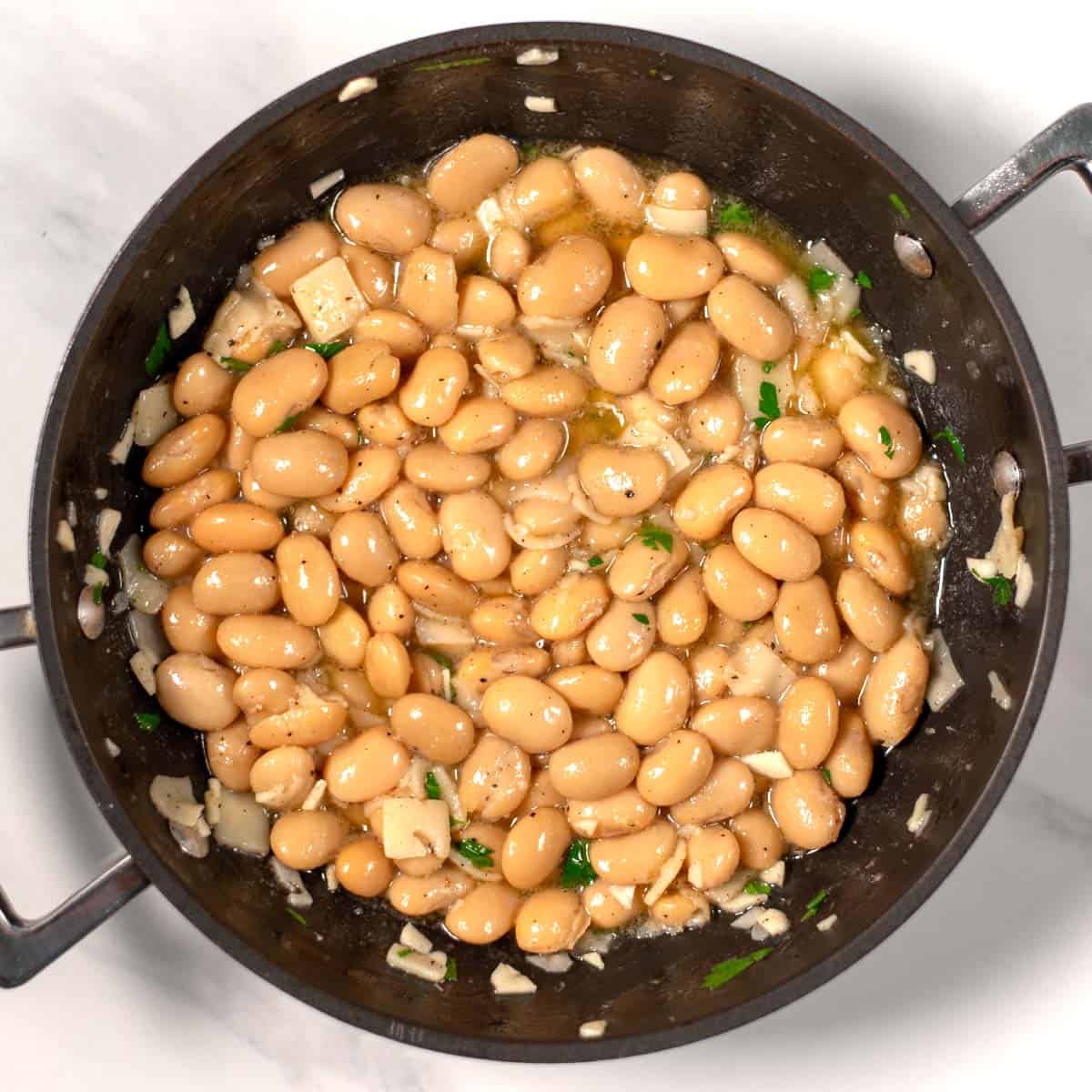
Add the drained beans and two to three tablespoons of the reserved bean liquid. Stir gently to combine and coat the beans in the garlic and fat mixture. Cook on medium heat for 3-4 minutes, stirring occasionally, until the beans are warmed through and the liquid has reduced slightly into a thin, glossy sauce.
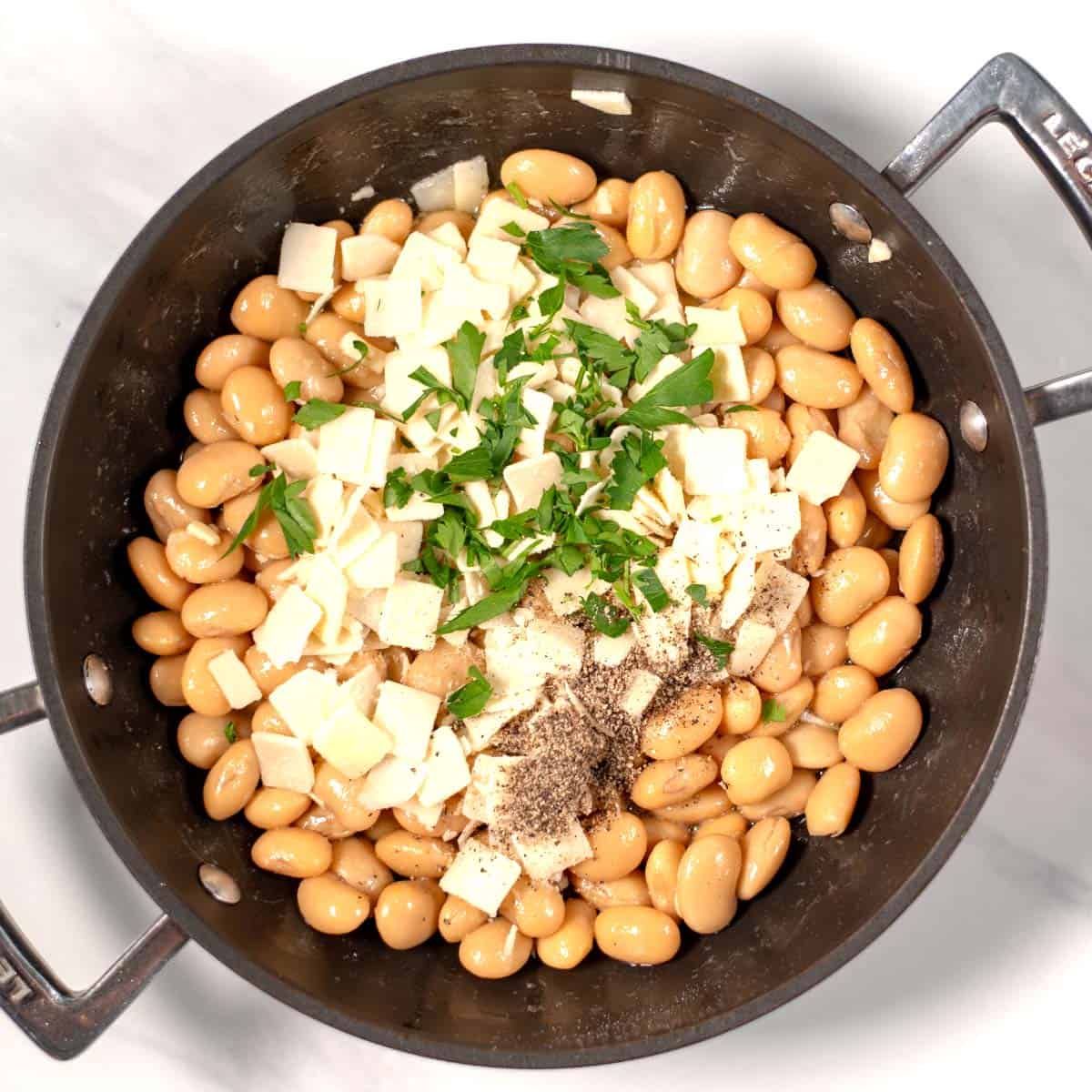
Remove from the heat. Add the vegan parmesan and stir gently until melted into the sauce - removing from the heat prevents the parmesan from seizing or becoming grainy. If the sauce looks too thick, add another splash of bean liquid and stir.
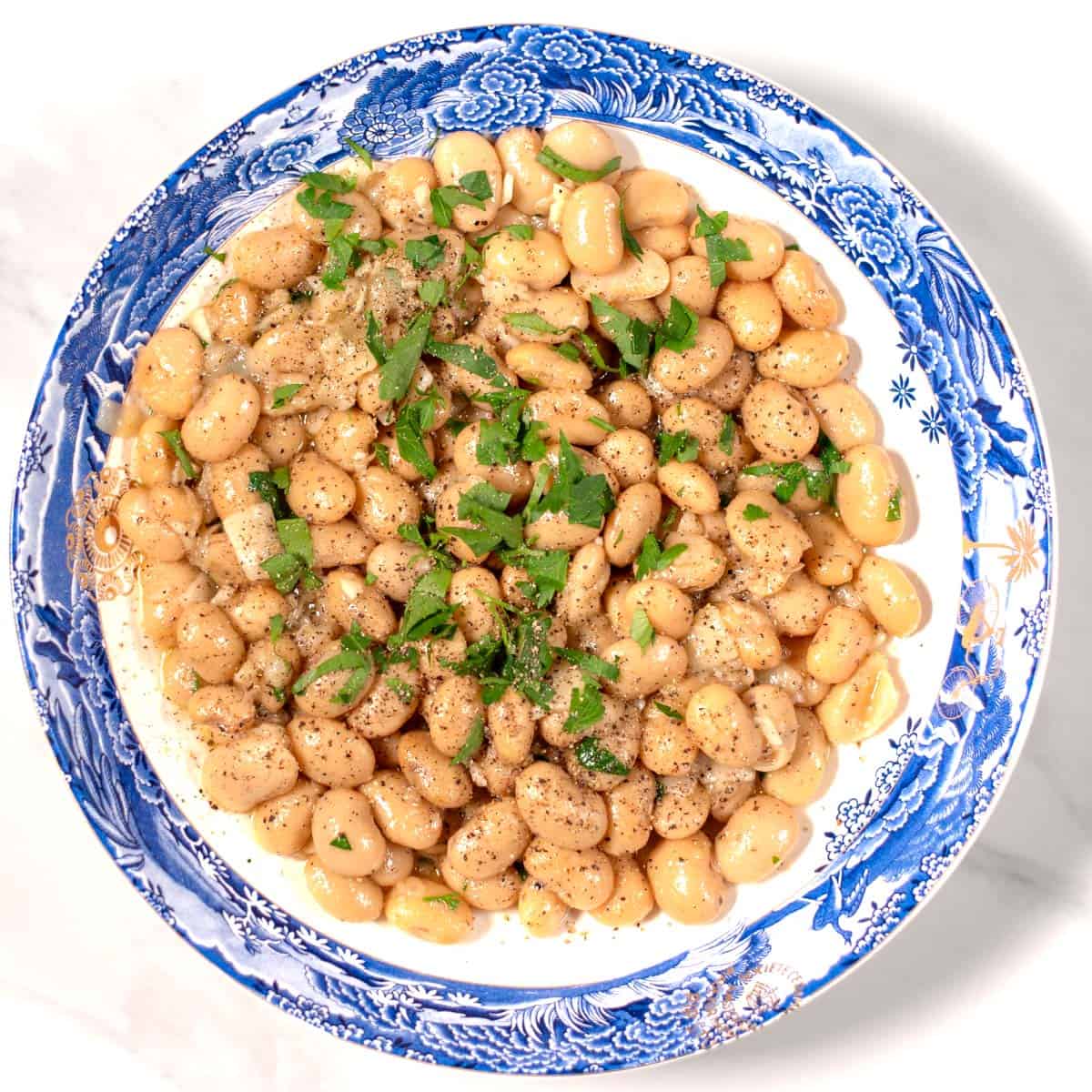
Season with salt to taste. Scatter parsley over the top and serve immediately.
The pepper technique
Black pepper is the defining flavor of cacio e pepe - not a background note, not a finishing touch, but a primary ingredient. Two teaspoons in a dish for four people is intentional and correct.
The technique of adding pepper to the fat before the beans is adapted from the classical pasta method, where pepper is toasted in a dry pan before liquid is added. Even 30 seconds of pepper in hot fat releases volatile aromatic compounds that are lost if the pepper is just sprinkled in at the end. The result is a more rounded, complex pepper flavor that runs through the whole dish rather than sitting on the surface.
If you want to go further - and the result is worth it - toast the peppercorns whole in a dry pan for 1-2 minutes until fragrant, then grind freshly before adding to the fat. This is the traditional approach and produces noticeably more depth.
Ways to serve
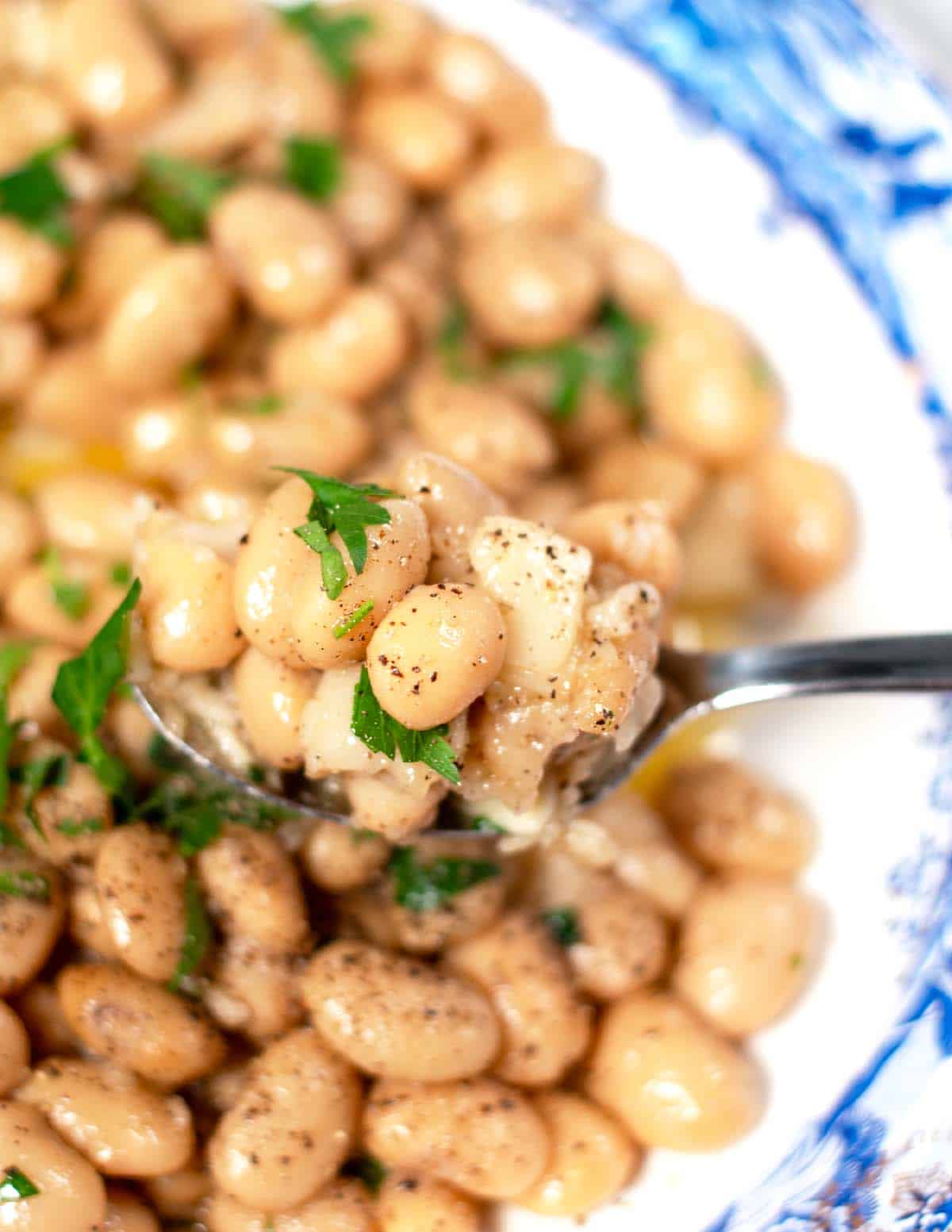
As a standalone bowl - with crusty bread for dipping. The sauce is worth scooping.
On toast - thick slices of sourdough, toasted until golden, topped generously with the beans. One of the best quick meals possible from this recipe.
As a side dish - alongside roasted vegetables, a simple green salad, or as part of a mezze spread.
Over polenta - for a more substantial, Italian-inspired bowl. The creamy polenta and the peppery bean sauce work exceptionally well together.
With pasta - for those who want the best of both worlds. Cook a small amount of pasta and fold the beans and sauce through. The combination adds texture variety and extends the dish to feed more people.
Storage
Refrigerator: Store in an airtight container for up to 4 days. The sauce thickens as it cools - add a splash of water or vegetable broth when reheating on the stovetop and stir to restore the original consistency. Reheat gently on medium-low heat.
Freezer: Freeze for up to 2 months. Allow to cool completely before transferring to a freezer-safe container. The sauce may separate slightly on thawing - stir vigorously while reheating to bring it back together.
Meal prep: This dish doubles easily and reheats well. Make a double batch and store in individual portions for quick lunches throughout the week.
Frequently asked questions
Yes. Cook 1 cup of dried butter beans or cannellini beans according to package directions until tender. Reserve the cooking liquid - it serves the same starch-emulsification purpose as the canned bean liquid. Use approximately 3 cups of cooked beans, equivalent to two 15 oz cans.
Heat causes the proteins in vegan cheese to seize and clump rather than melt smoothly. Removing the pan from the heat before adding the parmesan allows it to melt gently into the sauce without becoming grainy or lumpy. Stir continuously for best results.
Yes - use 3 tablespoons of nutritional yeast in place of the half cup of parmesan. The flavor is different - nuttier and more yeast-forward - but the dish is still very good. The sauce will be slightly thinner since nutritional yeast does not melt in the same way.
No - classical cacio e pepe contains no garlic. This recipe adds it because beans are a more assertive base than pasta and benefit from the savory depth garlic provides. If you want the most traditional flavor profile, reduce the garlic to one clove or omit it entirely.
The parmesan was added while the pan was still too hot. Next time, remove the pan fully from the heat and allow it to cool for 30 seconds before adding the parmesan. Stir quickly and continuously. If the sauce has already seized, add a splash of warm water and stir vigorously - it will often come back together.
Yes - use four tablespoons of olive oil in total and skip the butter. The sauce will be slightly less rich but still good.
More recipes you'll love
- White Bean Salad
- Creamy Harissa Butter Beans
- Lemon Pasta
- Creamy Tomato Pasta
- Cuban Rice and Beans
- Moroccan Spiced Lentils
Made these Cacio e Pepe Beans?
Leave a comment below and rate the recipe - it helps more people find it.
Tag me on Instagram or Facebook with a photo. Florian.

Cacio e Pepe Beans (One Pan, 15 Minutes, High Protein)
Cacio e pepe beans swap pasta for butter beans or cannellini — bold black pepper, vegan parmesan, garlic, olive oil, and dairy-free butter in one pan in 15 minutes. More protein, more fiber, just as indulgent.
Ingredients
- 2 × 15 oz cans butter beans or cannellini beans, drained (liquid reserved)
- 4 tablespoons olive oil
- 2 tablespoons dairy-free butter
- 4 cloves garlic, thinly sliced or minced
- ½ cup vegan parmesan, finely grated
- 2 teaspoons black pepper, freshly ground
- 2 tablespoons fresh parsley, finely chopped
- ½ teaspoon salt, or to taste
Instructions
- Heat the olive oil in a large skillet or casserole over medium-low heat. Add the sliced or minced garlic and cook gently for 2 minutes, stirring occasionally, until fragrant and barely golden at the edges. Keep the heat gentle — the garlic should soften and become aromatic, not fry or brown.
- Add the dairy-free butter and let it melt into the olive oil. Add the black pepper and stir through the combined fats for 30 seconds. This step blooms the pepper in the fat and deepens its flavor throughout the finished dish.
- Add the drained beans and 2–3 tablespoons of the reserved bean liquid. Stir gently to coat the beans in the garlic and fat mixture. Cook on medium heat for 3–4 minutes, stirring occasionally, until the beans are warmed through and the liquid has reduced slightly into a thin, glossy sauce.
- Remove the pan from the heat entirely. Add the vegan parmesan and stir gently until melted into the sauce — the residual heat will melt the cheese without seizing it. If the sauce is too thick, add another splash of bean liquid and stir. Season with salt to taste.
- Scatter chopped parsley over the top and serve immediately in bowls, on toast, or over polenta.
Notes
- Reserve bean liquid: The starchy liquid from the can emulsifies the sauce. Reserve 4–5 tablespoons before draining and use as needed.
- Parmesan off the heat: Always add vegan parmesan after removing from heat. On the heat it will seize and become grainy rather than melting smoothly.
- Black pepper: Two teaspoons is intentional — pepper is a primary flavor here, not just seasoning. Use freshly ground for the best result.
- Garlic: This is not traditional in cacio e pepe but adds depth that works well with beans. Reduce to one clove or omit for a more classical flavor profile.
- Nutritional yeast substitute: Use 3 tablespoons of nutritional yeast in place of the vegan parmesan if unavailable. Flavor will differ slightly.
- Bean choice: Butter beans are larger and creamier. Cannellini are slightly firmer. Both work well — use whichever you prefer or have on hand.
- Refrigerator: Stores for up to 4 days. Reheat gently with a splash of water to restore sauce consistency.
- Freezer: Freeze for up to 2 months. Stir vigorously while reheating if the sauce has separated.
Nutrition Information:
Yield: 4 Serving Size: 1 cupAmount Per Serving: Calories: 441Total Fat: 29gSaturated Fat: 11gUnsaturated Fat: 19gCholesterol: 0mgSodium: 894mgCarbohydrates: 29gFiber: 7gSugar: 0gProtein: 18g