High Protein Lentils with Tempeh, Chickpeas, and Edamame
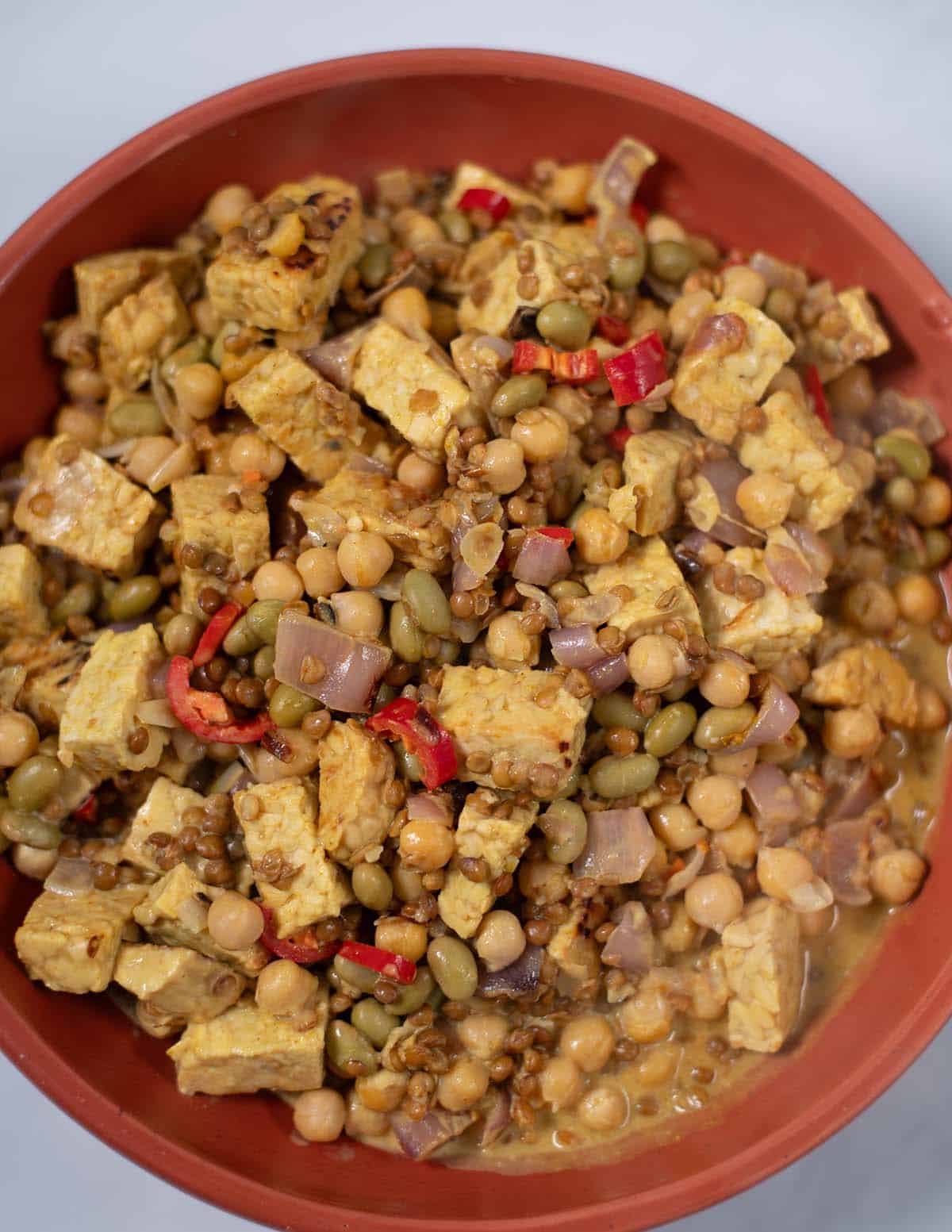
These High Protein Lentils are built on four plant protein sources - lentils, chickpeas, tempeh, and edamame - in a coconut curry sauce with soy sauce, brown sugar, chili, and lemon. More protein per bowl than almost any other plant-based recipe on this site. 30 minutes, completely plant-based.
Table of contents
Most high-protein lentil recipes add one protein source and call it done. Lentils with vegan sausage. Lentils with chickpeas. Lentils alone in a dal, relying on their own 18 grams per cup to carry the nutritional brief. These are all good approaches and they produce genuinely satisfying meals.
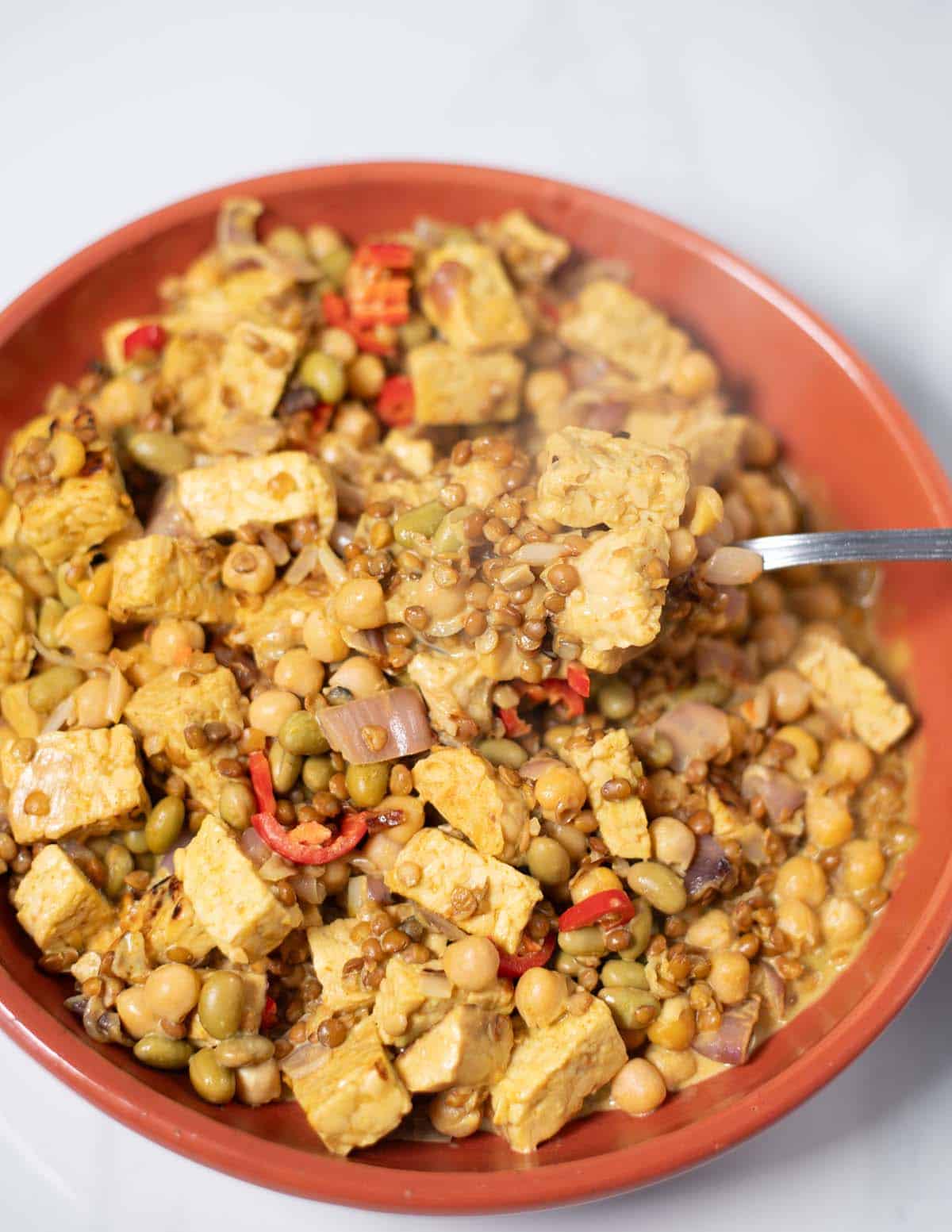
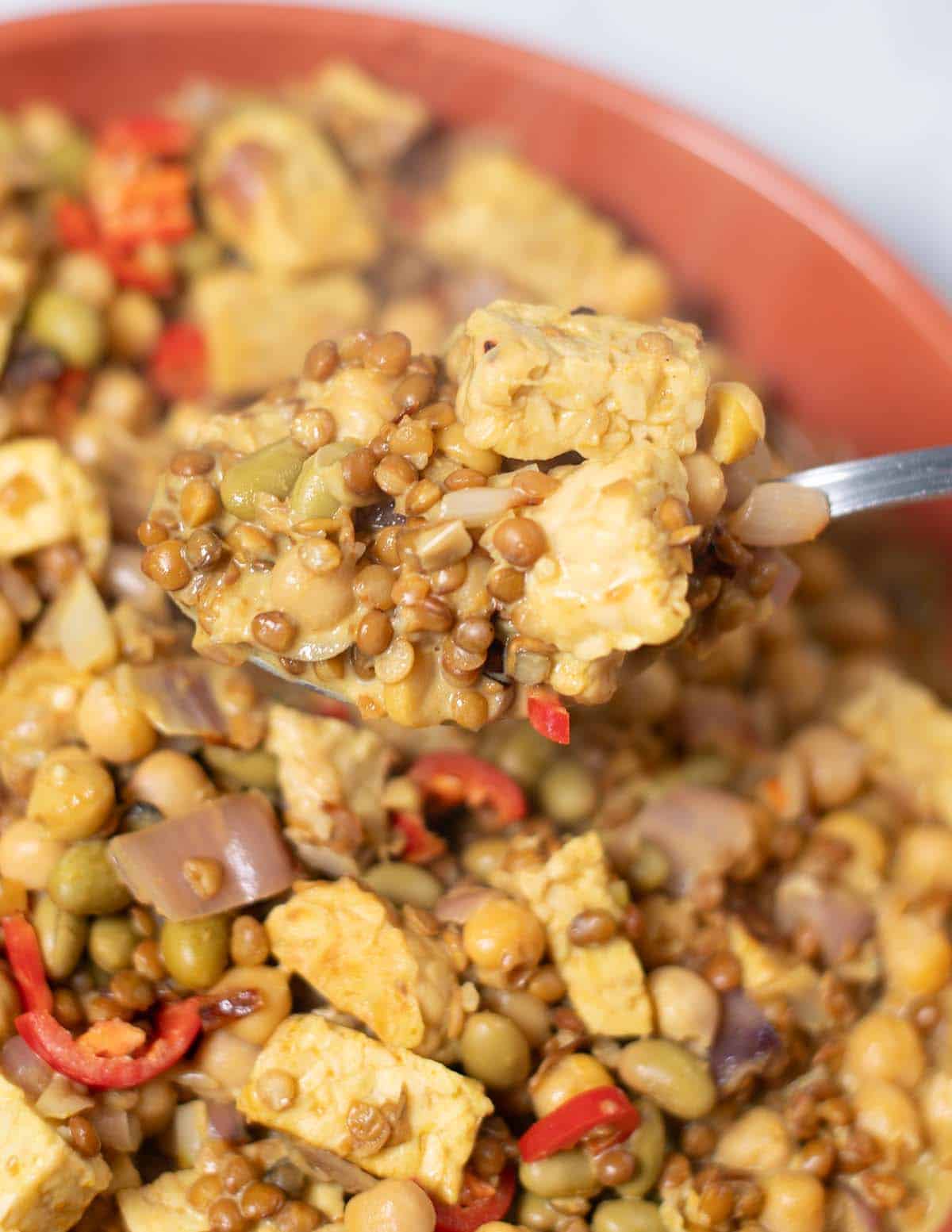
This recipe takes a different position entirely. Four plant protein sources - lentils, chickpeas, tempeh, and edamame - cooked together in a sauce that is neither Indian nor Mediterranean but something more specifically Southeast Asian in character: curry powder, soy sauce, brown sugar, coconut milk, fresh chili, and lemon. The sauce is bold, slightly sweet, mildly spiced, and deeply savory. The four proteins give it a texture that no single-protein lentil dish can match - soft lentils, firm chickpeas, caramelized tempeh, and the bright pop of edamame all in the same forkful.
The tempeh is the ingredient that most people who haven't cooked with it are unfamiliar with, and it is the one that makes this recipe genuinely distinctive. Tempeh is fermented soybean cake - firmer, nuttier, and more savory than tofu, with a slightly earthy depth that comes from the fermentation. It holds its shape when cubed and pan-fried, developing a crispy, golden exterior that no other protein in this dish can provide. Cooked first in olive oil until the edges caramelize, then combined with the aromatics and sauce, it becomes the most interesting component of the bowl.
No other high-protein lentil recipe in the category combines these four proteins. No other combines this specific Southeast Asian sauce profile with lentils. The gap is real and the recipe fills it cleanly.
Why four protein sources?
The practical case for combining multiple plant proteins in a single dish is straightforward: each protein source contributes something different in terms of texture, flavor, and nutritional profile, and together they produce a more complete, more interesting, and more filling meal than any single source could.
Lentils are soft, mild, and high in fiber - they absorb the sauce deeply and provide the bulk of the dish. Chickpeas are firmer and nuttier, adding textural contrast and a second complete protein. Tempeh brings fermented depth, a dense, satisfying chew, and the caramelized edges that only a pan-fried protein provides. Edamame adds a bright, fresh pop - green, slightly sweet, and completely different in texture from everything else in the bowl.
Together the four proteins create something that is genuinely greater than the sum of its parts: a bowl that is nutritionally dense, texturally varied, and satisfying in the kind of deep, sustained way that a single-protein meal often isn't. This is the plant-based protein bowl that actually keeps you full.
Why this recipe works
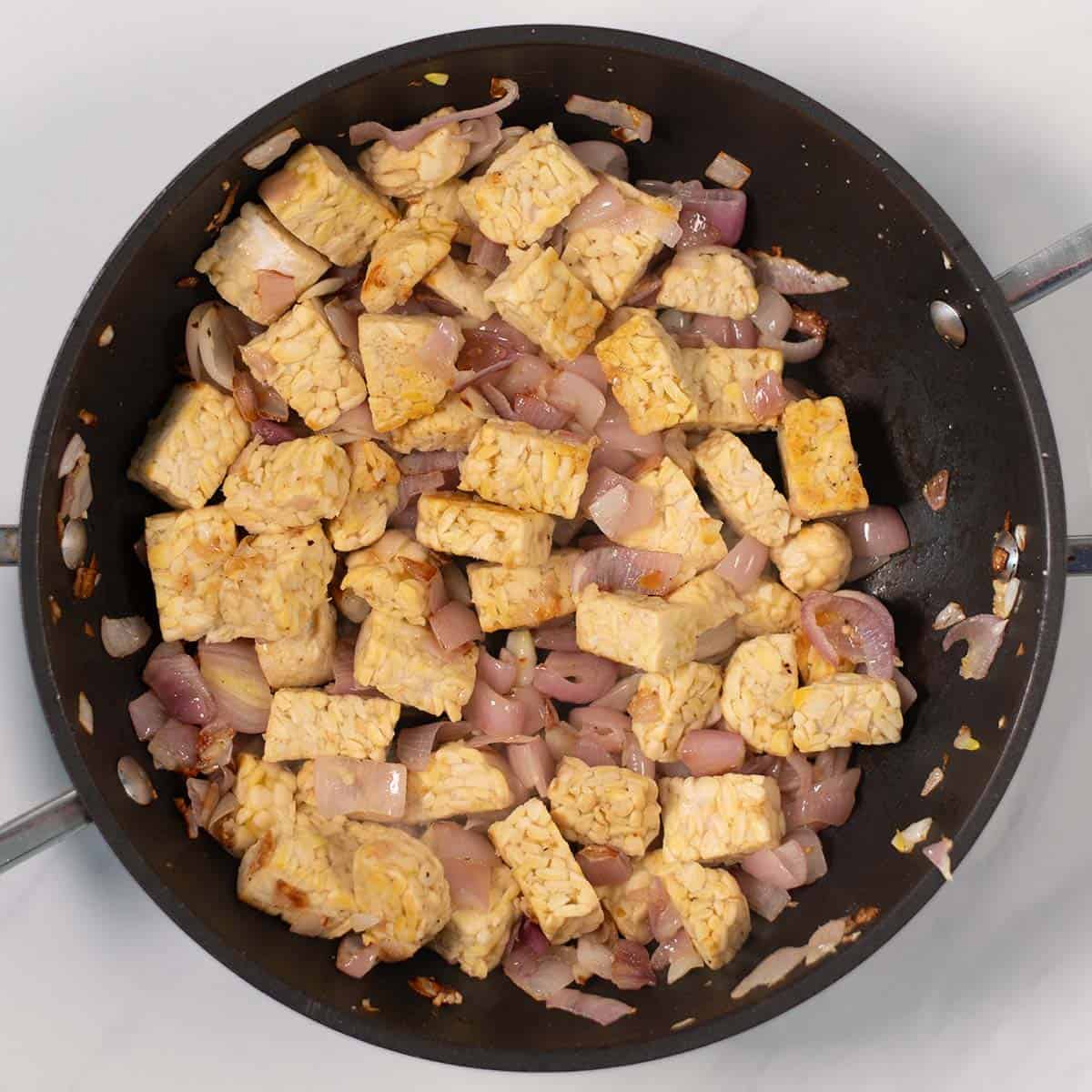
Tempeh cooked before everything else. Pan-frying the cubed tempeh in olive oil first - before the aromatics go in - allows it to develop a golden, slightly crispy exterior without steaming in the sauce. That caramelized crust is the most flavorful element of the finished dish. Never crowd the pan and never move the tempeh until it is ready to flip.
Soy sauce and brown sugar together. The sauce is built on a combination that appears across Southeast and East Asian cooking - soy sauce for deep, savory umami, brown sugar for a gentle sweetness that rounds and balances the heat of the chili and the earthiness of the curry powder. The two together produce a depth that neither achieves alone.
Coconut milk as the finishing liquid. Added last, the coconut milk ties all the components together into a cohesive sauce without overwhelming the other flavors. It adds richness and a mild creaminess that makes the dish feel substantial without being heavy.
Lemon at the end, off the heat. Fresh lemon juice stirred in just before serving brightens the entire dish and cuts through the richness of the coconut milk. Added too early it loses its impact; added off the heat it stays vivid.
Four textures in one bowl. Soft lentils, firm chickpeas, caramelized tempeh edges, and the pop of edamame - variety in every forkful that keeps the dish interesting from the first bite to the last.
Ingredient notes
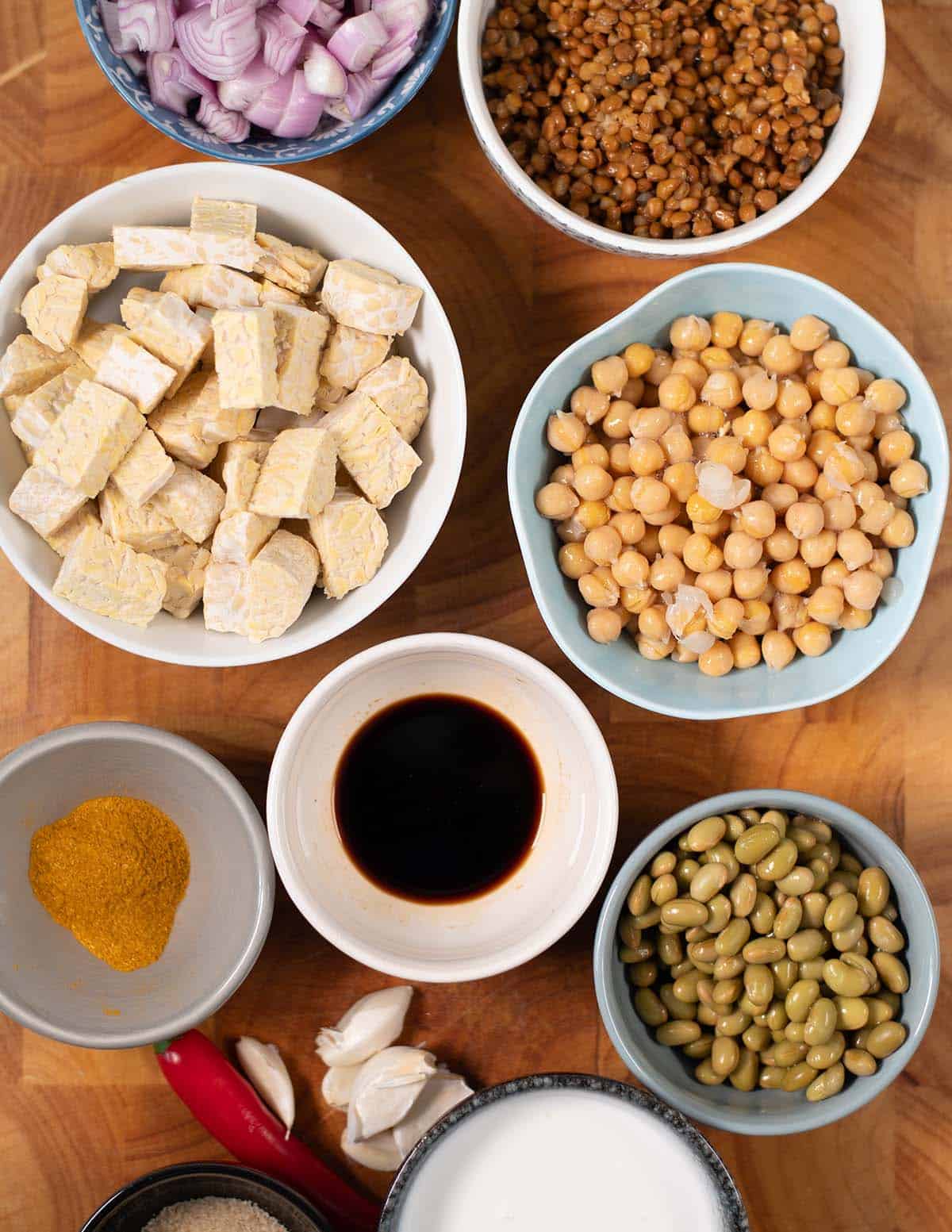
Lentils - one 15 oz can, drained and rinsed. Canned lentils are already cooked, which is what makes this recipe a 30-minute dish. Any variety works - green or brown hold their shape best. Drain and rinse well so they absorb the sauce rather than diluting it.
Chickpeas - one 15 oz can, drained and rinsed. Firm, nutty, and the second protein anchor. Drain and rinse thoroughly.
Tempeh - 8 oz, cubed into roughly half-inch pieces. The most distinctive ingredient in the dish. Tempeh is fermented soybean cake with a firm, dense texture and a slightly nutty, earthy flavor - completely different from tofu. No pressing needed. If tempeh has a slightly bitter taste when raw, a quick steam for 10 minutes before cubing mellows it significantly.
Edamame - 1 cup, cooked and shelled. Frozen shelled edamame, thawed before going into the pan, works perfectly. Their brightness and pop of texture is the detail that lifts the finished dish.
Shallots - 1 cup, chopped. Sweeter and more delicate than onion, they melt into the aromatics and provide a gentle, rounded sweetness. Two medium onions work as a substitute.
Garlic - 4 cloves, minced. Cooked with the shallots until fragrant before the sauce ingredients go in.
Red chili - 1, finely sliced. Adjust the quantity to your heat preference. Remove the seeds for a milder result; keep them for more heat. A pinch of red pepper flakes works as a substitute.
Curry powder - 2 tablespoons. A substantial quantity that provides the warm, aromatic spice backbone of the sauce. Use a good quality curry powder - it is the primary flavoring agent.
Soy sauce - 2 tablespoons. Provides the deep, savory umami base. Tamari works as a substitute for a different soy profile; coconut aminos for a slightly sweeter, milder result.
Brown sugar - 2 tablespoons. Balances the soy sauce and the chili. Light or dark both work - dark produces a slightly more caramel-like depth.
Coconut milk - 1 cup, full-fat canned. Adds richness and ties the sauce together. Full-fat produces a noticeably richer result than light coconut milk.
Olive oil - 3 tablespoons, for frying the tempeh and softening the aromatics.
Lemon - half a lemon, juiced. Added off the heat just before serving for brightness. Lime works equally well and shifts the flavor profile slightly toward Southeast Asian.
How to make high protein lentils
Heat 2 tablespoons of the olive oil in a large skillet or wide pot over medium-high heat. Add the cubed tempeh in a single layer and cook undisturbed for 3-4 minutes until the edges are deeply golden. Flip and cook for a further 2-3 minutes until golden on multiple sides. Remove the tempeh from the pan and set aside.
Reduce the heat to medium. Add the remaining tablespoon of olive oil to the same pan. Then, add the chopped shallots and cook for 3-4 minutes, stirring occasionally, until softened and translucent. Add the minced garlic and sliced chili and cook for a further 1-2 minutes until fragrant.
Add the curry powder to the pan and stir for 30 seconds, letting the spices bloom in the oil and aromatics. This brief toasting step deepens their flavor significantly.
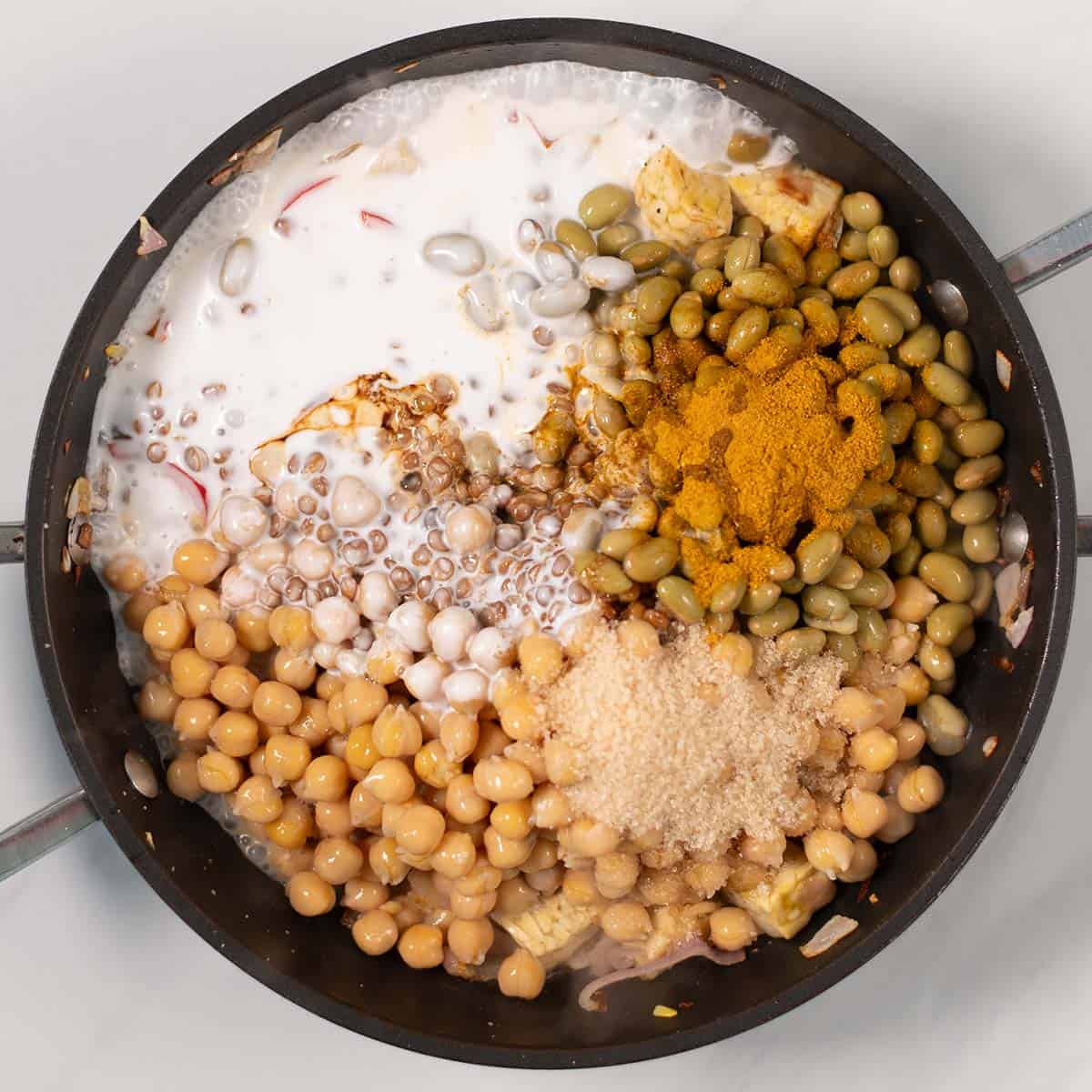
Add the soy sauce and brown sugar and stir to combine. Pour in the coconut milk and stir until everything is fully incorporated into a smooth, golden sauce.
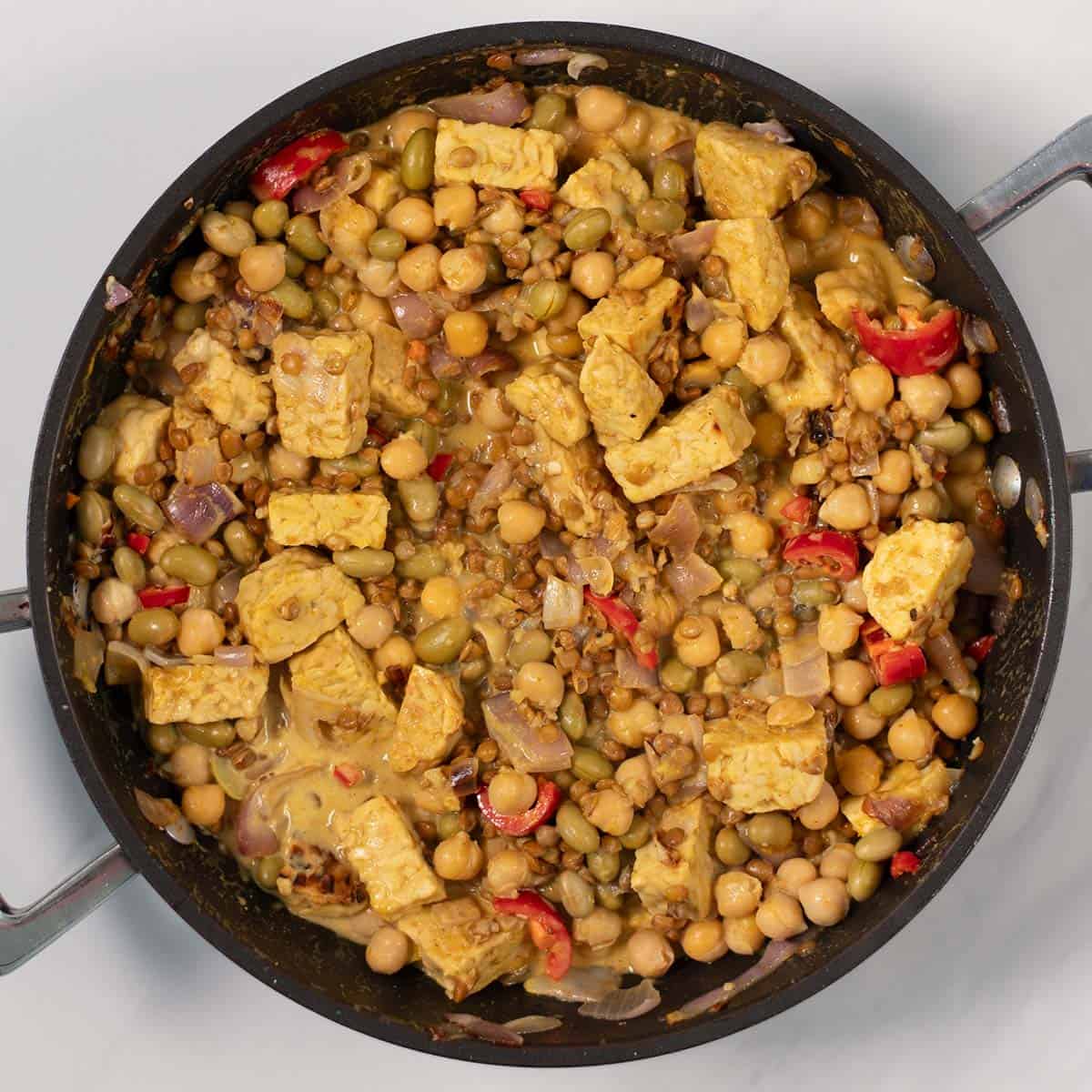
Add the drained lentils, drained chickpeas, and cooked edamame to the pan. Stir to coat everything evenly in the sauce. Return the cooked tempeh to the pan. Cook for 3-4 minutes over medium heat, stirring gently, until everything is heated through and the sauce has thickened slightly. Season with salt and pepper.
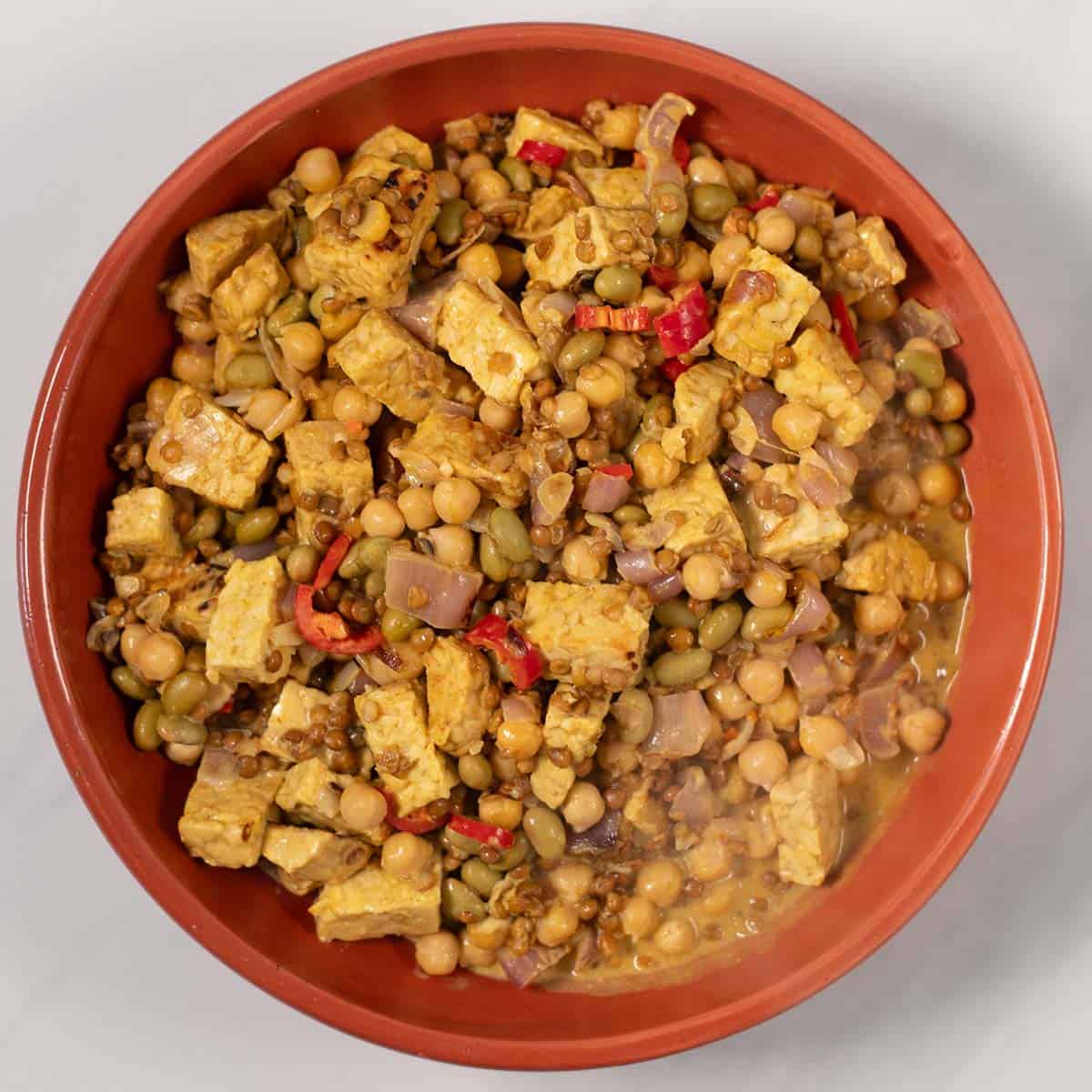
Remove from the heat. Stir in the lemon juice. Taste and adjust seasoning - the dish should be savory, mildly sweet, and bright. Serve immediately over rice or in bowls on their own.
Ways to serve
Over steamed rice - the most natural serving. Jasmine rice or basmati both work well; the sauce coats the rice and makes every grain flavorful.
Over cauliflower rice - for a lower-carb option that keeps the dish's high protein character intact.
In a bowl on its own - the four protein sources make it genuinely filling without any grain. Serve with warm flatbread for mopping up the sauce.
With naan or flatbread - the coconut curry sauce is worth mopping up. Warm naan alongside is the right call.
Over quinoa - for additional protein and a slightly nuttier base than rice.
As a meal prep bowl - portion into containers over rice. The flavors deepen overnight as the lentils and chickpeas absorb the sauce.
Storage and meal prep
Refrigerator: Store in an airtight container for up to 4 days. The dish improves overnight as the proteins absorb the coconut curry sauce - the flavors deepen and become more cohesive. Reheat gently in a pan over medium heat with a small splash of water or coconut milk to loosen.
Meal prep: This is an excellent batch cooking recipe. Make a full batch on Sunday and portion over rice into containers. The tempeh holds its texture reasonably well in the fridge - it softens slightly from the sauce but remains satisfying. For maximum tempeh texture, store it separately and add fresh when serving.
Freezer: Freezes well for up to 3 months. Cool completely, freeze in portions, and thaw overnight in the fridge before reheating. The texture of the lentils and chickpeas holds well; the tempeh softens slightly on thawing but remains flavorful.
Frequently asked questions
Tempeh is fermented soybean cake - firm, dense, and slightly nutty in flavor, with a texture completely different from tofu. It is sold in most health food stores, larger supermarkets, and Asian grocery stores, usually in the refrigerated section near the tofu. It comes in rectangular blocks and is typically 8 oz per package.
No - tempeh is already firm and dry and needs no pressing. If it tastes slightly bitter raw, steaming it for 10 minutes before cubing mellows the flavor significantly. This is worth doing if you are new to cooking with tempeh.
Yes - the dish is still very high in protein with the lentils, chickpeas, and edamame. Increase one or both canned proteins to compensate for the volume. The caramelized, dense texture that tempeh provides is not easily replicated, so the dish will be different, but it is still excellent.
Yes - cook 200g of dried green or brown lentils separately until just tender, then drain and use in place of the canned lentils. This adds about 20-25 minutes to the preparation time.
With one red chili it is mildly spiced rather than hot - the coconut milk and brown sugar temper the heat significantly. For a spicier result, add a second chili or keep the seeds in. For a milder result, remove the seeds or use half a chili.
Frozen peas work well and are more widely available - they add a similar freshness and pop, though with less protein. Broad beans (fava beans) are the closest texture substitute. Green lentils added in a larger quantity also work if edamame is unavailable.
More recipes you'll love
- Dense Bean Salad
- Vegan Grinder Salad
- Creamy Tikka Masala Beans
- Lentil Chickpea Yellow Curry
- Pesto Gnocchi with Smoked Tofu and Chickpeas
- Easy Vegan One Pot Meals
Made these High Protein Lentils? Leave a comment below and rate the recipe - it helps more people find it. Tag me on Instagram or Facebook with a photo. Florian.

High Protein Lentils with Tempeh, Chickpeas, and Edamame (30 Minutes)
Four plant protein sources — lentils, chickpeas, tempeh, and edamame — in a coconut curry sauce with soy sauce, brown sugar, chili, and lemon. The highest-protein plant-based bowl on this site. 30 minutes, completely plant-based.
Ingredients
- 15 oz can lentils, drained and rinsed
- 15 oz can chickpeas, drained and rinsed
- 8 oz tempeh, cubed
- 1 cup edamame, cooked and shelled
- 1 cup shallots, chopped
- 4 cloves garlic, minced
- 1 red chili, finely sliced
- 2 tablespoons curry powder
- 2 tablespoons soy sauce
- 2 tablespoons brown sugar
- 1 cup coconut milk, full-fat canned
- 3 tablespoons olive oil, divided
- ½ lemon, juiced
- Salt and pepper to taste
Instructions
- Heat 2 tablespoons of the olive oil in a large skillet over medium-high heat. Add the cubed tempeh in a single layer and cook undisturbed for 3–4 minutes until the edges are deeply golden. Flip and cook for a further 2–3 minutes until golden on multiple sides. Remove the tempeh from the pan and set aside.
- Reduce the heat to medium. Add the remaining tablespoon of olive oil to the same pan. Add the chopped shallots and cook for 3–4 minutes, stirring occasionally, until softened and translucent. Add the minced garlic and sliced chili and cook for a further 1–2 minutes until fragrant.
- Add the curry powder to the pan and stir for 30 seconds, letting the spices bloom in the oil and aromatics. Add the soy sauce and brown sugar and stir to combine. Pour in the coconut milk and stir until fully incorporated into a smooth, golden sauce.
- Add the drained lentils, drained chickpeas, and cooked edamame to the pan. Stir to coat everything evenly in the sauce. Return the cooked tempeh to the pan.
- Cook for 3–4 minutes over medium heat, stirring gently, until everything is heated through and the sauce has thickened slightly. Season generously with salt and pepper.
- Remove from the heat. Stir in the lemon juice. Taste and adjust seasoning — the dish should be savory, mildly sweet, and bright. Serve immediately over rice or in bowls.
Notes
- Cook the tempeh first and don't move it: Leave undisturbed for 3–4 minutes per side. A proper golden crust releases cleanly from the pan — if it sticks, it is not ready.
- Bloom the curry powder: The 30 seconds of toasting the curry powder in the oil before adding liquid deepens the flavor significantly. Don't skip it.
- Tempeh bitterness: If tempeh tastes bitter raw, steam it for 10 minutes before cubing. This mellows the fermented flavor and is worth doing if you are new to cooking with it.
- Soy sauce and brown sugar: This combination is the flavor foundation of the sauce — savory, slightly sweet, and deeply rounded. Do not reduce either quantity significantly.
- Lemon off the heat: Add the lemon juice after removing from the heat to keep its brightness vivid. Added while cooking it loses its impact.
- Heat level: One chili with seeds removed is mild. Keep the seeds or add a second chili for more heat. A pinch of red pepper flakes works as a substitute.
- Coconut milk: Full-fat produces a noticeably richer sauce. Light coconut milk works but the sauce will be thinner.
- Refrigerator: Stores for up to 4 days. Improves overnight as the proteins absorb the sauce.
- Freezer: Freezes for up to 3 months. Cool completely before freezing.
Nutrition Information:
Yield: 4 Serving Size: 1.5 cupsAmount Per Serving: Calories: 659Total Fat: 24gSaturated Fat: 2gUnsaturated Fat: 17gCholesterol: 0mgSodium: 568mgCarbohydrates: 143gFiber: 39gSugar: 6gProtein: 77g