
Vegan Arayes (Lentil and Chickpea Stuffed Pita, 30 Minutes)
These Vegan Arayes stuff pita halves with a spiced lentil and chickpea filling - sumac, paprika, and chili flakes mixed with caramelized onion and garlic - then pan-fry them until the outside is golden and crispy. Served with a dairy-free yogurt, garlic, and parsley sauce. 30 minutes, completely plant-based, and the only fully vegan arayes recipe in the category.
Table of contents
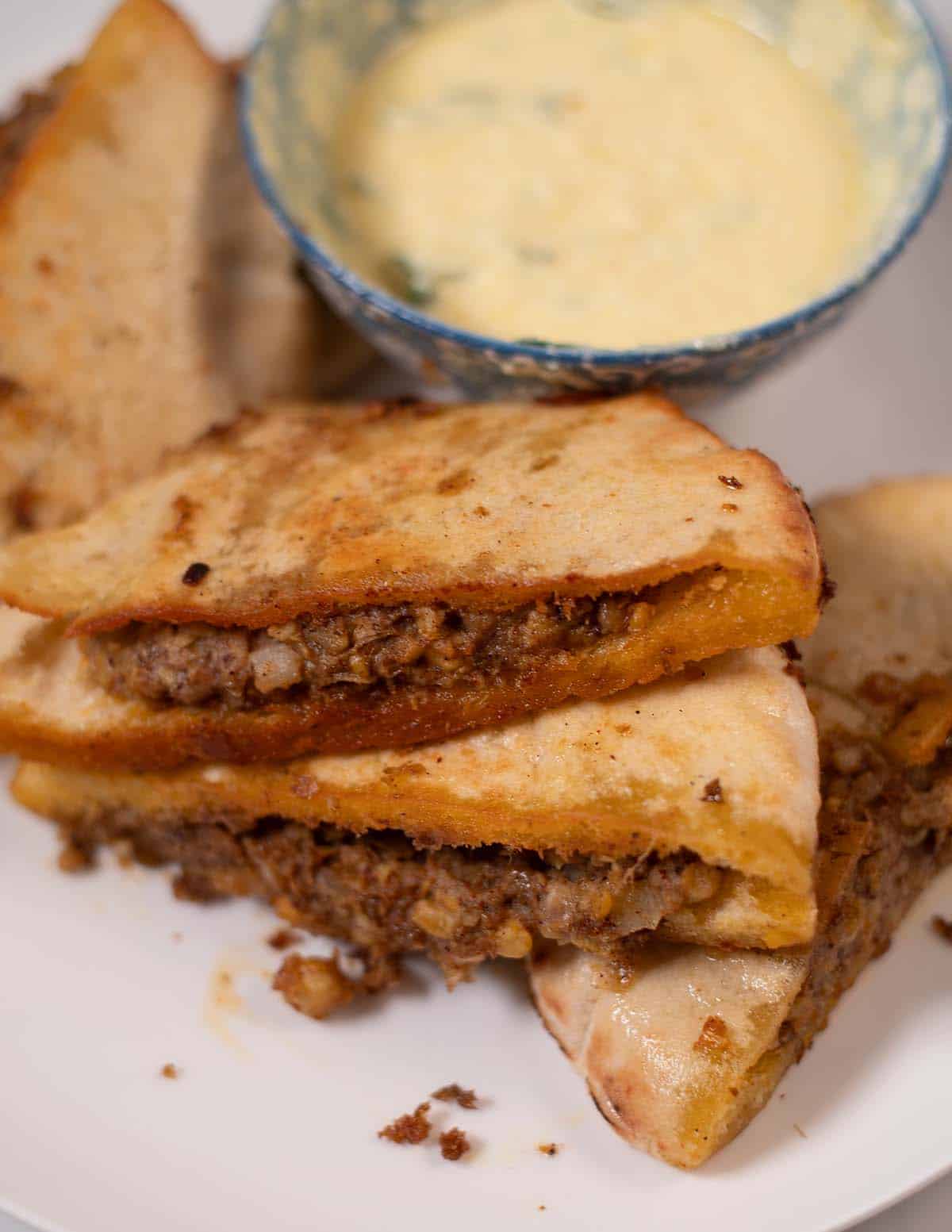
What are arayes?
Arayes are a Lebanese street food - pita pockets stuffed with spiced ground meat, pressed flat, and grilled or pan-fried until the outside is golden and crispy and the filling is cooked through inside. The name comes from the Arabic word for "bride," and the dish is a staple of Lebanese home cooking and street food culture across the Levant.
Think of them like the Lebanese version of a quesadilla - instead of cheese, they are stuffed with Middle Eastern-flavored ground meat, similar to the mixture used in kofta kebab. The technique of pressing the filled pita flat in a hot pan is what creates the characteristic crispy exterior and melds the filling into the bread.
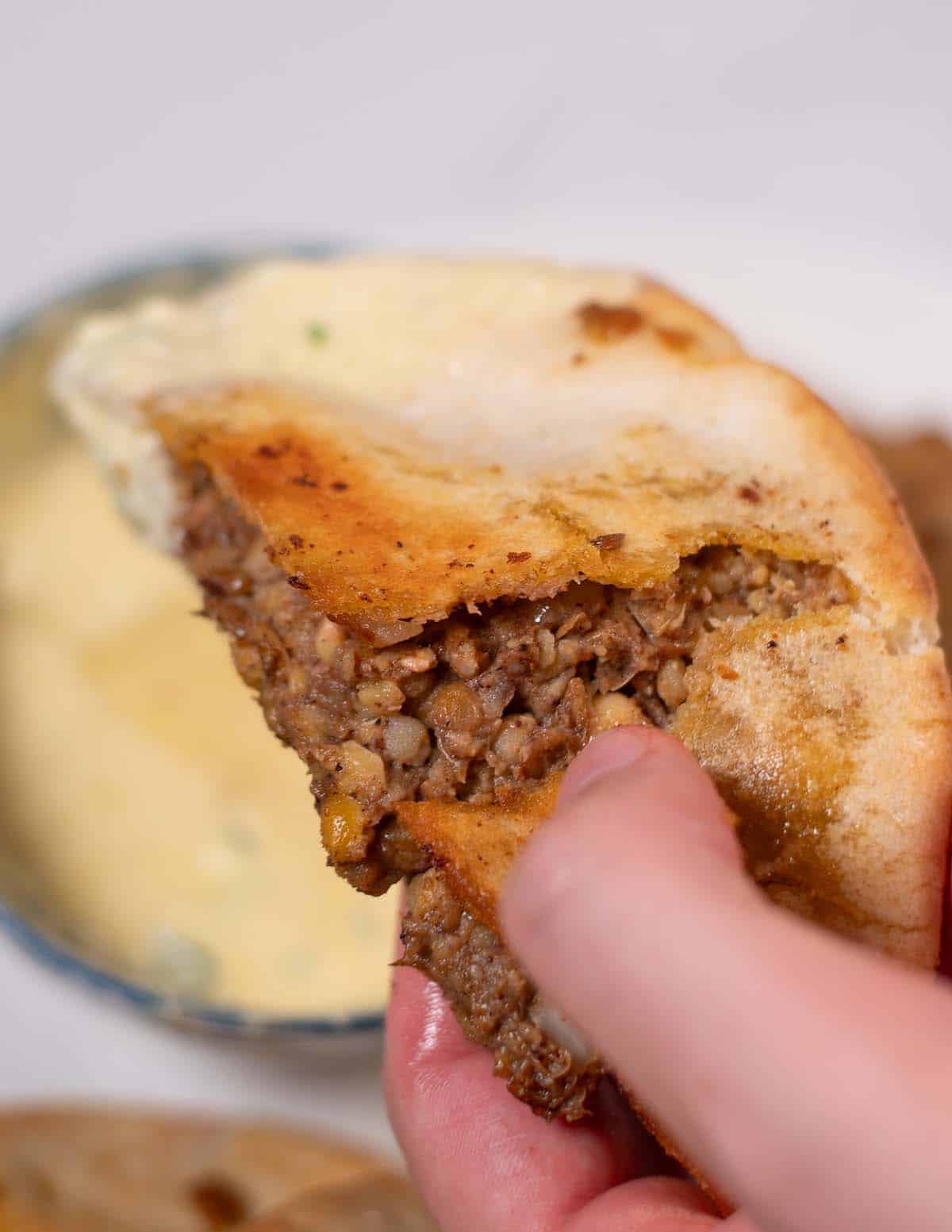
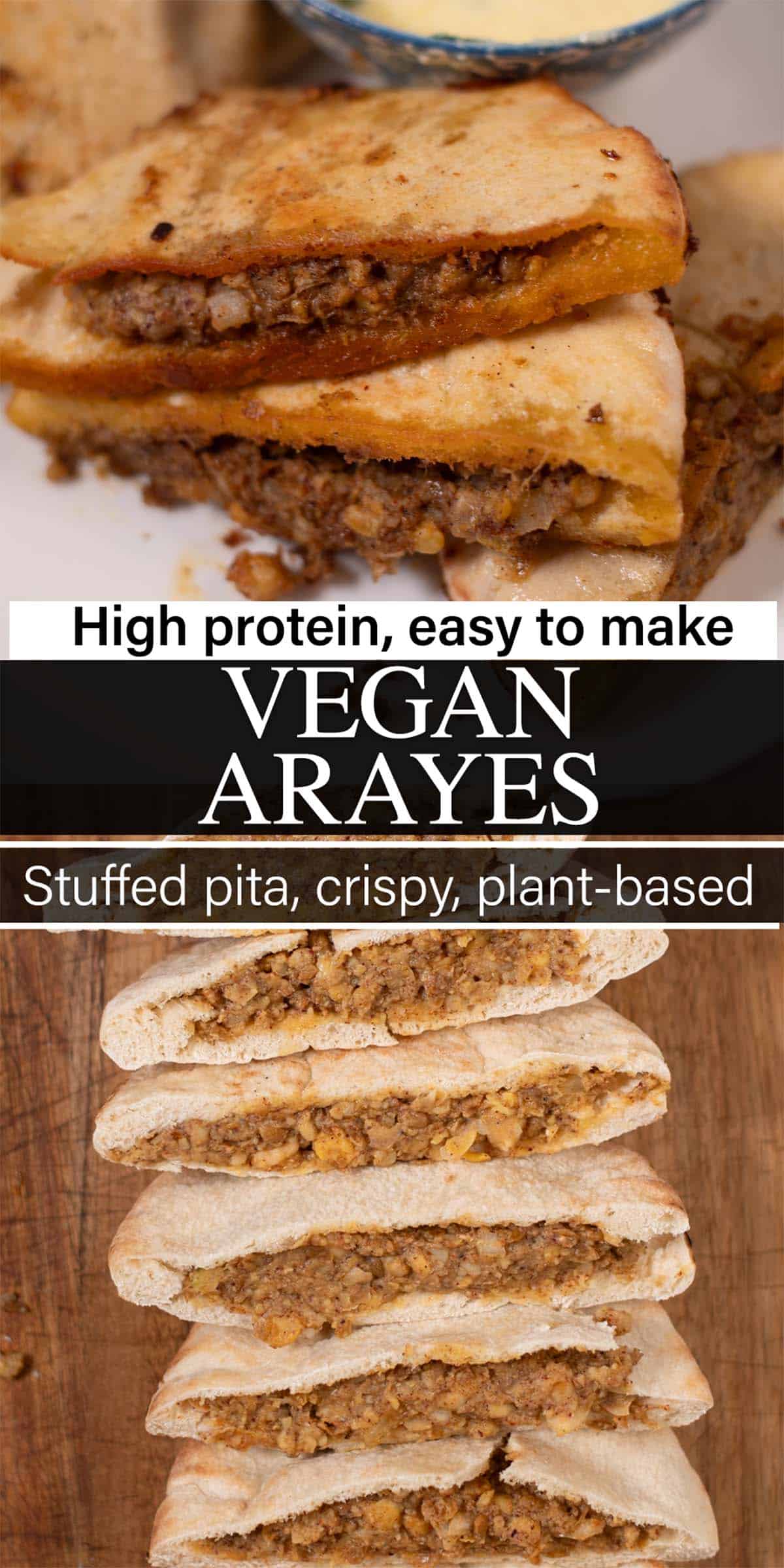
This plant-based version uses the same technique - half a pita stuffed with a spiced lentil and chickpea filling, pressed flat in a hot oiled pan, and cooked until both sides are golden and crispy. The filling behaves similarly to ground meat in a pressed pita because the roughly mashed mixture holds together and the chickpeas provide enough substance to fill and stay inside the bread during cooking.
Why this vegan version works
Rough mashing creates the right filling texture. Lentils and chickpeas mashed together until roughly broken - not smooth, but cohesive - produce a filling that holds together in the pita during pressing and cooking. The lentils provide a slightly soft, binding element; the chickpeas retain enough texture to give the filling substance and bite. The result is genuinely similar to a coarse ground meat mixture in terms of how it behaves inside a pressed pita.
Sumac as the primary spice. Sumac is the ingredient that makes this taste authentically Lebanese rather than merely spiced. Its fruity, sour, distinctly Middle Eastern character is the flavor note that separates arayes from a standard spiced bean filling. Combined with paprika and chili flakes, it produces a filling that is genuinely bold and identifiable as Middle Eastern in character.
Caramelizing the onion and garlic first. Cooking the onion until it is soft and beginning to color before combining with the beans adds a sweetness and depth that raw onion cannot provide. This step also removes excess moisture from the onion, which keeps the filling from making the pita soggy during cooking.
Pressing in a hot pan. The pressing technique is the same as the original - a spatula or heavy pan used to press the filled pita flat against the hot surface creates contact between the bread and the oil, producing an even golden crust. The pressure also helps the filling heat through quickly and compress slightly, which makes the finished arayes easier to eat without the filling spilling out.
The dairy-free yogurt sauce. Cool, creamy, and herby - the yogurt, garlic, parsley, and olive oil sauce provides the exact counterpoint the crispy spiced pita needs. It is the traditional accompaniment in a plant-based form and the element that makes this a complete dish rather than a standalone snack.
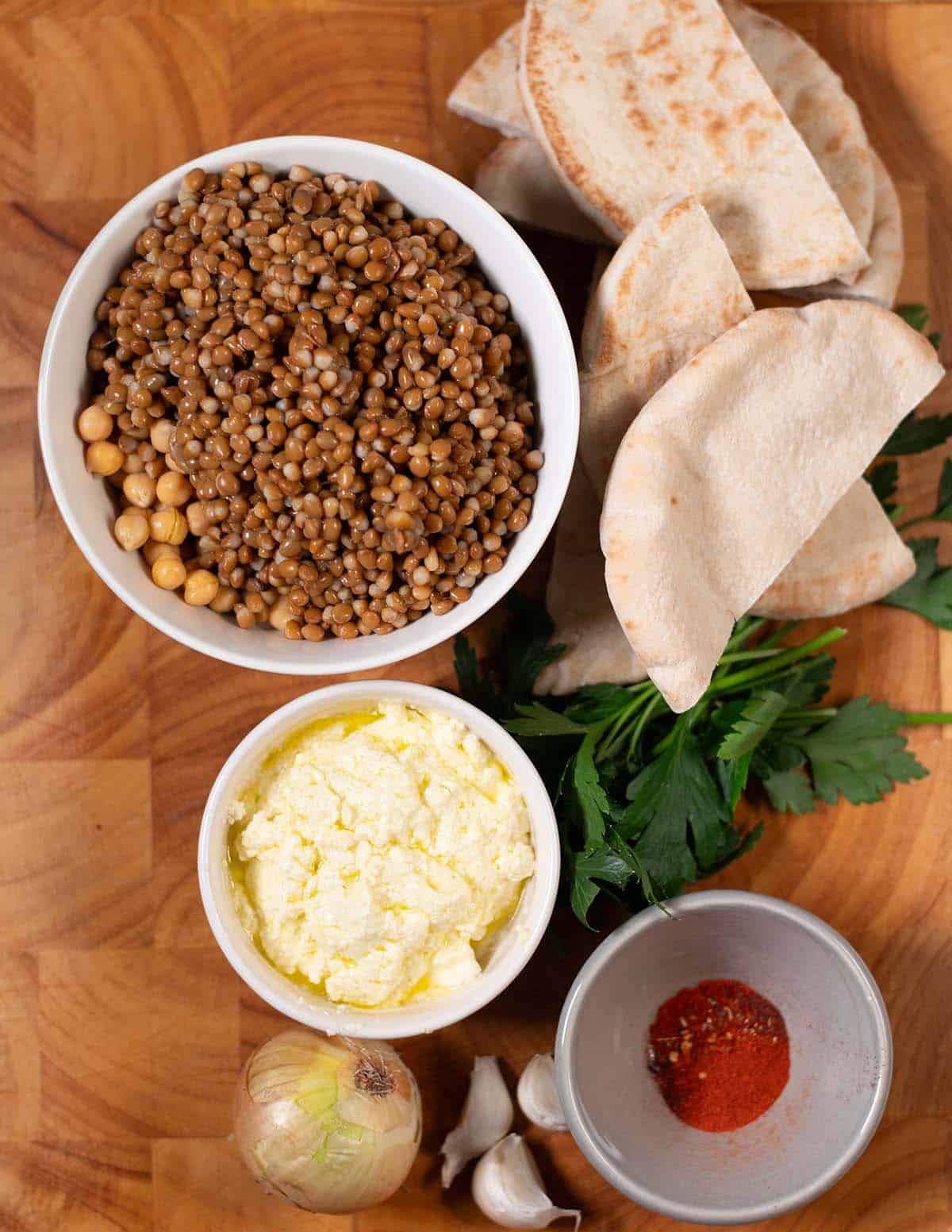
Ingredient notes
Lentils - one 15 oz can, drained and rinsed. The primary binding element in the filling. Green or brown lentils hold their shape best when roughly mashed. Drain thoroughly - excess liquid in the filling makes the pita soggy.
Chickpeas - one 15 oz can, drained and rinsed. Provide the substance and texture that give the filling its body. Drain and rinse thoroughly and pat dry if possible for the driest filling.
Onion - 1 medium, finely diced. Cooked in olive oil before combining with the beans. The caramelization adds sweetness and the cooking removes moisture.
Garlic - 3 cloves, pressed. Cooked with the onion for 1-2 minutes.
Olive oil - 2 tablespoons, divided between cooking the filling and frying the arayes.
Sumac - 2 teaspoons. The signature spice of this recipe and the ingredient that gives it its authentic Middle Eastern character. Sumac is sour, fruity, and slightly tangy - it is available in Middle Eastern grocery stores, larger supermarkets, and online. Do not substitute with anything else in the spice blend; its flavor is genuinely distinctive and irreplaceable in this context.
Paprika - 1 teaspoon. Adds warmth and color to the filling. Standard paprika rather than smoked works best here - the flavor profile is Middle Eastern rather than Spanish.
Chili flakes - 1 teaspoon. For background heat. Adjust to preference.
Pitas - 4, halved. Standard round pita bread, each halved into two semicircles. Look for pita that is thin rather than thick - thinner pita presses flat more easily and produces a crispier exterior. Each half is opened at the cut edge and stuffed.
Dairy-free yogurt - half a cup. The base of the dipping sauce. Any plain, unsweetened dairy-free yogurt works - coconut-based, soy-based, or oat-based. The yogurt should be thick rather than watery for the best sauce texture.
Garlic - 1 clove, pressed, for the sauce. Raw garlic in a yogurt sauce is assertive - reduce to half a clove for a milder result.
Fresh parsley - 2 tablespoons, finely chopped, for the sauce.
Olive oil - 1 tablespoon, for the sauce. Drizzled in and stirred through for richness.
How to make vegan arayes
Make the filling first. Heat 1 tablespoon of olive oil in a skillet over medium heat. Add the finely diced onion and cook for 5-6 minutes, stirring occasionally, until softened and beginning to color. Add the pressed garlic and cook for a further 1-2 minutes until fragrant. Remove from the heat.
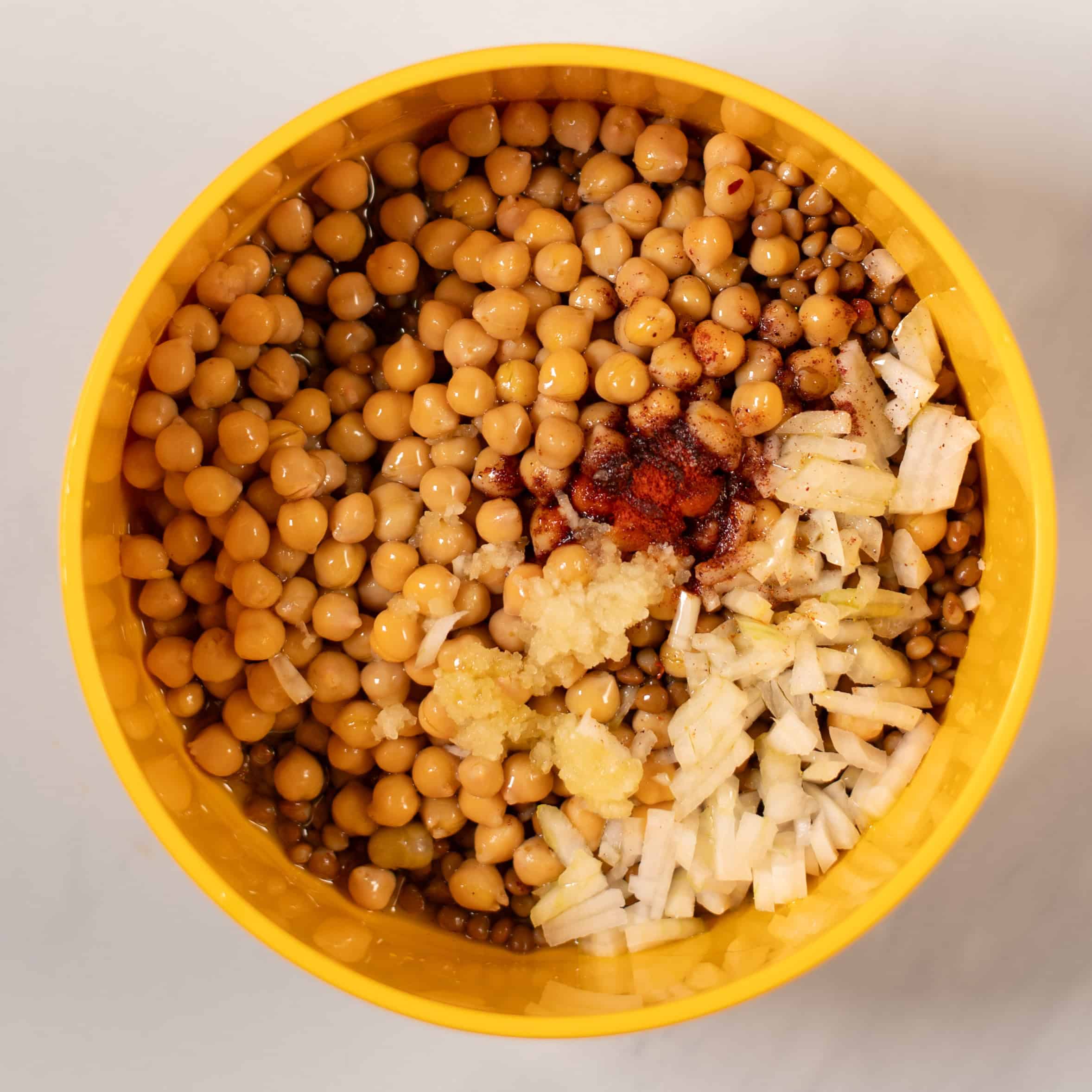
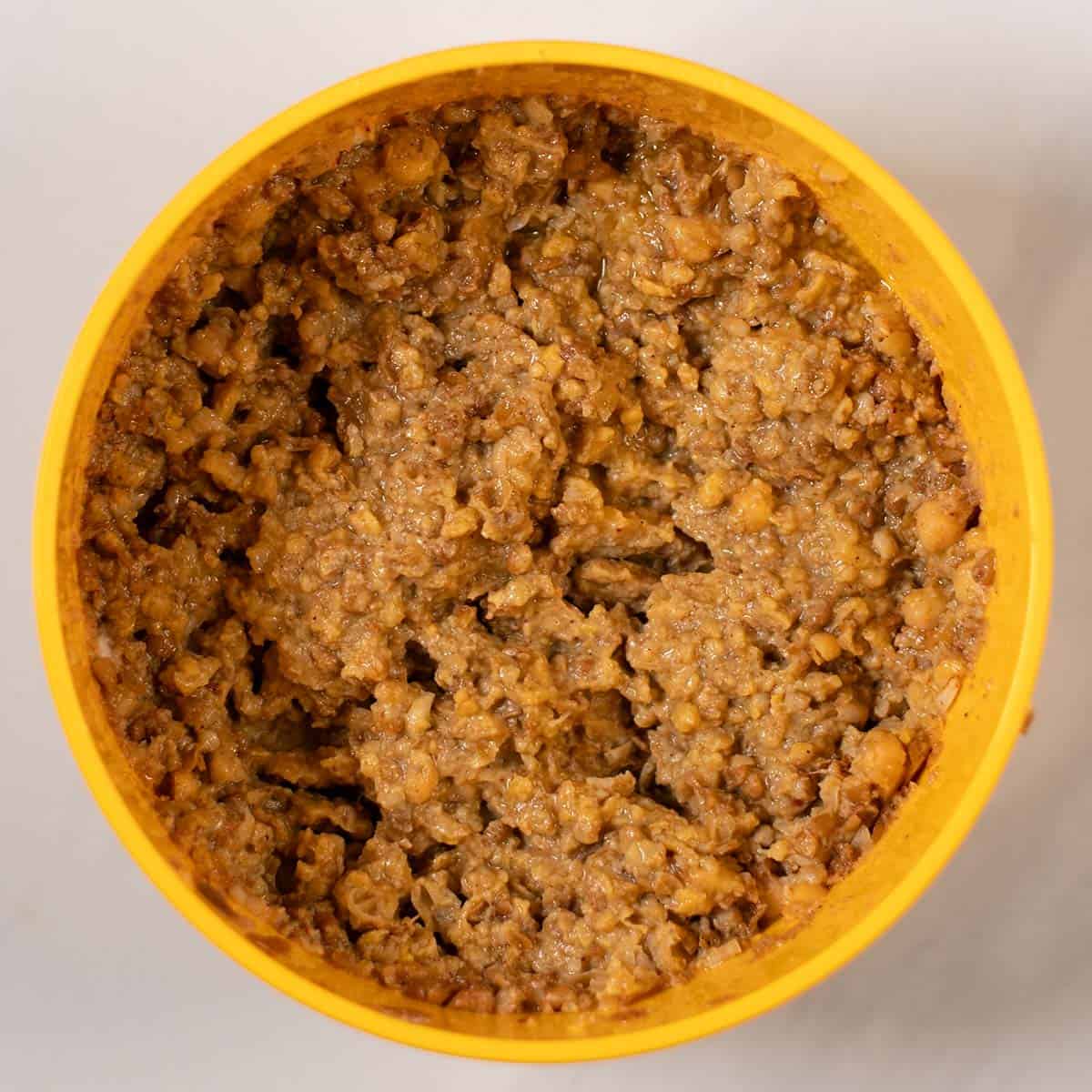
Drain and rinse the lentils and chickpeas thoroughly. In a large bowl, combine the lentils, chickpeas, and cooked onion and garlic mixture. Using a fork or potato masher, roughly mash until approximately half the mixture is broken down and the rest remains in pieces. The filling should be cohesive enough to hold together but not a smooth paste - texture is important. Season generously with the sumac, paprika, chili flakes, salt, and pepper and mix until the spices are evenly distributed throughout. Taste and adjust seasoning.
Make the sauce. In a small bowl, combine the dairy-free yogurt, pressed garlic, chopped parsley, olive oil, salt, and pepper. Stir to combine and refrigerate until serving.
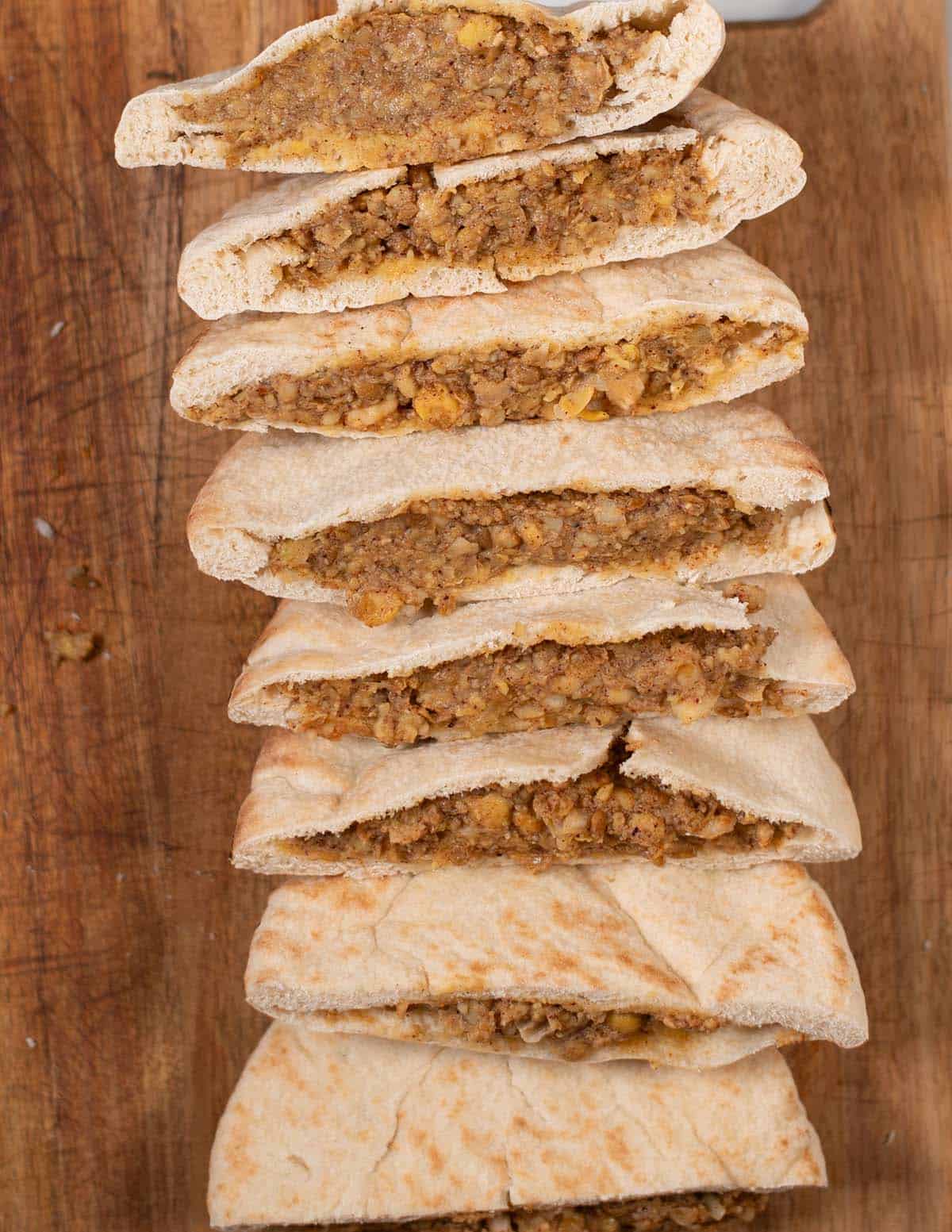
Fill the pitas. Halve each pita into two semicircles. Gently open the cut edge of each half to create a pocket. Spoon a generous amount of filling into each pocket - roughly 3-4 tablespoons - and press the pita together so the filling is distributed in an even layer from edge to edge. Do not overfill - the filling should sit in a thin, even layer inside the pita, not bulge out.
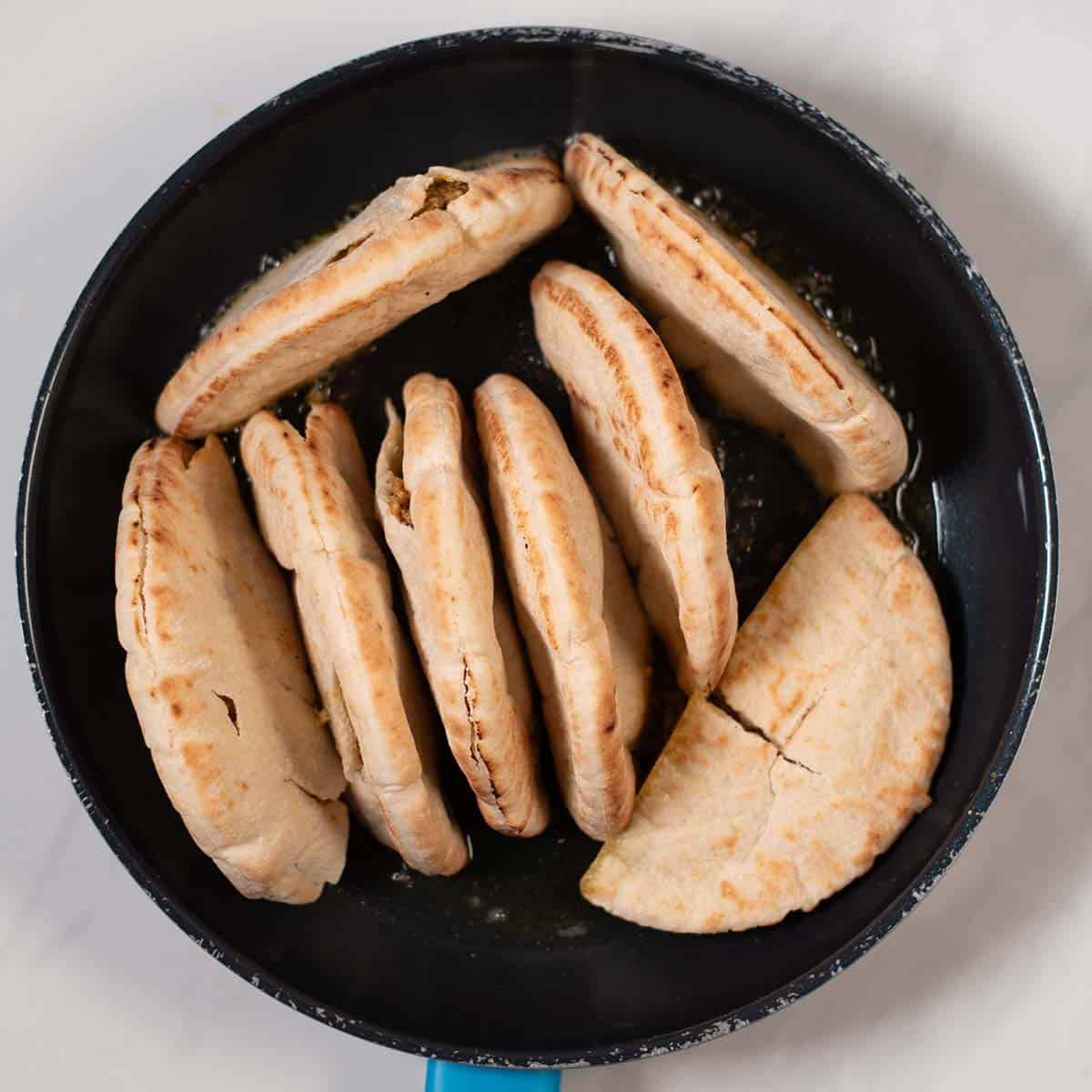
Cook the arayes. Heat the remaining tablespoon of olive oil in a large skillet or grill pan over medium-high heat. Add the filled pitas in a single layer, pressing down firmly with a spatula. Cook for 2-3 minutes without moving until the underside is golden and crispy. Flip, press down again, and cook for a further 2-3 minutes until the second side is golden. Work in batches if needed.
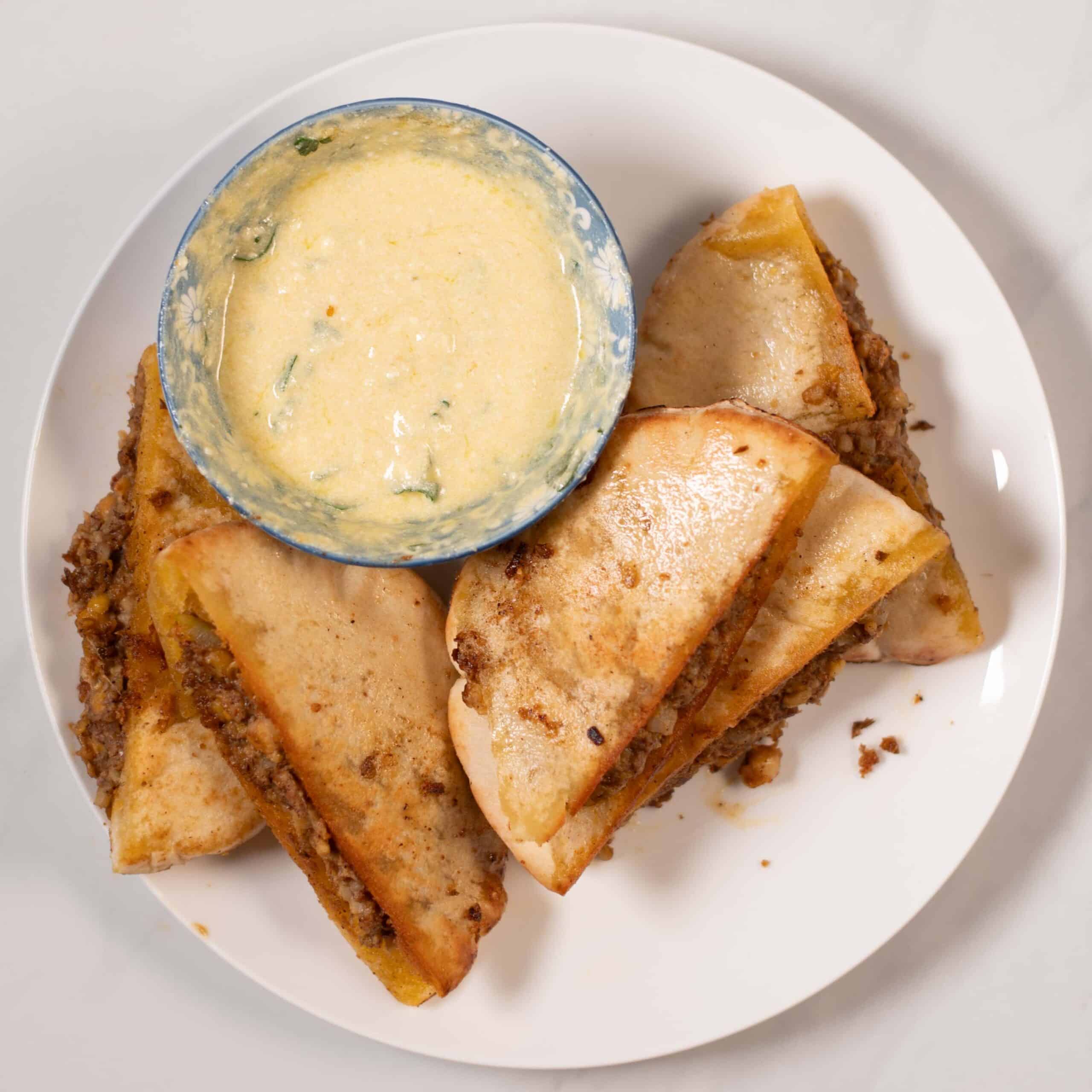
Serve immediately with the dairy-free yogurt sauce alongside.
The crispy pita technique
The crispy exterior is what distinguishes arayes from a stuffed pita sandwich - and getting it right takes attention to two things: heat and pressure.
The pan needs to be properly hot before the pitas go in. A pan that is not hot enough produces pale, softened pita rather than golden crust. The oil should shimmer and a small piece of pita should sizzle immediately when it touches the surface.
The pressing is the other key element. A spatula pressed firmly down on the pita for the first minute of cooking creates even contact between the bread and the pan, which is what produces an evenly golden rather than patchy crust. Some cooks use a second, heavy pan placed on top to maintain the pressure - this works well and produces the most even result.
Arayes are really best right out of the frying pan - the toasty element can be lost as the pita sits and steams with the hot filling. Serve immediately.
Ways to serve
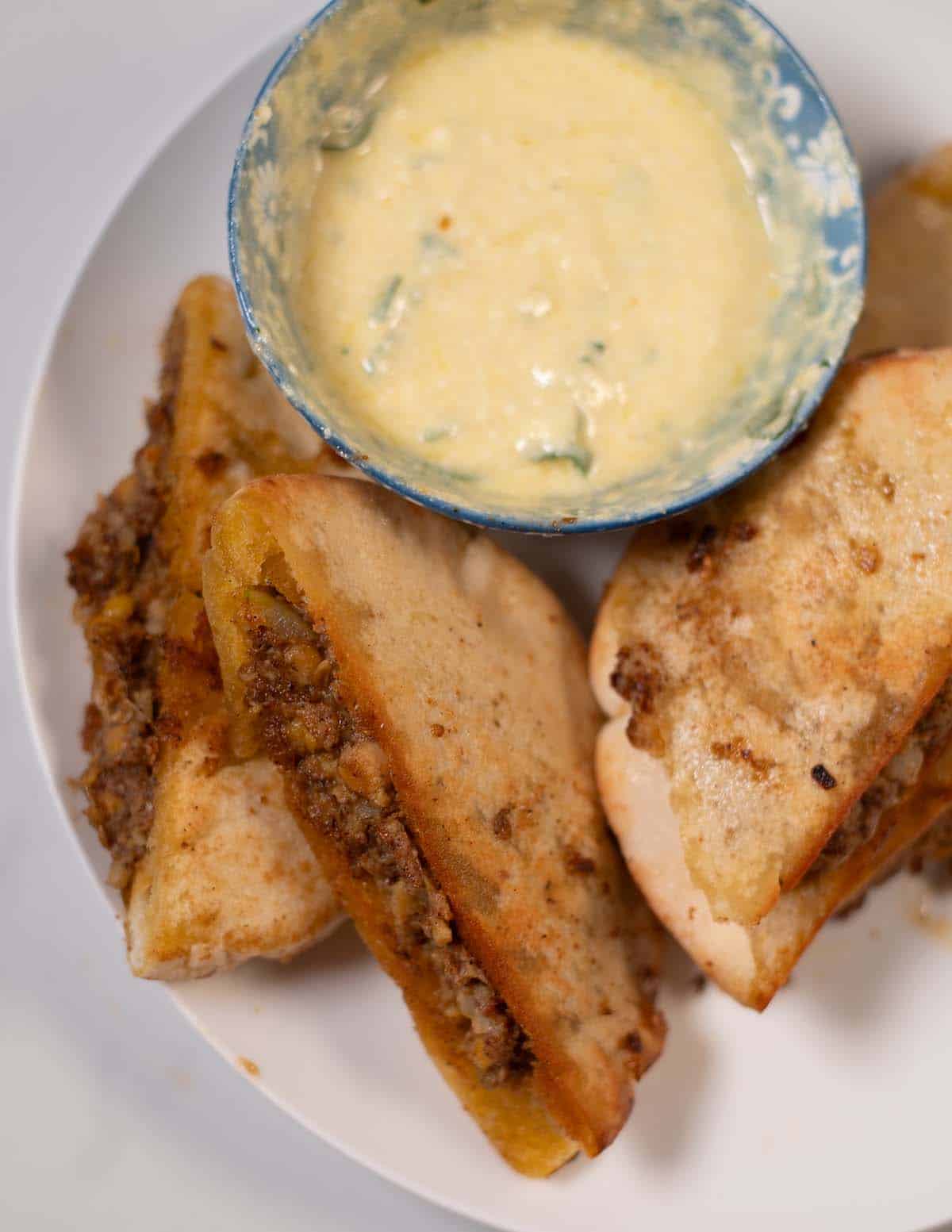
With the dairy-free yogurt sauce - the intended accompaniment. Serve the sauce cold alongside the hot arayes - the contrast is part of what makes them so good.
As part of a mezze spread - alongside hummus, baba ganoush, tabbouleh, and the Balela Salad for a fully plant-based Middle Eastern spread. The arayes work both as a main component and as part of a larger sharing table.
With the Dense Bean Salad - the bold sumac and paprika flavors in the arayes pair naturally with the Mediterranean character of the Dense Bean Salad served alongside.
Halved as a party appetizer - each pita half cut again into two smaller triangles after cooking makes 16 bite-sized pieces from 4 pitas. Serve with the yogurt sauce for dipping.
With pickles - pickled turnips or cucumber pickles alongside, as is traditional in Lebanese street food culture, cut through the richness of the crispy pita and filling.
Storage
Cooked arayes: Best eaten immediately - the crispy exterior softens as the pitas sit and steam. If making ahead, reheat in a hot dry pan or in an oven at 400°F / 200°C for 5 minutes to restore crispness.
The filling: Stores in an airtight container for up to 3 days in the fridge. Stuff and cook the pitas fresh. The filling also improves slightly overnight as the sumac and spices penetrate further.
The yogurt sauce: Stores for up to 3 days refrigerated. Stir before serving.
Uncooked filled pitas: Can be assembled and refrigerated for up to 4 hours before cooking - a useful make-ahead step for gatherings.
Freezer: The filling freezes well for up to 2 months. Thaw overnight in the fridge and stuff the pitas fresh before cooking.
Frequently asked questions
Arayes are a Lebanese street food - pita pockets stuffed with spiced ground meat, pressed flat, and grilled or pan-fried until the outside is crispy. This plant-based version uses a spiced lentil and chickpea filling in place of the meat.
Yes - arrange the filled pitas on a baking sheet and bake at 400°F / 200°C for 15-18 minutes, flipping halfway. Brush the outsides with olive oil before baking for the best color. The pan-fried version produces a slightly crispier result, but the baked version works well and is more hands-off.
Sumac is a ground spice made from dried sumac berries - it is sour, fruity, and distinctly Middle Eastern in flavor. It is widely available in Middle Eastern grocery stores, larger supermarkets (usually in the spice aisle), and online. It is worth tracking down specifically for this recipe as its flavor is irreplaceable.
Yes - cannellini beans in place of lentils produce a slightly smoother, creamier filling. Black beans work for a completely different flavor profile but stray from the Middle Eastern character. The lentil and chickpea combination is the most similar in texture and flavor to the original meat filling.
The two most common causes are overfilling and undermashing. Use no more than 3-4 tablespoons of filling per pita half, and ensure roughly half the mixture is mashed smooth so the filling has enough binding to hold together during pressing and cooking.
Arayes are traditionally a meat dish and this is a plant-based adaptation, not an authentic version. The spicing - sumac, paprika, onion, garlic - is inspired by Lebanese kofta seasoning, and the cooking technique is the same. It is a plant-based interpretation that respects the original format rather than a replacement for the traditional dish.
More recipes you'll love
- Balela Salad with Pistachios
- Dense Bean Salad
- Vegan Grinder Salad
- High Protein Lentils with Tempeh and Chickpeas
- Skordalia
- Chopped Salad Sandwich
Made these Vegan Arayes? Leave a comment below and rate the recipe - it helps more people find it. Tag me on Instagram or Facebook with a photo. Florian.

Vegan Arayes (Lentil and Chickpea Stuffed Pita, 30 Minutes)
Pita halves stuffed with a spiced lentil and chickpea filling — sumac, paprika, and chili flakes with caramelized onion and garlic — pressed flat and pan-fried until golden and crispy. Served with a dairy-free yogurt, garlic, and parsley sauce. 30 minutes, completely plant-based.
Ingredients
For the filling:
- 1 × 15 oz can lentils, drained and rinsed
- 1 × 15 oz can chickpeas, drained and rinsed
- 1 medium onion, finely diced
- 3 cloves garlic, pressed
- 1 tablespoon olive oil
- 2 teaspoons sumac
- 1 teaspoon paprika
- 1 teaspoon chili flakes
- Salt and pepper to taste
For cooking:
- 4 pitas, halved
- 1 tablespoon olive oil
For the sauce:
- ½ cup dairy-free yogurt, plain and unsweetened
- 1 clove garlic, pressed
- 2 tablespoons fresh parsley, finely chopped
- 1 tablespoon olive oil
- Salt and pepper to taste
Instructions
- Heat 1 tablespoon of olive oil in a skillet over medium heat. Add the diced onion and cook for 5–6 minutes until softened and beginning to color. Add the pressed garlic and cook for 1–2 minutes until fragrant. Remove from the heat.
- In a large bowl combine the drained lentils, drained chickpeas, and cooked onion and garlic. Roughly mash with a fork or potato masher until approximately half the mixture is broken down and the rest remains in pieces. The filling should be cohesive but textured — not a smooth paste.
Add the sumac, paprika, chili flakes, salt, and pepper. Mix until the spices are evenly distributed. Taste and adjust seasoning. - Make the sauce. Combine the dairy-free yogurt, pressed garlic, chopped parsley, olive oil, salt, and pepper in a small bowl. Stir to combine and refrigerate until serving.
- Halve each pita into two semicircles. Gently open the cut edge of each half to create a pocket. Spoon 3–4 tablespoons of filling into each pocket and press flat so the filling is in an even layer from edge to edge. Do not overfill.
- Heat the remaining tablespoon of olive oil in a large skillet over medium-high heat until shimmering. Add the filled pitas in a single layer and press down firmly with a spatula. Cook for 2–3 minutes without moving until the underside is golden and crispy. Flip, press down again, and cook for a further 2–3 minutes until golden. Work in batches if needed. Serve immediately with the dairy-free yogurt sauce.
Notes
- Half-mash, don't purée: Roughly half the filling should remain in pieces for texture. A smooth paste will not produce a filling with the same substance or bite.
- Dry the beans thoroughly: Excess moisture in the filling makes the pita soggy during cooking. Drain, rinse, and pat the lentils and chickpeas dry before mashing.
- Hot pan: The skillet must be properly hot before the pitas go in — the oil should shimmer and a small piece of pita should sizzle immediately.
- Press firmly: Use a spatula or place a second heavy pan on top for the first minute of cooking to create even contact and an even golden crust.
- Sumac: The essential spice — sour, fruity, distinctly Lebanese in character. Available at Middle Eastern grocers, larger supermarkets, and online. Do not substitute.
- Serve immediately: The crispy exterior softens as the arayes sit. These are best eaten directly from the pan.
- Bake instead: 400°F / 200°C for 15–18 minutes, flipping halfway. Brush outsides with olive oil first.
- Make ahead: The filling stores for 3 days refrigerated. The sauce stores for 3 days. Stuff and cook the pitas fresh.
- Freezer: The filling freezes for up to 2 months.
Nutrition Information:
Yield: 4 Serving Size: 2 halvesAmount Per Serving: Calories: 430Total Fat: 14gSaturated Fat: 2gUnsaturated Fat: 12gCholesterol: 0mgSodium: 645mgCarbohydrates: 63gFiber: 11gSugar: 3gProtein: 17g
Ara-yes!!!! This was my favorite from our local Lebanese restaurant in Ohio 10+ years ago and I haven't seen it anywhere since going vegan. Can't wait to make it!
Wonderful and let me know what you think, Paula. 🙂