Briam (Greek Roasted Vegetables with Potatoes and Zucchini)
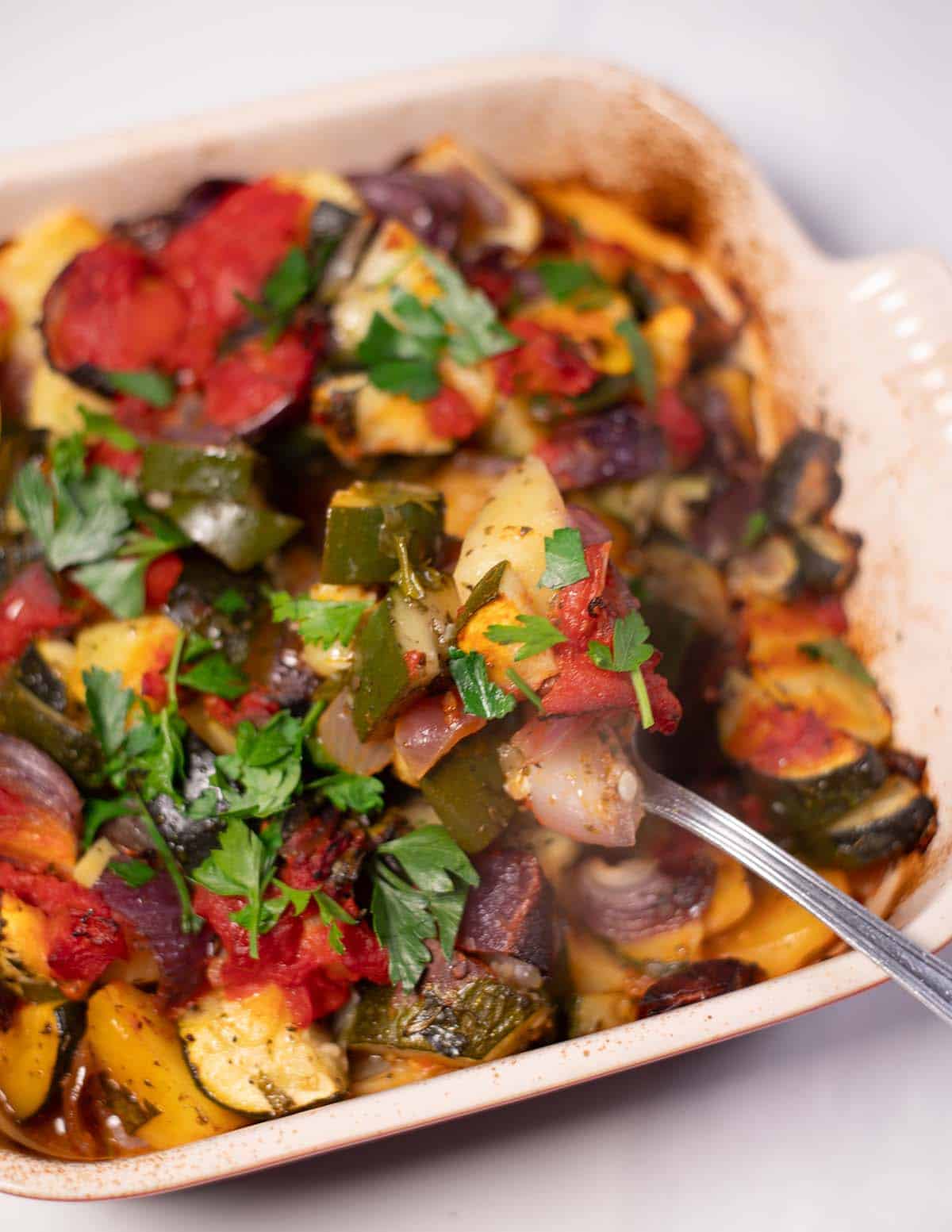
Briam is the Greek roasted vegetable classic - potatoes, zucchini, red onions, and garlic layered between diced tomatoes with olive oil, oregano, and parsley, and baked slowly until tender and deeply flavored. No eggplant, no fuss, completely plant-based. 90 minutes of mostly oven time.
Table of contents
What is briam?
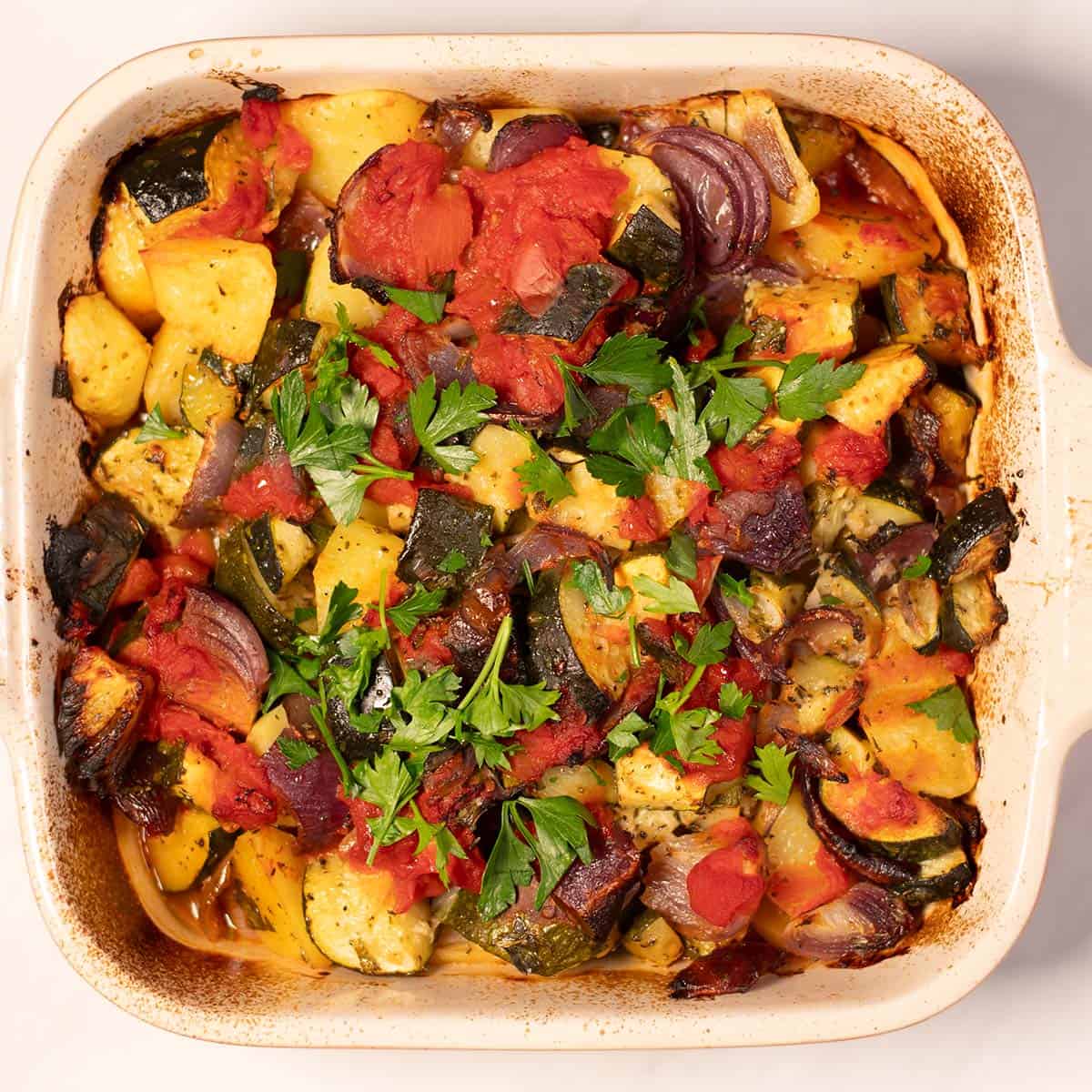
Briam (Μπριάμ) is a classic Greek dish of roasted seasonal vegetables baked in plenty of good olive oil until tender and caramelized. It belongs to the family of Greek ladera - vegetable dishes cooked with olive oil - and it's as rustic as it is comforting.
Briam has deep cultural roots in Greek home cooking, especially in rural and island communities where seasonal vegetables and olive oil are dietary staples. It exemplifies the Mediterranean lifestyle, emphasizing plant-based nutrition, seasonal produce, and olive oil as a foundation of flavor and health. Briam is economical, wholesome, and satisfying, often served as a main dish during periods of religious fasting, or as a weekday comfort meal in Greek households.
The comparison to ratatouille is frequently made - both are slow-baked Mediterranean vegetable dishes with tomatoes and olive oil - but briam is distinctly its own thing. Where ratatouille is typically made on the stovetop with precisely cut vegetables arranged decoratively, briam is an oven dish where the vegetables are simply seasoned, layered, and left to bake into something deeply flavored without any attending.
Why this recipe works
The layered tomato method. Diced tomatoes on the bottom, vegetables in the middle, diced tomatoes on top - rather than the mixed-through approach many recipes use. The bottom layer steams and protects the vegetables during the long bake; the top layer caramelizes and concentrates into a deep, sweet tomato crust. The finished dish has more flavor depth than any version where the tomatoes are simply mixed in.
Coating in a bowl before baking. Tossing the vegetables with olive oil, garlic, oregano, and seasoning in a large bowl before they go into the dish ensures every piece is evenly coated. This produces more consistent seasoning and caramelization than drizzling oil over the vegetables in the dish.
The long covered bake. Ninety minutes covered at 190°C / 375°F is significantly longer than many recipes suggest, and the difference is significant. The covered phase allows the vegetables to steam in their own juices and the tomato liquid, softening completely and absorbing the olive oil and oregano throughout rather than just on the surface. The final ten minutes uncovered does the caramelizing work.
Red onions specifically. Red onions have a natural sweetness that becomes deeply pronounced during a long slow bake. They melt into the dish rather than asserting themselves, adding a background sweetness that makes the finished briam taste more complex than the ingredient list suggests.
Good olive oil in the right quantity. Briam is a ladera dish - olive oil is a primary ingredient, not a coating. A third of a cup of olive oil for this quantity of vegetables is not excessive; it is what allows the vegetables to cook and caramelize properly rather than drying out during the long bake.
Ingredient notes
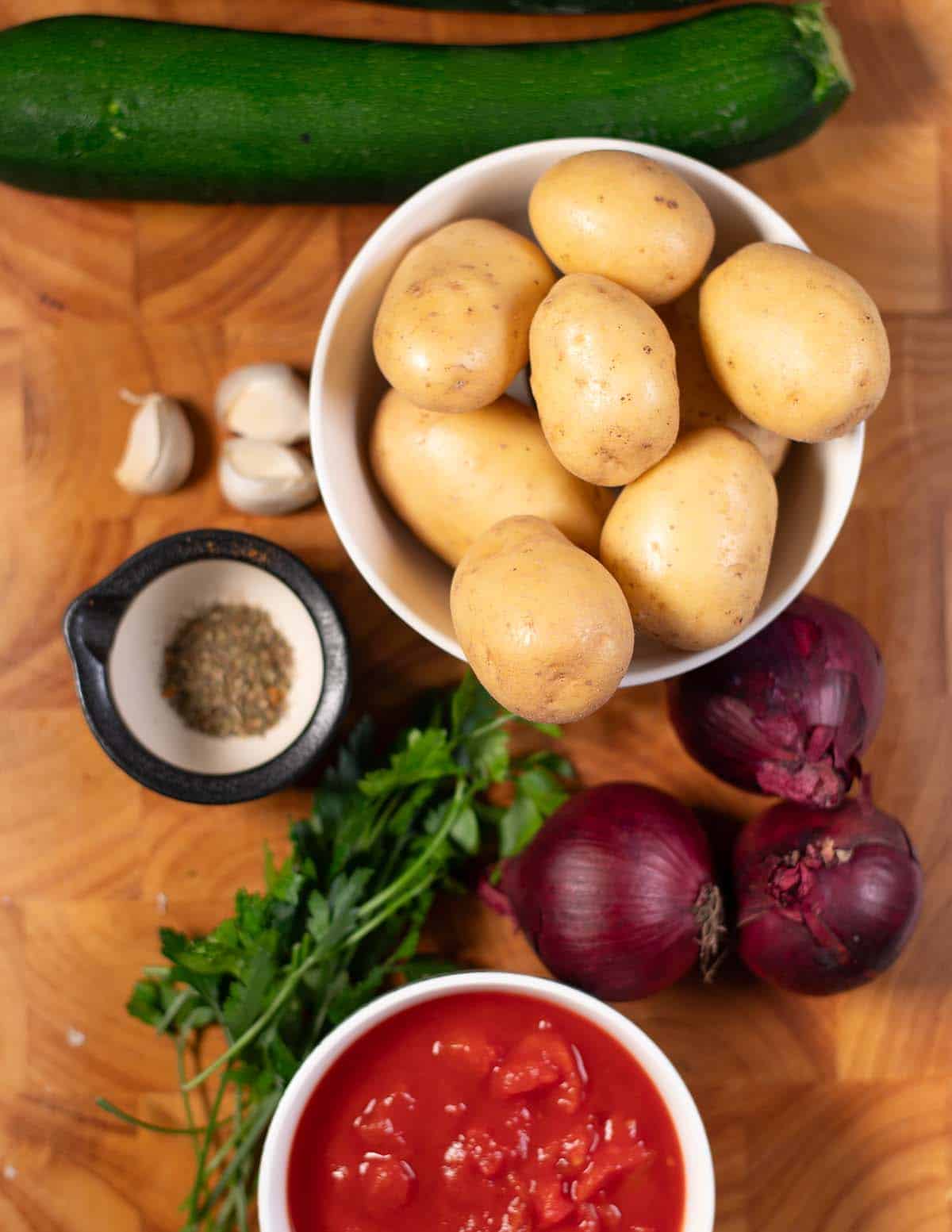
Potatoes - 28 oz, peeled and chopped into roughly one-inch pieces. They take the longest to cook and form the hearty backbone of the dish. All-purpose or waxy potatoes both work; Yukon Gold is particularly good for its creamy texture when fully roasted.
Zucchini - 2 medium, cut into thick rounds of about half an inch. Use small or medium zucchini, which contain more flesh and fewer seeds. Larger zucchini can be watery. Cutting them thick prevents them from completely dissolving during the long bake - they should be very tender but still present.
Red onions - 3 medium, peeled and cut into wedges or thick rings. Red onions are preferable to white or yellow here - their sweetness comes through beautifully after a slow bake and their color adds to the visual appeal of the finished dish.
Garlic - 3 cloves, thinly sliced or pressed. Mixed through the vegetables in the bowl so the garlic flavor distributes evenly throughout the dish rather than concentrating in one area.
Diced tomatoes - one 15 oz can. Used for both layers - the bottom and the top. The juice from the can is part of the liquid that the vegetables steam in during the covered bake. A good-quality can makes a difference here; the tomatoes are a primary flavor.
Olive oil - a third of a cup, extra virgin. This is what makes briam briam. Use the best quality olive oil available - it is a featured ingredient, not a cooking medium.
Dried oregano - 1 teaspoon. The defining herb of Greek cooking. Dried oregano has a more concentrated, slightly earthier flavor than fresh in this context, and it is the traditional choice.
Fresh parsley - a quarter cup, chopped. Stirred through the vegetable mix before baking. It adds freshness and a slight green bitterness that balances the sweetness of the onions and tomatoes.
How to make briam
Preheat the oven to 190°C / 375°F.
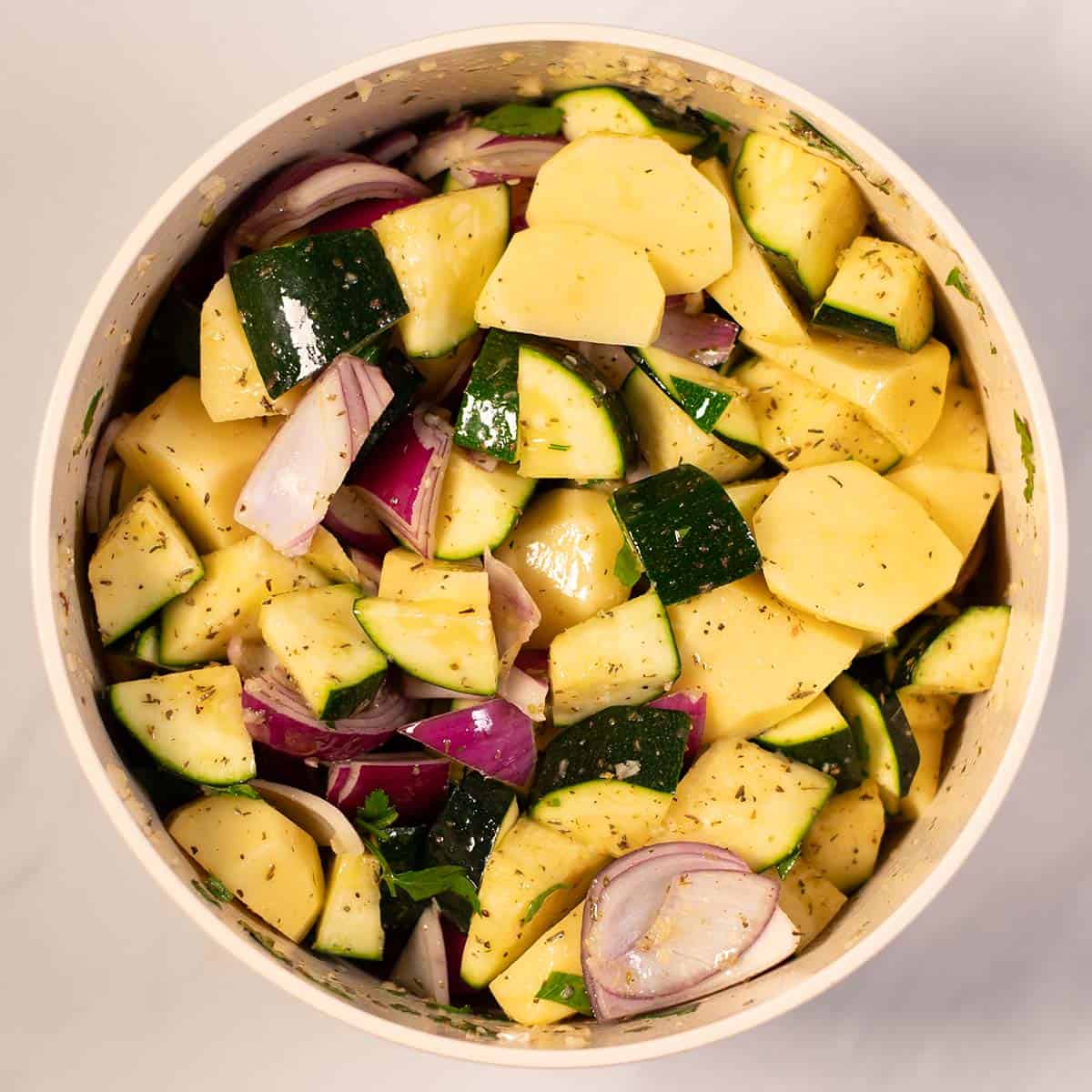
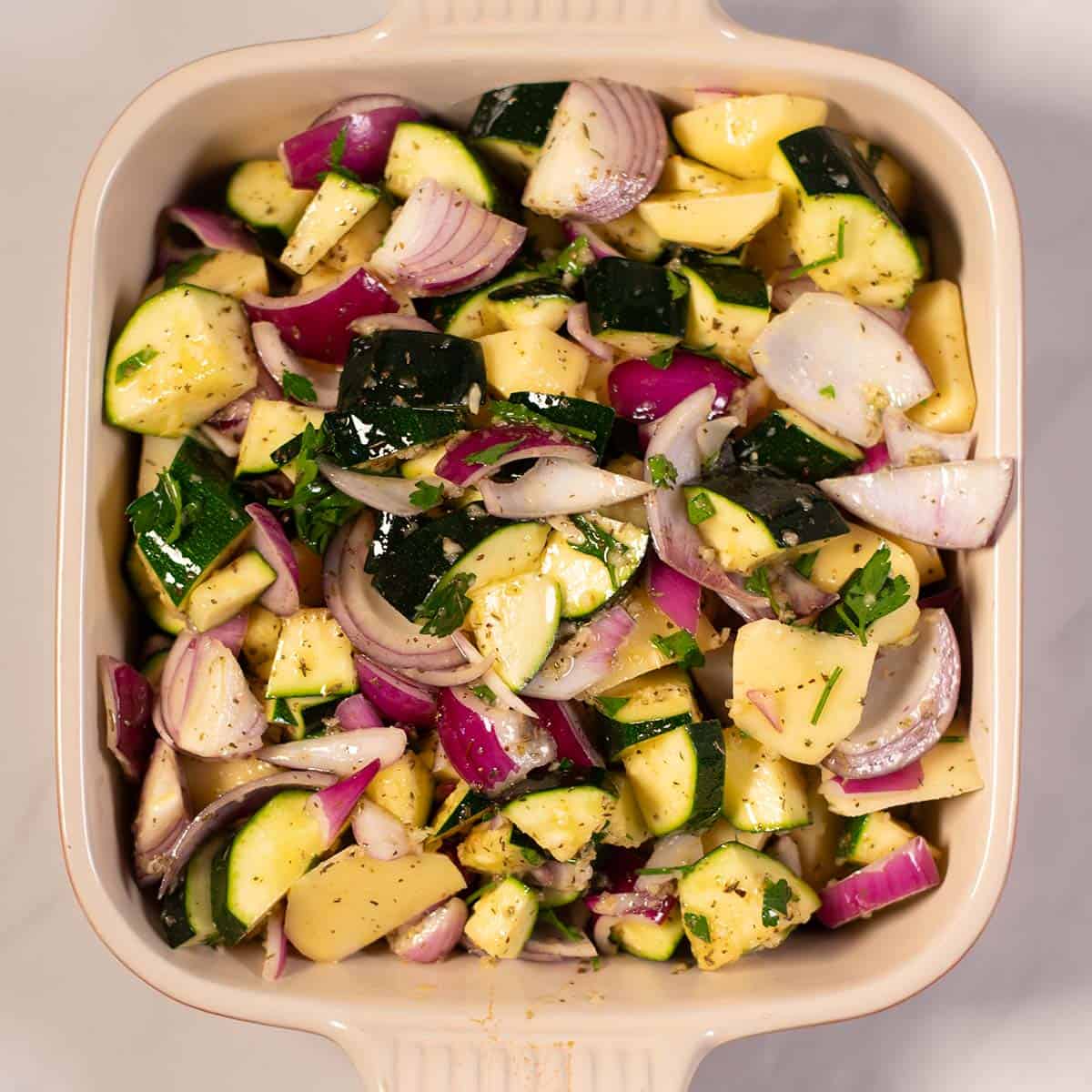
Peel and chop the potatoes into roughly one-inch pieces. Cut the zucchini into thick rounds of about half an inch. Cut the red onions into wedges or thick rings. In a large bowl, combine the potatoes, zucchini, and onions. Add the garlic, olive oil, oregano, and chopped parsley. Season generously with salt and pepper. Toss everything together until every piece is evenly coated in oil and seasoning.
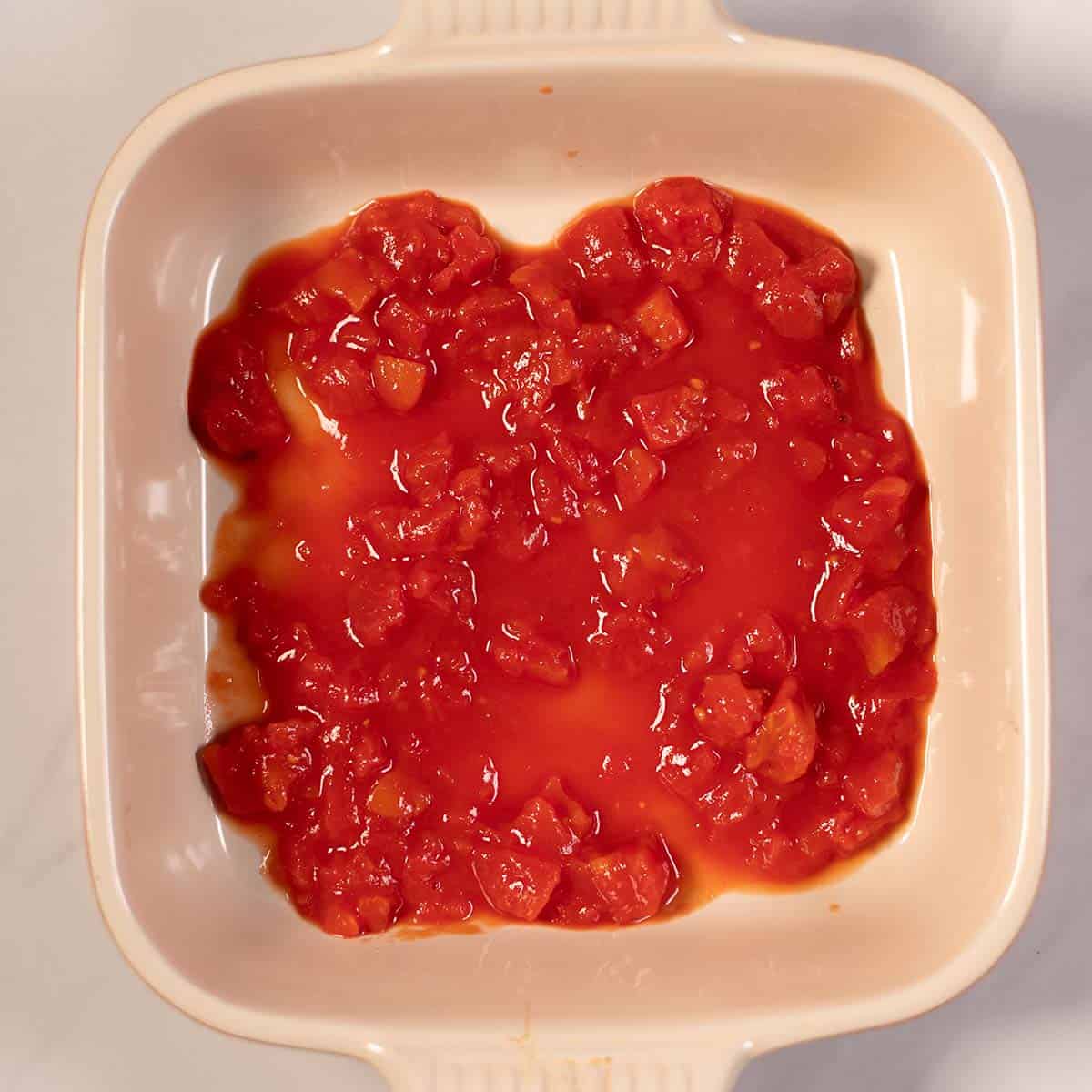
Pour half the diced tomatoes - along with their juice - into the bottom of a large baking dish and spread in an even layer. This is the bottom tomato layer.
Add the dressed vegetables in an even layer over the tomatoes.
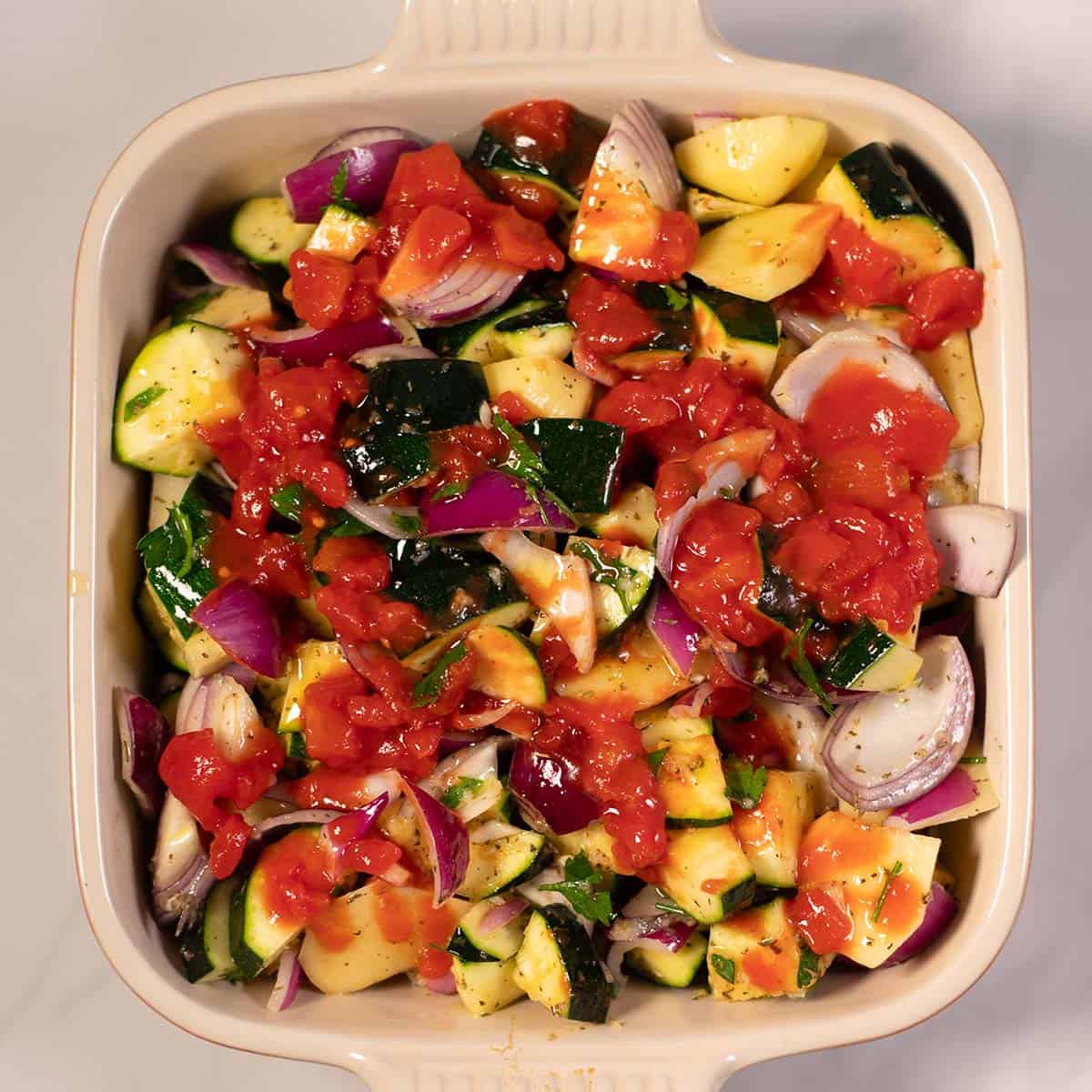
Pour the remaining diced tomatoes over the top of the vegetables, spreading them evenly. This is the top tomato layer.
Cover the baking dish tightly with aluminum foil. Bake covered for 80 minutes. The vegetables should be completely tender and the tomato layers bubbling.
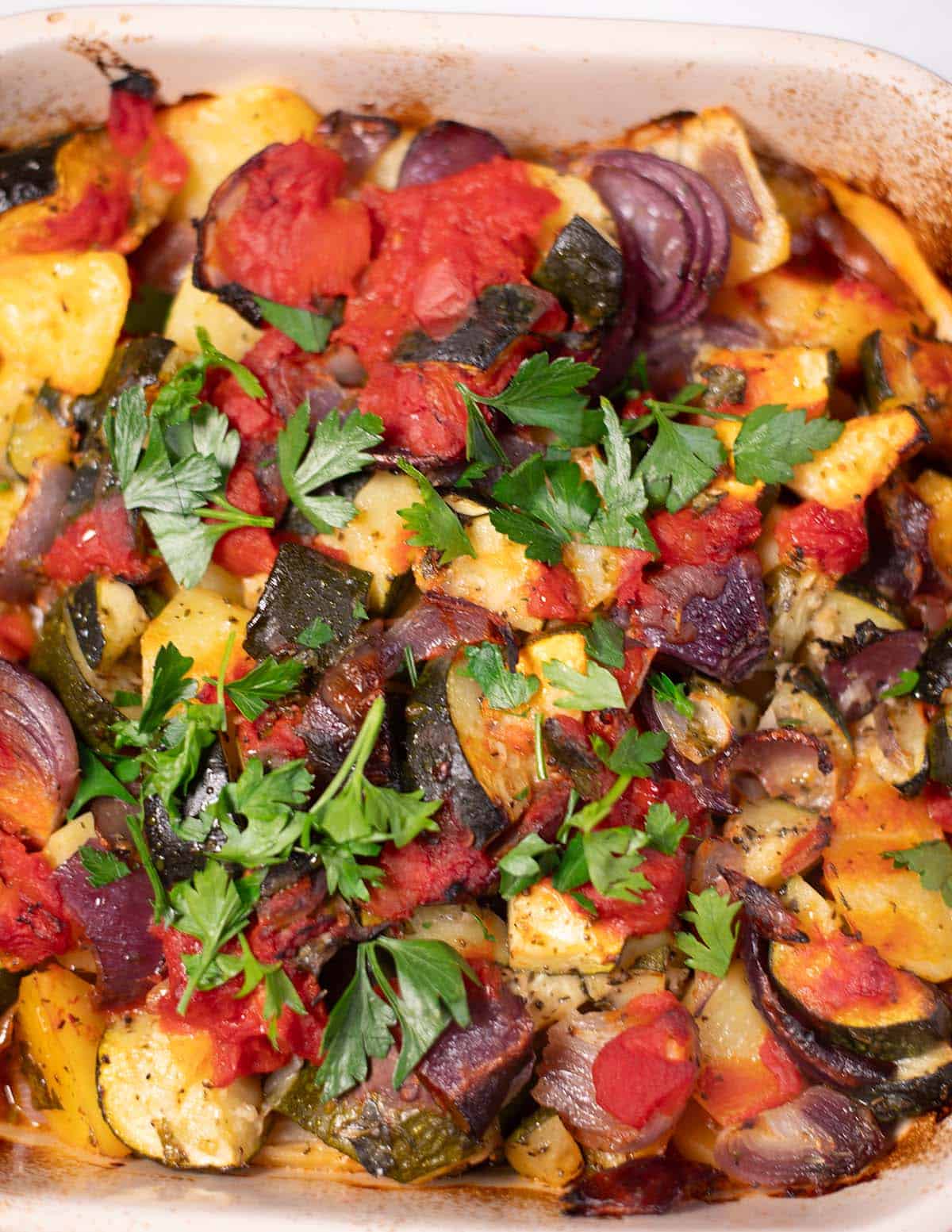
Remove the foil and bake for a further 10 minutes until the top layer of tomatoes has caramelized and the visible edges of the vegetables are slightly colored.
Let the briam rest for 15-20 minutes after baking. This allows the flavors to meld and the oil to settle. Serve warm, at room temperature, or cold the next day.
The layering technique
Most briam recipes either mix everything together in the dish or arrange vegetables in alternating slices like a French-style gratin. The layering method here - tomatoes, vegetables, tomatoes - is the traditional Greek approach and produces a better result than either alternative.
The bottom tomato layer does two things: it creates a moist, acidic surface that prevents the potatoes from sticking and provides steam during the covered bake; and it infuses the underside of the vegetables with tomato flavor as they cook. The top tomato layer does something different - it caramelizes during the uncovered final minutes, concentrating into a deep, slightly jammy tomato crust that is the most flavorful part of the finished dish.
To bake the briam, use a large baking pan so that the vegetables are not layered too deep. Overcrowding - a too-small dish with vegetables piled high - produces steamed rather than roasted vegetables. A dish large enough that the vegetable layer is roughly two to three inches deep produces the best result.
Ways to serve
As a main course - the traditional approach. A generous portion of briam with crusty bread to mop up the olive oil and tomato juices is a complete, satisfying meal. This is how it is most commonly served in Greek homes.
With bread - essential. The juices at the bottom of the dish - olive oil, tomato liquid, and the concentrated vegetable juices from the long bake - are best absorbed by a good bread. Sourdough, pita, or any crusty bread works.
At room temperature - briam can be served warm, at room temperature, or even cold the next day - the flavor only deepens with time. It is an excellent make-ahead dish precisely because of this property.
As a side dish - alongside any main course that benefits from a vegetable accompaniment. Pairs particularly well with dishes that have a bold, spiced character.
With a simple green salad - a lightly dressed cucumber and tomato salad or arugula alongside provides freshness against the rich, slow-cooked vegetables.
Storage
Refrigerator: Store in an air-tight container in the fridge for 4 to 5 days. Briam is genuinely better the next day - the olive oil, tomatoes, and vegetable juices continue to meld overnight and the flavors deepen. Serve cold, at room temperature, or reheat gently in a low oven or microwave.
Best the next day: The most experienced Greek home cooks make briam the day before serving. Cold briam eaten the next day with bread is one of the great simple pleasures of the Mediterranean kitchen.
Freezer: Not recommended - the zucchini becomes watery and soft on thawing. This is a dish that holds in the fridge but does not freeze well.
Frequently asked questions
Briam translates to "roasted food" in Greek. The word describes a class of baked vegetable dishes - similar to ladera (olive oil dishes) - that are fundamental to Greek home cooking and the broader Mediterranean diet.
They are in the same family - both are slow-cooked Mediterranean vegetable dishes with tomatoes, olive oil, and herbs - but they are distinct in origin, technique, and character. Briam is Greek, baked in the oven as a layered dish. Ratatouille is Provençal French, traditionally made on the stovetop. Briam predates ratatouille by centuries.
Yes - eggplant is a common addition in many traditional briam recipes. Slice it into similar-sized pieces as the zucchini and add to the vegetable mix. It absorbs olive oil readily and adds a slightly smoky depth. If adding eggplant, cut into similar-sized pieces and lightly salt beforehand if you prefer a less bitter result.
The most common cause is using too small a baking dish so the vegetables are too deep, or covering tightly and removing the foil too early without allowing the liquid to reduce. The final uncovered bake is the step that evaporates excess liquid and caramelizes the top. If the dish is still very liquid after the foil comes off, extend the uncovered bake by 5-10 minutes.
Yes - 4-5 ripe medium tomatoes, peeled and roughly chopped, work well in place of the canned diced tomatoes. The flavor with ripe fresh tomatoes in peak season is excellent. Outside of tomato season, good-quality canned tomatoes produce a more consistent result.
Yes - at least 10 minutes and ideally 15-20. The olive oil and juices settle during the rest, the vegetables finish softening from residual heat, and the flavors meld. Served immediately from the oven, briam is slightly less cohesive than it is after a rest.
More recipes you'll love
- Greek Lemon Potatoes
- Greek Salad
- Imam Bayildi
- Skordalia
- Balela Salad with Pistachios
- Easy Vegan One Pot Meals
Made this Briam? Leave a comment below and rate the recipe - it helps more people find it. Tag me on Instagram or Facebook with a photo. Florian.

Briam (Greek Roasted Vegetables with Potatoes and Zucchini)
The Greek roasted vegetable classic — potatoes, zucchini, and red onions coated in olive oil and oregano, layered between diced tomatoes, and baked slowly until deeply tender and caramelized. Completely plant-based, no eggplant. Serves 4 as a main, 6 as a side.
Ingredients
- 28 oz (800g) potatoes, peeled and chopped into 1-inch pieces
- 2 medium zucchini, cut into ½-inch rounds
- 3 medium red onions, cut into wedges
- 3 cloves garlic, thinly sliced
- ⅓ cup extra virgin olive oil
- 1 teaspoon dried oregano
- ¼ cup fresh parsley, chopped
- 1 × 15 oz can diced tomatoes
- Salt and pepper to taste
Instructions
- Preheat the oven to 190°C / 375°F.
- In a large bowl, combine the chopped potatoes, zucchini rounds, and onion wedges. Add the garlic, olive oil, oregano, and chopped parsley. Season generously with salt and pepper. Toss everything together until every piece is evenly coated.
- Pour half the diced tomatoes with their juice into the bottom of a large baking dish and spread in an even layer.
- Add the dressed vegetables in an even layer over the tomatoes.
- Pour the remaining diced tomatoes over the top of the vegetables, spreading evenly to cover.
- Cover the baking dish tightly with aluminum foil. Bake for 80 minutes.
- Remove the foil and bake uncovered for a further 10 minutes, until the top tomatoes are caramelized and the edges of the visible vegetables are lightly colored.
- Rest for 15 minutes before serving. Serve warm, at room temperature, or cold the next day with plenty of crusty bread.
Notes
- Use a large baking dish: The vegetable layer should be roughly 2–3 inches deep. Overcrowding produces steamed rather than roasted vegetables.
- Good olive oil matters: Briam is a ladera dish — olive oil is a primary ingredient. Use the best extra virgin olive oil you have.
- Red onions: Their natural sweetness deepens beautifully during the long slow bake. Do not substitute with white or yellow onion if possible.
- Zucchini size: Use small or medium zucchini, which have more flesh and fewer seeds than large ones.
- The tomato layers: The bottom layer steams and protects the vegetables; the top layer caramelizes. Do not mix the tomatoes through the vegetables.
- The rest is important: 15 minutes minimum after baking allows the olive oil and juices to settle and the flavors to meld. Briam improves significantly during this rest.
- Better the next day: Briam eaten cold or at room temperature the next day is often better than fresh from the oven.
- Can I add eggplant? Yes — cut to similar size as the zucchini and add to the vegetable mix. Extend the covered bake by 10–15 minutes if adding eggplant.
- Refrigerator: Stores for 4–5 days. Does not freeze well.
Nutrition Information:
Yield: 4 Serving Size: 1.5 cupsAmount Per Serving: Calories: 445Total Fat: 22gSaturated Fat: 3gUnsaturated Fat: 19gSodium: 91mgCarbohydrates: 58gFiber: 9gSugar: 10gProtein: 9g