10 Easy Vegan Curry Recipes (One Pot, 30 Minutes)
Ten of the best vegan curry recipes from this page - Thai-style coconut curries, warming Indian-inspired dishes, and a Japanese classic, all made in one pot and ready in 30 minutes or less. Entirely plant-based, naturally gluten free, and packed with flavor.
Table of contents
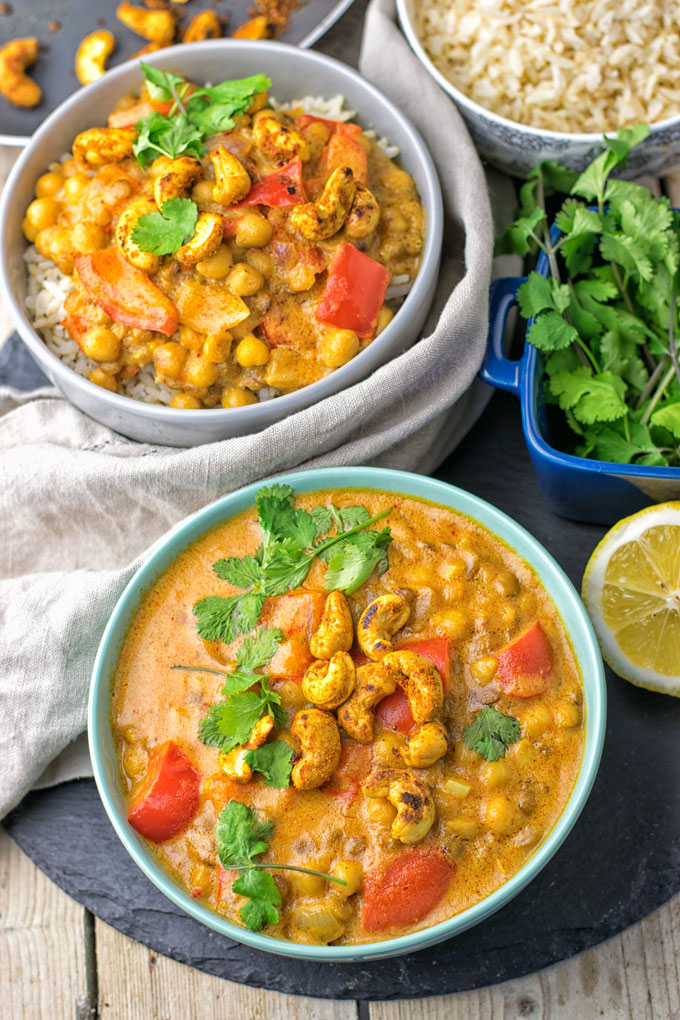
What makes a great vegan curry?
The answer is usually the same regardless of which style you are making: a well-built sauce base, quality spices, and enough time for everything to come together. Vegan curries have a natural advantage over meat-based versions - chickpeas, lentils, and vegetables absorb spices and sauce beautifully as they cook, becoming deeply flavored all the way through rather than just on the surface.
Every curry on this list is made in a single pot and ready in 30 minutes or less. Most use a small number of accessible ingredients - coconut milk, curry paste or powder, canned legumes, and whatever vegetables you have on hand. These are weeknight recipes that reward consistency: the more often you make them, the faster they come together and the better you understand how to adjust them to your taste.
Thai vs Indian vs Japanese - what's the difference?
The three curry traditions on this list produce genuinely different results and it is worth understanding the difference before choosing which one to make.
Thai-style curries use curry paste - a pre-made blend of lemongrass, galangal, chili, and aromatics - as the flavor base, with coconut milk as the sauce. The result is fragrant, aromatic, and relatively quick to prepare. Red curry paste is bold and spicy; yellow is milder and sweeter; Panang is the richest of the three. The Sweet Potato Curry, Eggplant Curry, Lentil Chickpea Yellow Curry, Vegetable Panang Curry, Massaman Curry, and Coconut Cream Pineapple Curry on this list are all Thai-style.
Indian-style curries are built on individual spices - garam masala, cumin, coriander, turmeric, chili - cooked into a tomato or coconut milk base. The flavor profile is warmer, earthier, and more complex than Thai-style. The Chickpea Tikka Masala and Tofu Tikka Masala on this list are Indian-inspired.
Japanese curry is different from both. It uses a curry roux - butter, flour, and curry powder cooked into a thick paste - as the sauce base, with vegetable broth rather than coconut milk. The result is savory, umami-rich, mildly spiced, and unlike anything else on this list.
The 10 recipes
1. Sweet Potato Curry
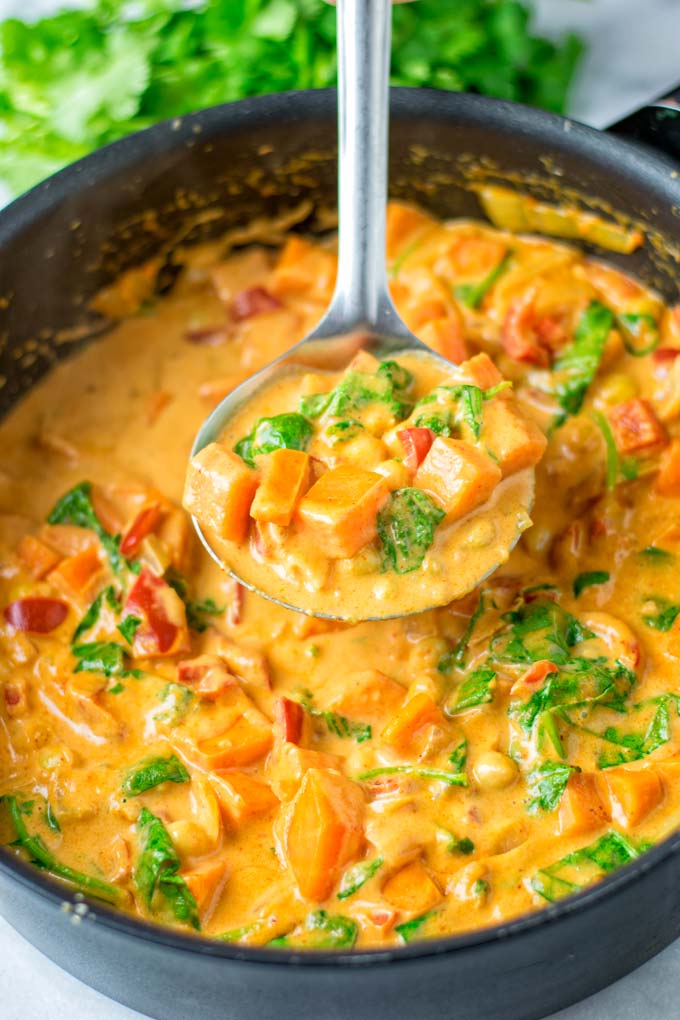
The most-visited recipe on this blog and the starting point for anyone new to vegan curry. Sweet potatoes and chickpeas cooked in coconut milk and red curry paste until the potatoes are tender and the sauce is rich and creamy. The sweet potatoes break down slightly as they cook, contributing their starch to thicken the sauce naturally.
It is forgiving, fast, and consistently impressive - the recipe that converts skeptics. Reader comments span years and multiple continents, all reaching the same conclusion: this one earns its place in the permanent rotation.
Time: 25 minutes | Style: Thai | Serves: 6
→ Get the Sweet Potato Curry recipe
2. Chickpea Tikka Masala
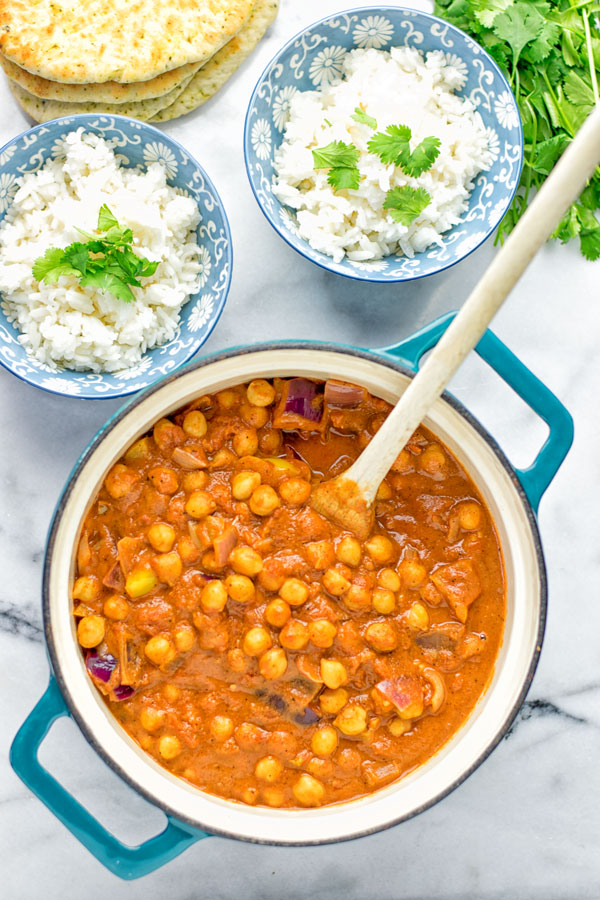
Five main ingredients - chickpeas, chopped tomatoes, coconut milk, garlic, and garam masala - cooked together in one pot for 10 minutes. The simplicity is the point. Garam masala does the flavor work, the coconut milk creates a naturally creamy sauce, and the chickpeas absorb everything as they heat through.
It is the easiest tikka masala on this list and the one that works best as a starting point for building confidence with Indian-inspired spicing. Several readers report serving it to people who had never enjoyed vegan food before - and changing their minds permanently.
Time: 20 minutes | Style: Indian-inspired | Serves: 6
→ Get the Chickpea Tikka Masala recipe
3. Eggplant Curry
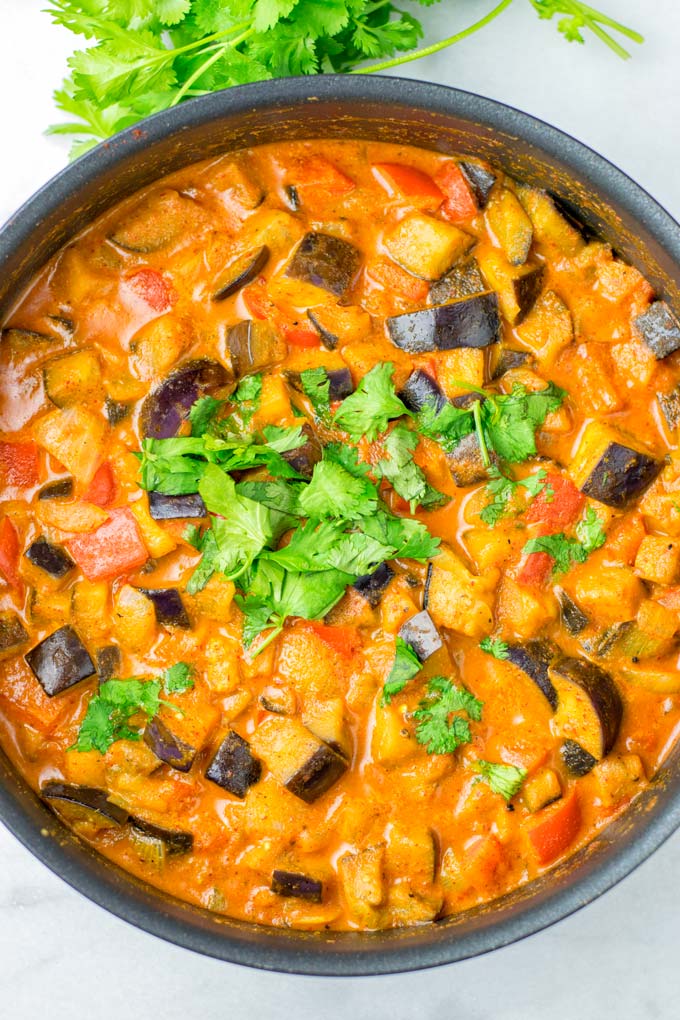
A Thai-style coconut milk curry built on yellow curry paste, with eggplant cooked directly in the sauce until tender and deeply flavored. No roasting, no pre-salting - the eggplant goes straight into the pot and absorbs the curry paste and coconut milk as it cooks.
The result is lighter and more fragrant than an Indian-style eggplant curry, with a flavor profile that is citrusy, aromatic, and gently spiced. It is one of the most forgiving curries on this list - the eggplant can be swapped for courgette, mushrooms, or green beans with equally good results.
Time: 25 minutes | Style: Thai | Serves: 4
→ Get the Eggplant Curry recipe
4. Lentil Chickpea Yellow Curry
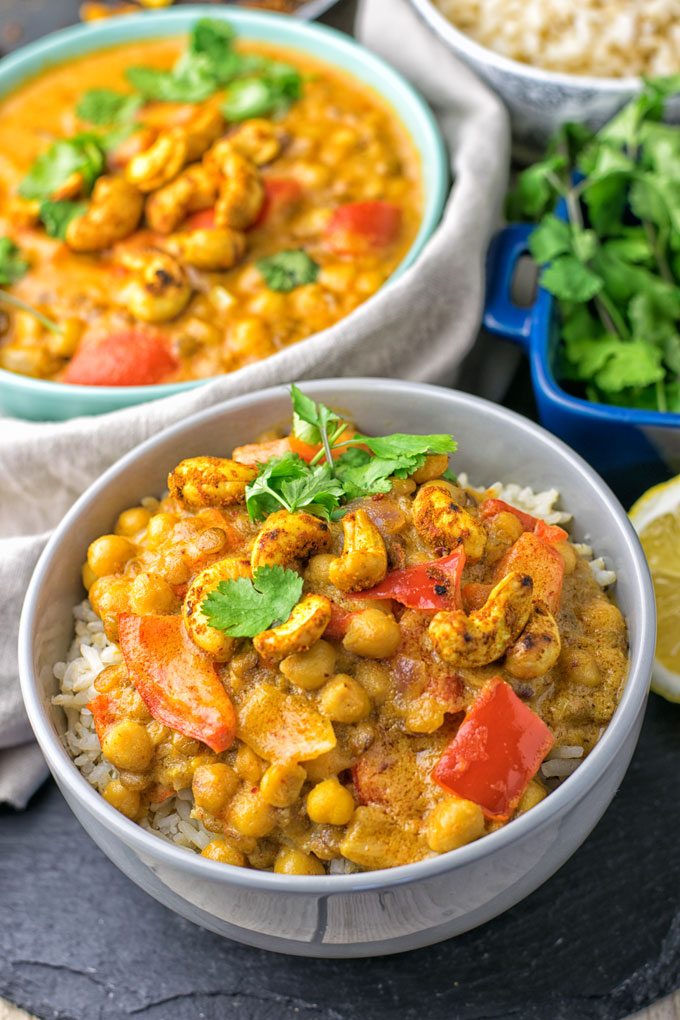
Lentils and chickpeas cooked together in a yellow curry sauce with coconut milk - two sources of plant-based protein in a single bowl. The lentils soften into the sauce and contribute a creamy texture, while the chickpeas provide contrast and substance.
It is one of the most protein-rich curries on this list and one of the most practical for meal prep - a double batch on Sunday feeds four people generously for most of the week.
Time: 28 minutes | Style: Thai | Serves: 4
→ Get the Lentil Chickpea Yellow Curry recipe
5. Vegetable Panang Curry
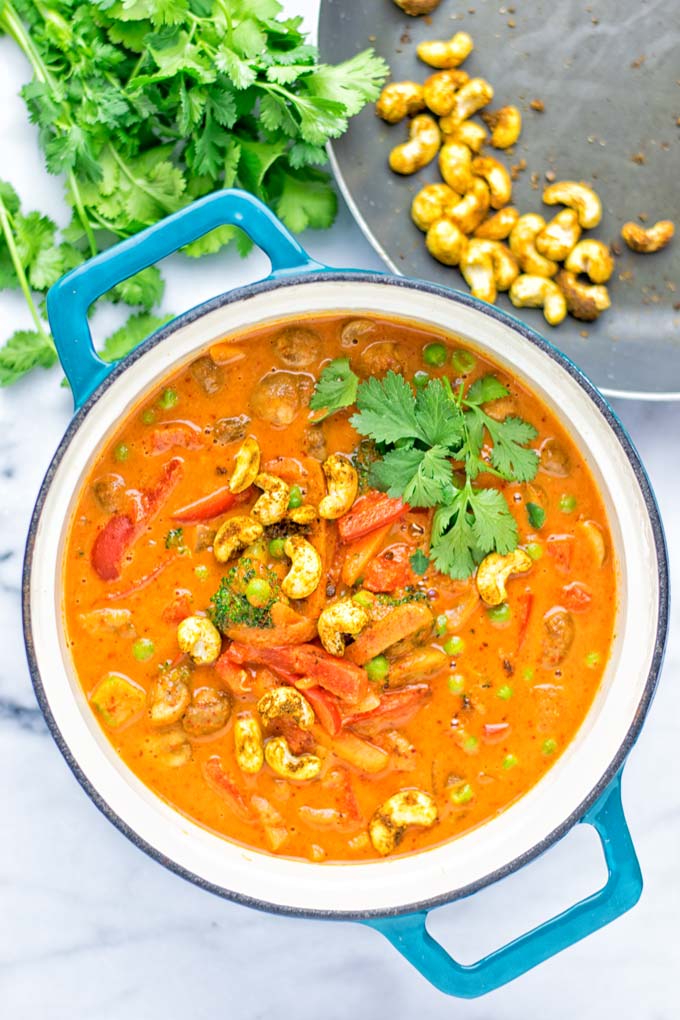
Panang is richer and slightly sweeter than red curry - a flavor profile that sits between red and massaman, with a coconut milk base and a complexity that consistently surprises people who try it for the first time. This version uses mixed vegetables and comes together in one pot in 25 minutes.
It is the curry for people who find red curry too sharp but want something more interesting than yellow. If you have only made one type of Thai curry, Panang is the most compelling next step.
Time: 25 minutes | Style: Thai | Serves: 4
→ Get the Vegetable Panang Curry recipe
6. Tofu Tikka Masala
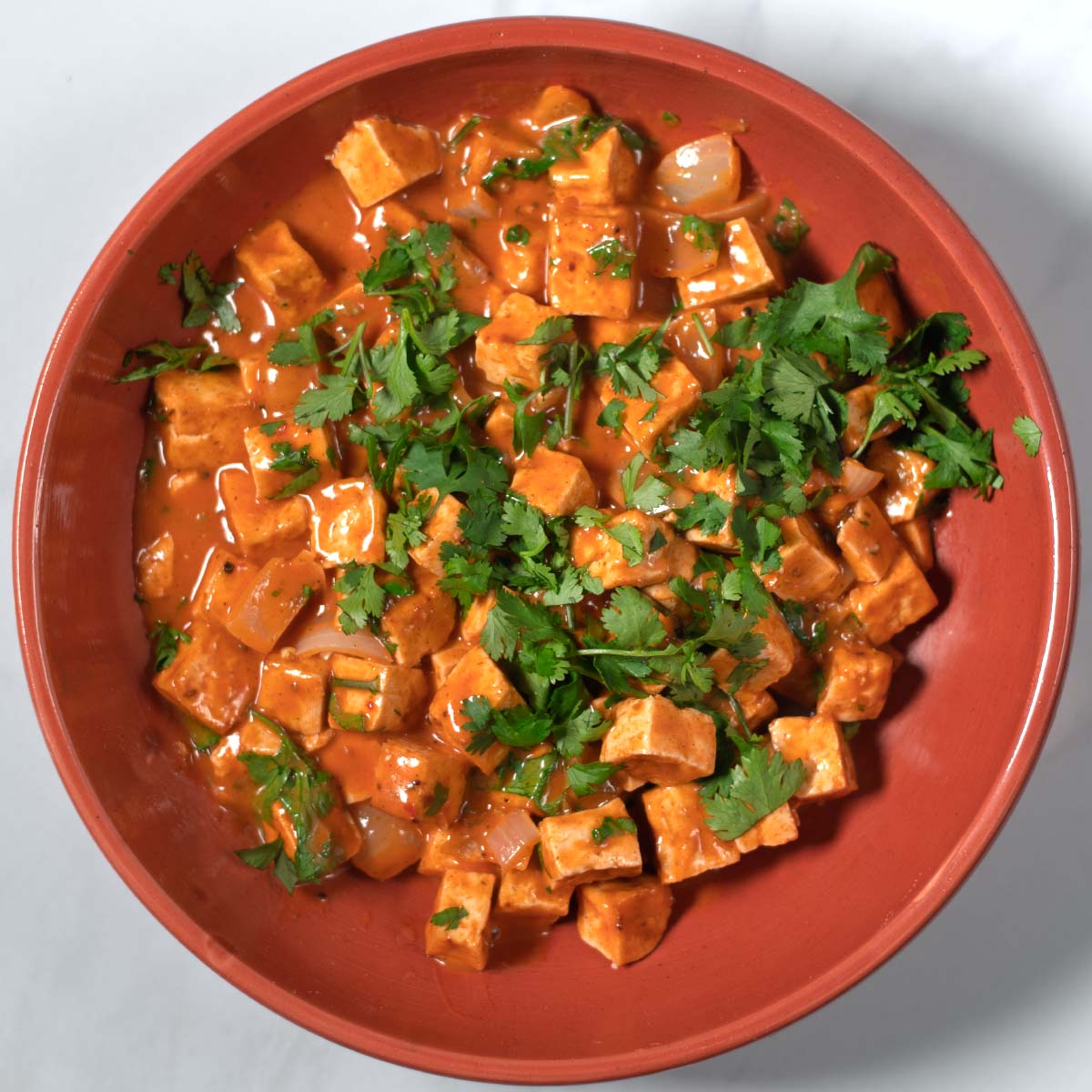
A sheet pan tikka masala - tofu marinated in coconut milk, garam masala, and smoked paprika, roasted until golden at the edges, then combined with a creamy coconut tomato sauce. The roasting step is what distinguishes this from a standard one-pot curry: the tofu develops a slightly crisp exterior and a depth of flavor that simply simmering it cannot produce.
It is the most involved recipe on this list in terms of steps, but the result is the closest thing here to a restaurant-quality tikka masala.
Time: 40 minutes | Style: Indian-inspired | Serves: 4
→ Get the Tofu Tikka Masala recipe
7. Massaman Curry with Roasted Potatoes
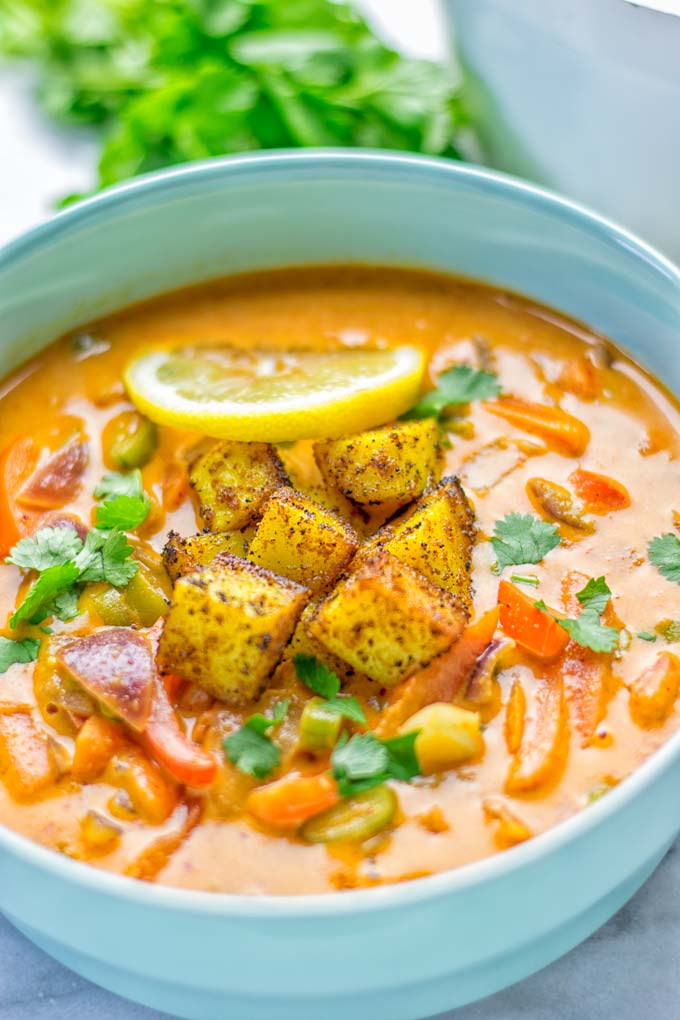
Massaman is the mildest and most approachable of the Thai curry pastes - warm notes of cinnamon and cardamom that make this the right choice for people who find other curries too sharp. Roasted potatoes add substance and a satisfying texture contrast with the creamy coconut sauce.
It takes slightly longer than the other curries here due to the roasting step, but the potatoes can be roasted ahead of time to bring the total active cooking time under 30 minutes. One of the heartiest curries on this list.
Time: 35 minutes | Style: Thai | Serves: 4
→ Get the Massaman Curry recipe
8. Japanese Curry
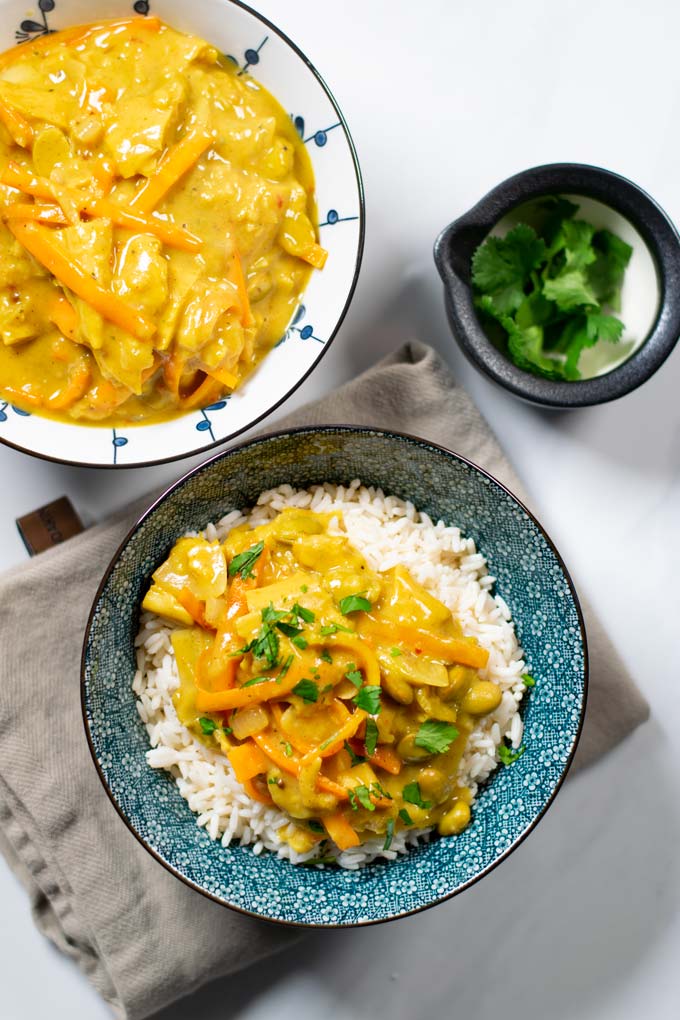
The outlier on this list - and deliberately so. Japanese curry uses a roux rather than paste or spice powder as the sauce base: butter and flour cooked with curry powder until thick, then combined with vegetable broth, vegan chicken, edamame, carrots, and apple. The result is savory, mildly spiced, and completely unlike any of the other curries here. The apple adds a subtle sweetness that is characteristic of Japanese curry and not easily replicated.
If you have only ever eaten Thai or Indian-style curry, this one is worth making for the entirely different experience it offers.
Time: 25 minutes | Style: Japanese | Serves: 4
→ Get the Japanese Curry recipe
9. Coconut Cream Pineapple Curry
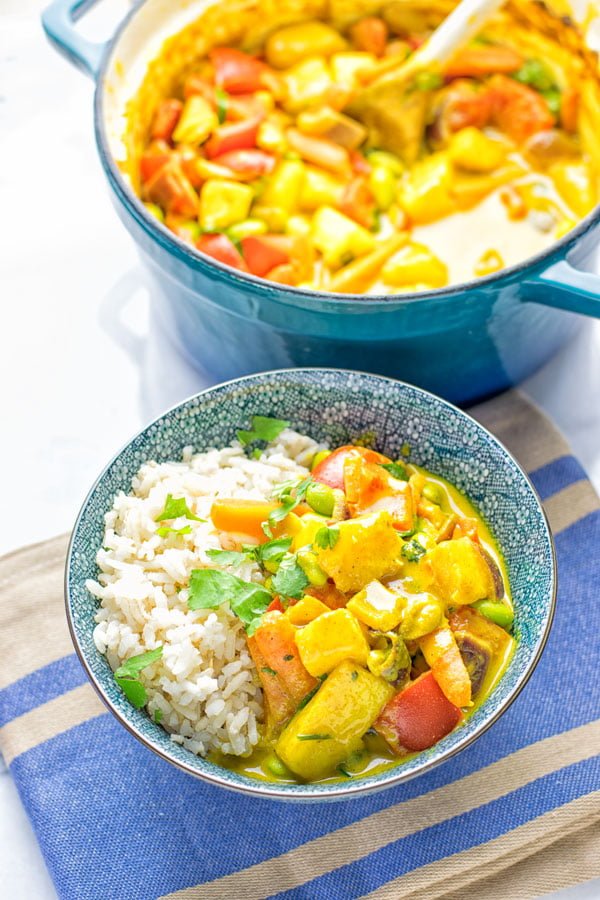
Sweet pineapple in a creamy coconut milk curry sauce - a combination that sounds unlikely and delivers something genuinely tropical and satisfying. The sweetness of the pineapple balances the heat of the curry paste and creates a flavor profile that is unlike any other curry on this list. Add tofu and bamboo shoots for extra substance.
Reader comments consistently note that this is the curry non-curry-eaters respond to most enthusiastically - the familiar sweetness of pineapple makes it accessible in a way that straightforwardly spiced curries sometimes are not.
Time: 25 minutes | Style: Thai | Serves: 4
→ Get the Coconut Cream Pineapple Curry recipe
10. Katsu Curry
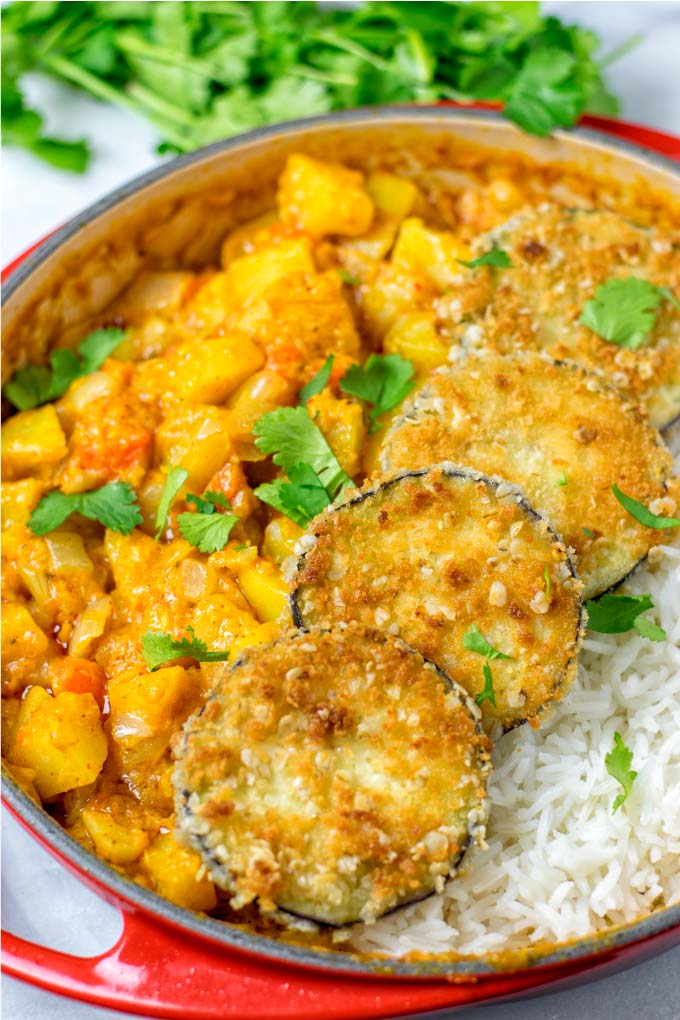
The most visually dramatic recipe on this list - a mildly flavored Japanese-style potato curry topped with crispy breaded eggplant slices. The contrast between the soft, creamy sauce and the crunchy breaded topping is what makes katsu curry so satisfying. The sauce is made separately and the eggplant is breaded and fried independently, then placed on top when serving.
It is the most impressive-looking curry here and the one worth making when you want something that feels like an occasion rather than a weeknight meal.
Time: 35 minutes | Style: Japanese-inspired | Serves: 4
Tips for making curry at home
Use full fat coconut milk. The carton varieties sold as a dairy alternative are too thin for curry. Use canned, full fat coconut milk - shake the can before opening, or stir the contents together if separated. The creaminess is what makes these sauces satisfying.
Taste your curry paste. Brands vary enormously in heat level. Maesri and Mae Ploy are reliable and more authentic - they tend to be hotter. Thai Kitchen is widely available and milder. Start with less than the recipe calls for if you are heat-sensitive and add more to taste.
Do not rush the aromatics. Garlic and onion fried for 3-4 minutes at the start build the flavor base that carries through the entire dish. Frying them for 60 seconds is not the same result.
Season at the end. Liquids reduce during cooking and flavors concentrate. What seems under-seasoned at the start will often be right by the time the curry finishes. Add salt and pepper in the final few minutes rather than at the beginning.
Make double. All of these curries store well in the fridge for 4-5 days and freeze for up to 3 months. Making double takes no extra effort and means the best dinner of the week can also be Tuesday's lunch.
Frequently asked questions
Start with the Sweet Potato Curry or the Chickpea Tikka Masala. Both require very few ingredients, are ready in 20-25 minutes, and produce results that consistently impress people who are new to plant-based cooking. The Sweet Potato Curry in particular is the most-made recipe on this site for good reason.
Massaman Curry is the mildest - warm, slightly sweet cinnamon and cardamom notes rather than chili heat. The Coconut Cream Pineapple Curry and Japanese Curry are also mild. For the most heat, use red curry paste versions or increase the chili in Indian-style recipes.
All of them are naturally gluten free with one exception - the Japanese Curry uses flour in the roux. Substitute a gluten-free flour blend for a gluten-free version. All other curries on this list contain no gluten.
Jasmine rice is the classic pairing for Thai-style curries. Basmati works well with Indian-style curries. The Japanese Curry is traditionally served over short-grain rice. All of them also work with naan, flatbread, quinoa, or as a standalone bowl. For extra protein, serve over cooked lentils or with a side of roasted chickpeas.
Yes - all curries on this list freeze well for up to 3 months. Allow to cool completely before transferring to airtight freezer-safe containers. Thaw overnight in the fridge and reheat gently on the stovetop, adding a splash of water or coconut milk if the sauce has thickened during freezing.
Gently on the stovetop over medium-low heat, stirring occasionally. Add a splash of water or coconut milk to loosen the sauce if it has thickened. Microwave reheating works but tends to produce uneven results - if using a microwave, cover loosely and stir halfway through.
Made one of these? Leave a comment on the individual recipe page and tag me on Instagram or Facebook with a photo. Florian.